Mallorca 7-Day Itinerary: The Ultimate Road Trip Route & Daily Guide (2026)
Mallorca demands velocity and deceleration in equal measure. Beyond the concrete hotel strips of the Bay of Palma lies an island of razor-sharp limestone escarpments, terraced olive groves irrigated by medieval Moorish channels, and isolated sea coves carved into honey-colored calcarenite stone. Driving 540 kilometers across Mallorca in seven days reveals an island far removed from package-holiday mythology.
To navigate Mallorca effectively, you must understand its topography. The Serra de Tramuntana spine runs 90 kilometers along the northwest coast, forming an imposing physical barrier between the open western sea and the central agricultural plain (Es Pla). The southern and eastern coastlines fracture into hundreds of narrow, fjord-like inlets (calas), while the north terminates in windswept capes. Crossing between these geological zones requires deliberate route design; choosing the wrong mountain pass during afternoon tourist traffic doubles transit times.
This 7-day road trip itinerary is engineered for real-world driving conditions in 2026. It balances mountain passes with subterranean karst caverns, coastal watchtowers, Roman archaeological sites, and secluded swimming coves, detailing exact driving times, road classifications, parking protocols, and cultural context.
Strategic Road Trip Briefing: 2026 Ground Truth
- Lodging Strategy (2-Base vs. 1-Base): We recommend a two-base accommodation strategy. Establish Base 1 (Days 1–4) in or near Palma, Sóller, or Valldemossa for the southwest and Tramuntana. Establish Base 2 (Days 5–7) in the northeast (Alcúdia/Pollença) or southeast (Santanyí). Crossing the mountain barrier daily from a single resort wastes 2.5 hours in redundant driving. Alternatively, book a single inland agroturismo in Inca or Santa Maria del Camí with direct Ma-13 highway access.
- Car Selection: Rent a compact B-segment or A-segment hatchback (Seat Ibiza, Fiat 500, Renault Clio). The Ma-10 mountain highway features tight switchbacks and 2.2-meter-wide stone alleys in Fornalutx and Valldemossa where wide SUVs struggle against oncoming tour buses.
- 2026 Cap de Formentor Restriction: From June 1 through October 31, the Ma-2210 from km 8.7 to the Formentor Lighthouse is closed to unauthorized private vehicles from 10:00 to 19:00 daily. ANPR cameras issue automated €200 fines. Take shuttle TIB Bus 334 from Port de Pollença or clear the checkpoint before 09:45.
- Cala Parking Cutoffs: Unspoiled coves like Caló des Moro, Cala Llombards, and Cala Pi have finite parking. Dirt lots fill before 08:30 in July/August and before 09:30 in shoulder months. Police turn cars away once full. Parking on wild pine verges incurs €100–€300 environmental fines and vehicle towing.
- Cyclist Passing Law: Spanish DGT regulations mandate a minimum lateral passing clearance of 1.5 meters (4.9 feet) and require dropping speed at least 20 km/h below the posted limit before overtaking. Crossing a solid white centerline is permitted only when visibility is completely clear.
- Parking Apps (ORA Blue Zones): Paid blue bays (Zona Blava) operate 09:00–14:00 and 16:30–20:00 weekdays. Use the Telpark or ElParking mobile apps to pay and extend remotely. Yellow curb markings indicate strict tow-away zones.
Quick-Glance 7-Day Mallorca Itinerary Matrix
The matrix below outlines the geographic progression, daily driving commitments, and core focuses for the week.
| Day | Base Region | Key Waypoints & Route | Dist. & Time | Strategic Travel Advice |
|---|---|---|---|---|
| Day 1 | Palma | La Seu Cathedral, Almudaina Palace, Bellver Castle, Santa Catalina | 15 km • 35 min | Park at Parc de la Mar; walk Gothic center; book castle entries. |
| Day 2 | Tramuntana SW | Valldemossa Charterhouse, Torre del Verger, Deià, Sa Foradada | 68 km • 1 hr 45 min | Depart Palma by 08:30 via Ma-1110; drive cliffside Ma-10; sunset at Son Marroig. |
| Day 3 | Sóller Valley | Jardines de Alfabia, Sóller Old Town, Port de Sóller, Fornalutx | 32 km • 55 min | Visit Alfabia early; ride 1913 tram; park at Lepanto lot in Port de Sóller. |
| Day 4 | High Passes | Gorg Blau, Sa Calobra (Nus de Sa Corbata), Lluc, Alcúdia | 84 km • 2 hr 15 min | Descend Ma-2141 before 10:00 to avoid coaches; eat roast pork at Lluc. |
| Day 5 | Northeast Capes | Cap de Formentor, Talaia d’Albercutx, Platja Formentor, Pollentia | 42 km • 1 hr 10 min | Clear Formentor gate before 10:00 or ride Bus 334; walk Alcúdia walls at dusk. |
| Day 6 | East Karst | Cuevas del Drach (Porto Cristo), Es Pontàs, Santanyí | 78 km • 1 hr 25 min | Pre-book 10:00 Drach entry; view Es Pontàs arch; dinner in Santanyí. |
| Day 7 | South Coast | Caló des Moro, Cala S’Almunia, Torre de Cala Pi, Airport (PMI) | 65 km • 1 hr 15 min | Reach Caló des Moro lot by 08:15; swim at Cala Pi; return car at airport. |
Day 1: Palma’s Gothic Core, Portixol & Royal Strongholds
Begin your Mallorcan journey in the Balearic capital, whose foundations date to the Roman military camp established in 123 BC. Dedicate this first day to exploring its sandstone core on foot before venturing onto mountain roads.
Morning: La Seu, Almudaina Palace & The Jewish Call
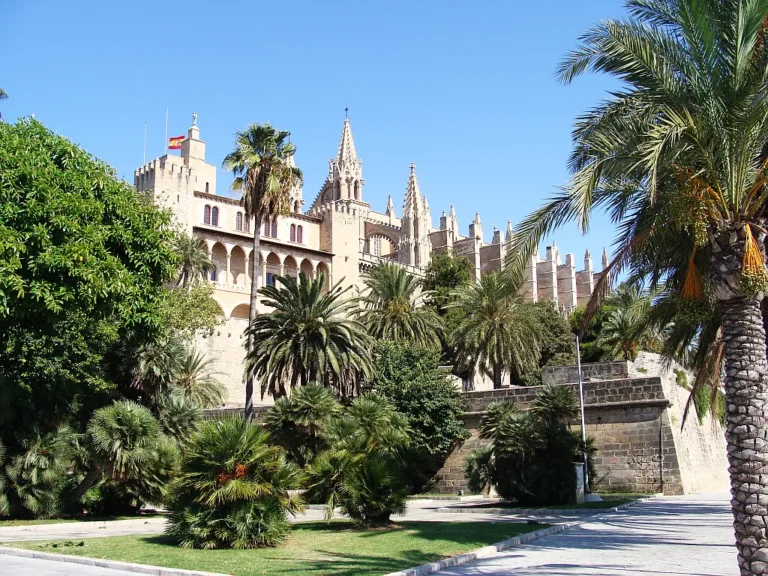
Park underground at Aparcament Parc de la Mar (€2.40/hour) and walk up to Plaça de la Seu, where the Cathedral of Santa Maria (La Seu) commands the waterfront. Commissioned by King James I after his 1229 conquest of Islamic Madina Mayurqa, construction spanned 1230 to 1601. Built from golden marés sandstone quarried at Portals Vells, its nave vaults reach 44 meters on octagonal pillars. Enter at 10:00 to see morning sun strike the 13.8-meter Eastern Rose Window (Ojo del Gótico), casting vivid colors across the aisle. Inside, inspect Antoni Gaudí’s suspended baldachin (1904–1914) and Miquel Barceló’s 2007 ceramic mural in the Chapel of the Holy Sacrament.
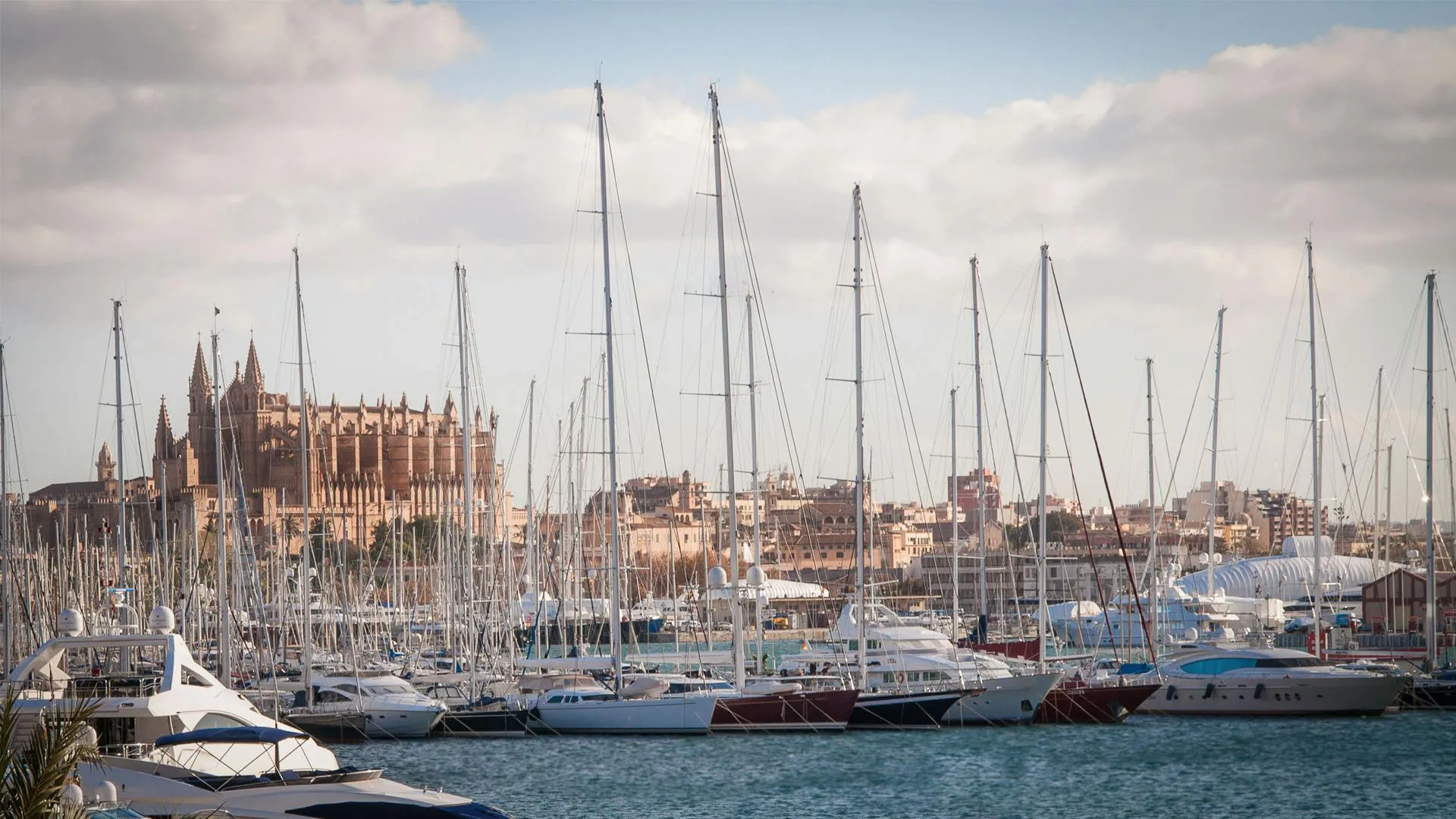
Opposite the cathedral stands the Royal Palace of La Almudaina, an Islamic alcázar rebuilt into a Gothic residence by King James II. Join one of the licensed free walking tours nearby to traverse El Call Jueu (the medieval Jewish quarter) along Carrer de Monti-sion and view historic Renaissance courtyards (patios mallorquines) through iron grilles on Carrer de la Portella.
Midday: Traditional Market Dining at Mercat de l’Olivar
Walk north up Carrer de Sant Miquel past Plaça de Cort—stopping at the 600-year-old Olivera de Cort—to Mercat de l’Olivar (open Monday–Saturday 07:00–14:30). Take a stool at Bar del Peix for authentic traditional Mallorcan foods: rustic pa moreno rubbed with tomàtiga de ramellet, drizzled with virgin olive oil, and topped with cured sobrassada de Mallorca and Mahón cheese, paired with grilled cuttlefish (sípia a la planxa).
Afternoon: Castell de Bellver & The Royal Forest
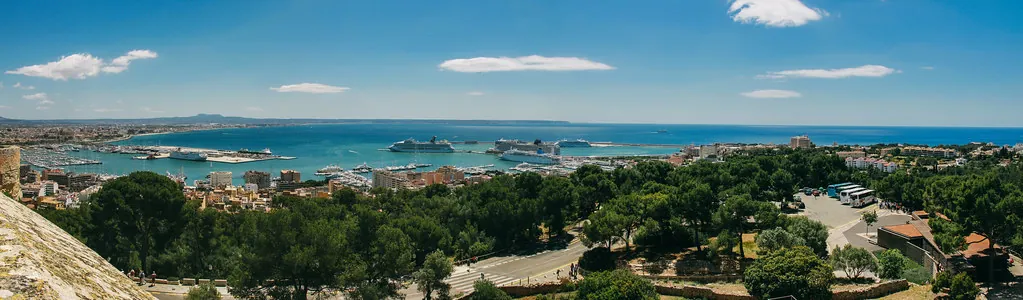
Drive 4.5 kilometers west to Bellver Castle, set amid pine woods 112 meters above the harbor. Commissioned in 1300 by King James II and designed by Pere Salvà, Bellver is Europe’s rare circular Gothic fortress, featuring three turrets and a detached 33-meter keep (Torre de l’Homenatge). Walk the roof terrace for 360-degree panoramas of the bay and Tramuntana. Consult our guide to things to do in Palma de Mallorca for seasonal exhibitions.
Evening: Santa Catalina & Passeig des Born
At dusk, head to Santa Catalina along Carrer de la Fàbrica. Enjoy authentic tapas: tumbet (fried potato, eggplant, and pepper slices baked in garlic-tomato sauce) and frit mallorquí (spiced lamb offal, potato, and fennel sauté dating to the 14th century). Wrap up with a stroll down Passeig des Born.
Day 1 Ground Truth Metrics
- Driving Distance: 15 km total (urban driving).
- Transit Time: 35 minutes behind the wheel.
- Primary Routes: Passeig Marítimo (Ma-19), Carrer de Bellver.
- Parking: Aparcament Parc de la Mar (€2.40/hr); Bellver Castle upper lot (free, 60 spaces).
- Admissions: La Seu Cathedral (€10.00); Bellver Castle (€4.00; free on Sundays).
Day 2: The Southern Tramuntana Coastline (Valldemossa to Deià)
Day two climbs into the UNESCO World Heritage landscape of the Serra de Tramuntana, shaped by dry-stone terracing (pedra en sec) and hydraulic agriculture. Prepare for elevation changes, switchbacks, and sharp coastal drop-offs.
Morning: Valldemossa Charterhouse & Potato Cocas
Leave Palma by 08:30 via the Ma-1110, climbing 420 meters to Valldemossa (18 km, 25 minutes). Park on Avinguda de Palma (€1.80 for two hours via Telpark). Stop at Pastisseria Ca’n Molinas (open since 1920) on Via Blanquerna for warm, sugar-dusted coca de patata with coffee or cold almond horchata.
Tour the Real Cartuja de Valldemossa, founded in 1309 as a royal residence by King Sancho and converted to a Carthusian monastery in 1399. Visit Cell 4, where Frédéric Chopin and George Sand stayed in winter 1838–1839. View Chopin’s Pleyel piano used to compose the Raindrop Prelude, Sand’s original manuscript of A Winter in Majorca, and the private herb garden overlooking the terraced valley.
Midday: Coastal Sea Cliffs & Torre del Verger
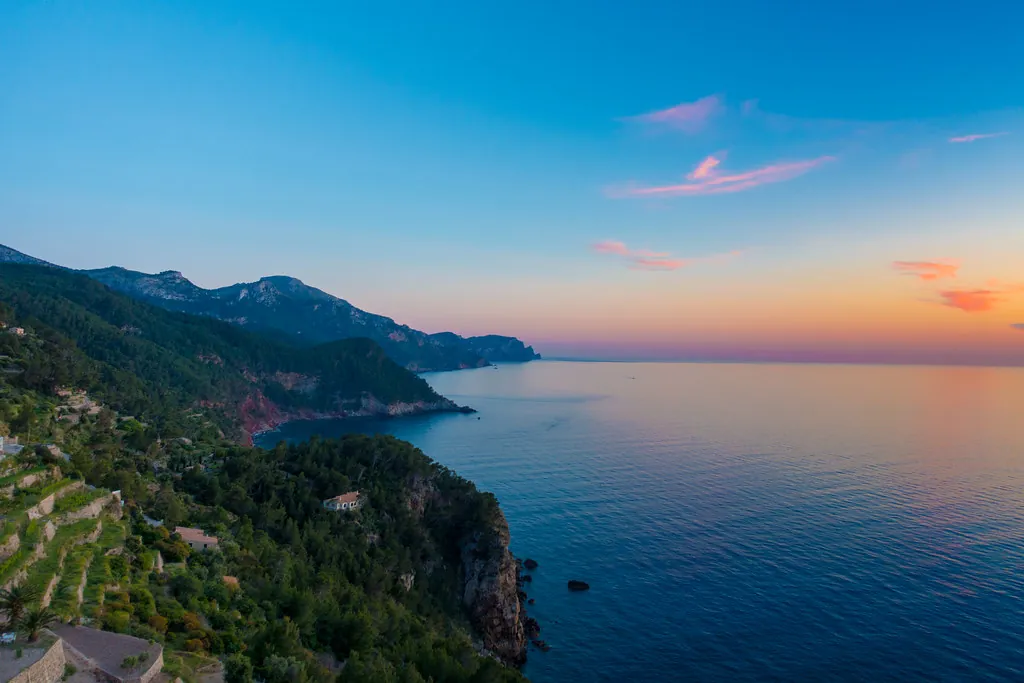
Drive southwest along the Ma-10 toward Banyalbufar, where steep Moorish stone terraces (marjades) step down to the sea. At km 89, pull into the turnout at Torre del Verger (Torre de Ses Ànimes). Built in 1579 in Joan Binimelis’s coastal defense network against Barbary pirates, this stone watchtower sits 175 meters above the sea. Climb the iron rungs to the open stone platform for wide coastal views.
Afternoon: Son Marroig & Sa Foradada Peninsula
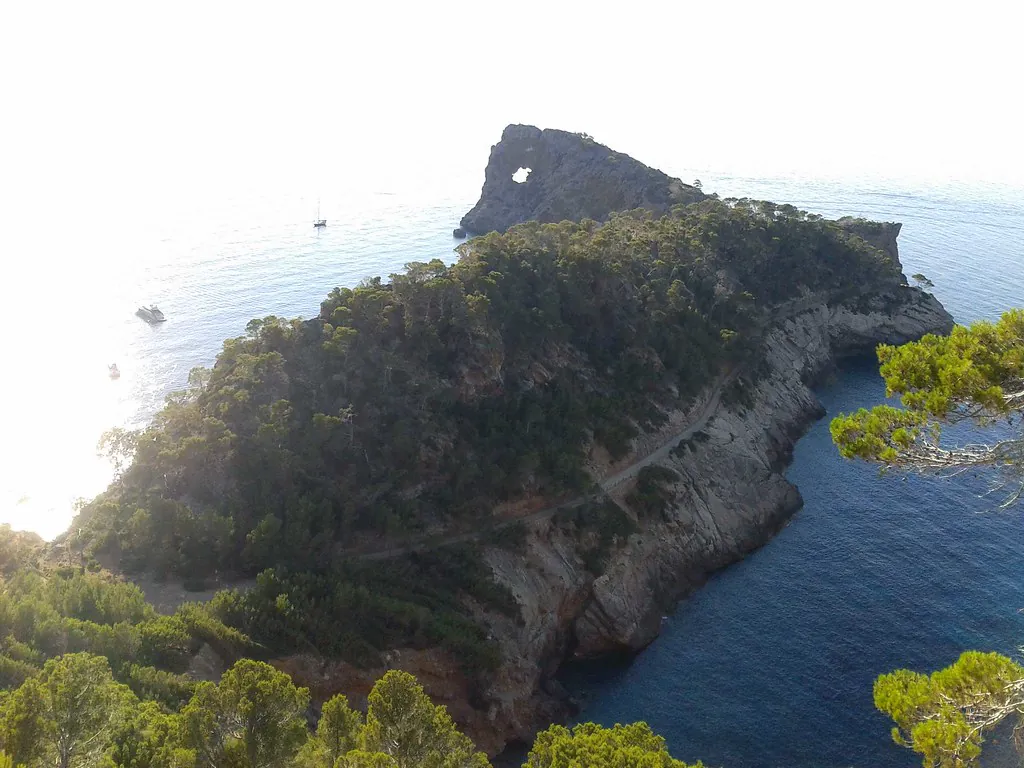
Follow the Ma-10 northeast past Valldemossa toward Deià. Between km 65 and 66, turn into the estate of Son Marroig, former home of Austrian Archduke Ludwig Salvator (1847–1915). From the Carrara marble rotunda, look out over Sa Foradada, a limestone peninsula featuring an 18-meter natural hole drilled through the rock by wave erosion. A 2.5-hour round-trip trail leads down through olive groves to the sea.
Evening: Deià & Dinner at Cala Deià
Drive 4 kilometers to Deià, where stone houses rest below Puig des Teix (1,064 m). Long an artistic refuge where English poet Robert Graves lived from 1929, the village preserves quiet stone lanes. In late afternoon, descend the 2-kilometer paved road to pebble-lined Cala Deià (parking €3.00/hr). Dine at Ca’s Patró March on wooden stilts over the surf, ordering grilled red mullet (moll), wild sea bass, and chilled Prensal Blanc wine.
Day 2 Ground Truth Metrics
- Driving Distance: 68 km total.
- Transit Time: 1 hour 45 minutes of mountain driving.
- Primary Routes: Ma-1110, Ma-10 (Tramuntana coast).
- Parking: Valldemossa Municipal Lot (€1.80/hr via Telpark); Torre del Verger turnout (free, 8 spaces); Son Marroig lot (free for visitors); Cala Deià lot (€3.00/hr).
- Admissions: Valldemossa Charterhouse (€12.00); Son Marroig Gardens (€4.00).
Day 3: Citrus Valleys, Vintage Rail & Mountain Terraces
Day three explores the Golden Valley of Sóller, a fertile basin famous for sweet Navel and Canoneta oranges. Encircled by high Tramuntana peaks, this valley channels mountain spring water that fueled centuries of agricultural wealth and citrus trade with southern France.
Morning: Moorish Water Engineering at Jardines de Alfabia
Head north along the Ma-11 motorway toward the Coll de Sóller. At kilometer marker 17, enter the gates of Jardines de Alfabia, an agricultural estate dating to the Islamic period prior to 1229, established by Moorish viceroy Ben-Abet.
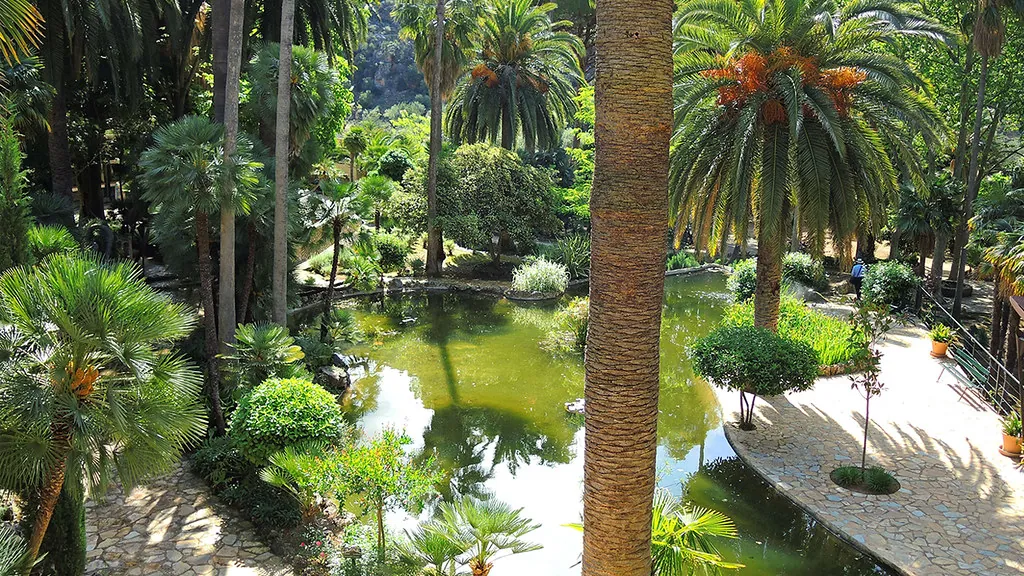
Alfabia preserves a sophisticated network of stone cisterns (aljibes) and gravity channels feeding subtropical plantations. Walk under the stone pergola; pressing a bronze button triggers 72 concealed water jets that spray overhead in cooling mist. Inside the manor house, view the 1170 Mudéjar pine ceiling carved with Arabic calligraphy alongside Queen Isabella II’s 19th-century royal suite.
Midday: Sóller Modernism & The Heritage Tram
Drive through the toll-free Túnel de Sóller into Sóller town. Park at Aparcament Defensora de Sóller (€1.50/hr) and walk into Plaça de la Constitució. Here, the Church of Sant Bartomeu features a striking modernista limestone façade crafted in 1904 by Joan Rubió i Bellver, a student of Antoni Gaudí. Board the 1913 wooden Tranvía de Sóller (€9.00 one-way) to travel through orange orchards down to Port de Sóller’s horseshoe bay.
Afternoon: Port de Sóller Red Prawns & Fornalutx
At the harbor, sample sweet Gamba Roja de Sóller (deep-sea red prawns) seared with sea salt and paired with cold Prensal Blanc white wine. Take the tram back to retrieve your car and drive 5 km along the Ma-2120 to Fornalutx. Wander stone lanes like Carrer dels Bous to admire traditional pedra en sec masonry and teules de moro: 16th-century roof tiles painted with red folk symbols to ward off misfortune.
Evening: Sunset at Far de Cap Gros
Before dark, drive to Far de Cap Gros, an 1859 lighthouse 120 meters above the bay’s western mouth, watching dusk bathe the harbor basin in warm copper light.
Day 3 Ground Truth Metrics
- Driving Distance: 32 km total.
- Transit Time: 55 minutes behind the wheel.
- Primary Routes: Ma-11, Ma-2120 (Sóller–Fornalutx).
- Parking: Alfabia lot (free for visitors); Aparcament Defensora de Sóller (€1.50/hr); Fornalutx lot on Carrer de l’Arbona Nova (€2.00/hr).
- Admissions: Jardines de Alfabia (€9.00); Tranvía de Sóller (€9.00 one-way).
Day 4: High Mountain Passes, Sa Calobra & Transition to the North Base
Check out of your initial base early. Today delivers challenging mountain driving, dropping through engineering wonders before relocating to your northern base in Alcúdia.
Morning: Puig Major Reservoirs & Sa Calobra (Ma-2141)
Depart Sóller by 08:15 to stay ahead of tour coaches. Climb the Ma-10 past Puig Major (1,445 m) and the alpine reservoirs of Cúber and Gorg Blau. At Coll dels Reis (682 m), turn onto the Ma-2141 descending to Sa Calobra. Engineered in 1932 by Antonio Parietti, this road drops through 12 switchbacks without tunnels, highlighted by the Nus de Sa Corbata (The Tie Knot), a 270-degree loop curving under its own viaduct.
Driving Strategy: The road is 5.5 meters wide with sheer rock walls. Tour buses descend after 10:30 and ascend after 14:30. Arrive before 09:15 to avoid traffic. Park at Sa Calobra (€3.50/hr) and walk through lit pedestrian rock tunnels to Torrent de Pareis, where 200-meter cliffs frame a wild gravel beach.
Midday: Spiritual Sustenance at Santuari de Lluc
Climb back up in low gear to save your brakes, rejoining the Ma-10 northeast for 12 km to Santuari de Lluc. Occupying an elevated mountain valley at 500 meters, Lluc has been Mallorca’s spiritual shrine since the 13th century. Visit the basilica to see La Moreneta (the Black Madonna). At Sa Fonda de Lluc, dine on arròs brut (spiced soupy rice with game and sobrassada) and roast suckling pig (porcella rostida).
Afternoon & Evening: Alcúdia Medieval Ramparts
Descend via the Ma-2200 to Alcúdia to check into your northern base. In late afternoon, walk the 1.5-kilometer circuit atop Alcúdia’s 14th-century medieval walls, commissioned in 1300 by King James II. Dine in Plaça de la Constitució on grilled sea bream (orada).
Day 4 Ground Truth Metrics
- Driving Distance: 84 km total.
- Transit Time: 2 hours 15 minutes.
- Primary Routes: Ma-10, Ma-2141 (Sa Calobra descent), Ma-2200 (to Alcúdia).
- Driving Warning: Extreme descent with 12 switchbacks; downshift to 2nd gear to prevent brake fade.
- Parking: Sa Calobra lot (€3.50/hr); Lluc Sanctuary lot (€3.00 flat fee); Alcúdia free municipal lot outside Porta de Mallorca.
- Admissions: Torrent de Pareis (free); Lluc Sanctuary Basilica (free; botanical garden €2.00).
Day 5: The Wild Formentor Peninsula & Roman Pollentia
Day five explores the northern capes where the Tramuntana meets the sea in dramatic limestone peninsulas, balancing coastal roads with ancient classical archaeology.
Morning: Cap de Formentor & Talaia d’Albercutx
Between June 1 and October 31, the Ma-2210 from kilometer marker 8.7 to the Formentor lighthouse is closed to unauthorized private vehicles between 10:00 and 19:00 daily. ANPR cameras issue automated €200 fines. Clear the checkpoint before 09:45 in your car, or ride shuttle TIB Bus 334 from Port de Pollença (detailed in our Mallorca public transport guide).
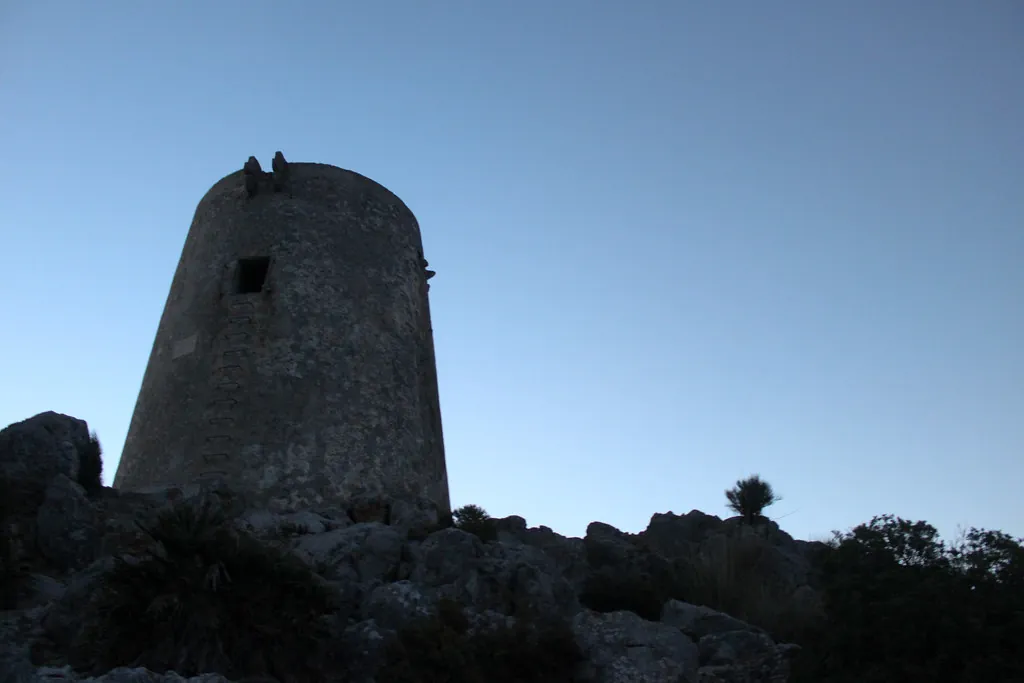
Stop at Mirador des Colomer (km 5) to take in sheer cliffs 232 meters above the sea. Next, drive the steep asphalt spur up to Talaia d’Albercutx. Erected in the late 16th century at 380 meters elevation, this stone watchtower commands a 360-degree vista over the entire peninsula and Pollença Bay. Afterward, descend to Platja de Formentor to swim in clear shallows shaded by maritime pines.
Midday: Pine Walk Promenade in Port de Pollença
Drive 15 minutes into Port de Pollença and stroll the pedestrian Pine Walk (Passeig Vora Mar), lined with pine branches trailing into the water. Enjoy a harbor lunch of grilled sardines or rockfish arroz a banda with homemade alioli.
Afternoon & Evening: Roman Ruins of Pollentia
Head south to Pollentia (Ciutat Romana de Pollèntia), founded in 123 BC by Roman consul Quintus Caecilius Metellus. Tour the excavated domus in La Portella, the Capitoline Forum, and the 1st-century AD Roman Theater carved into bedrock. Conclude with sunset views over Badia d’Alcúdia from the Alcanada headland.
Day 5 Ground Truth Metrics
- Driving Distance: 42 km total.
- Transit Time: 1 hour 10 minutes.
- Primary Routes: Ma-2220, Ma-2210 (Formentor).
- 2026 Restriction: Lighthouse road closed 10:00–19:00; use TIB Bus 334 or clear km 8.7 before 09:45.
- Parking: Mirador des Colomer lot (free, 65 spaces); Pollentia Roman Site lot (free).
- Admissions: Pollentia Archaeological Site (€4.00); Talaia d’Albercutx (free).
Day 6: The Karst Coastline, Subterranean Lakes & Migjorn Sea Arches
Day six leads south through the eastern karst limestone plateau into the Migjorn region, celebrated for caverns and sea arches hollowed by mineral-rich water and coastal waves.
Morning: Cuevas del Drach & Lake Martel Concert
Take the Ma-4020 south to Porto Cristo to explore Cuevas del Drach (Caves of the Dragon). Surveyed in 1896 by speleologist Édouard-Alfred Martel, the caves extend 1,200 meters. Pre-book the 10:00 entry online (€17.50). At Lake Martel (177 meters long, 17°C), enjoy a 10-minute classical recital performed by a live quartet from illuminated wooden rowboats floating across the dark water, followed by an optional subterranean rowboat ride.

Midday: The Natural Arch of Es Pontàs
Drive 40 km south along the Ma-4014 to Santanyí to inspect a geological marvel highlighted in our guide to the best calas in Mallorca: the rock arch of Es Pontàs.
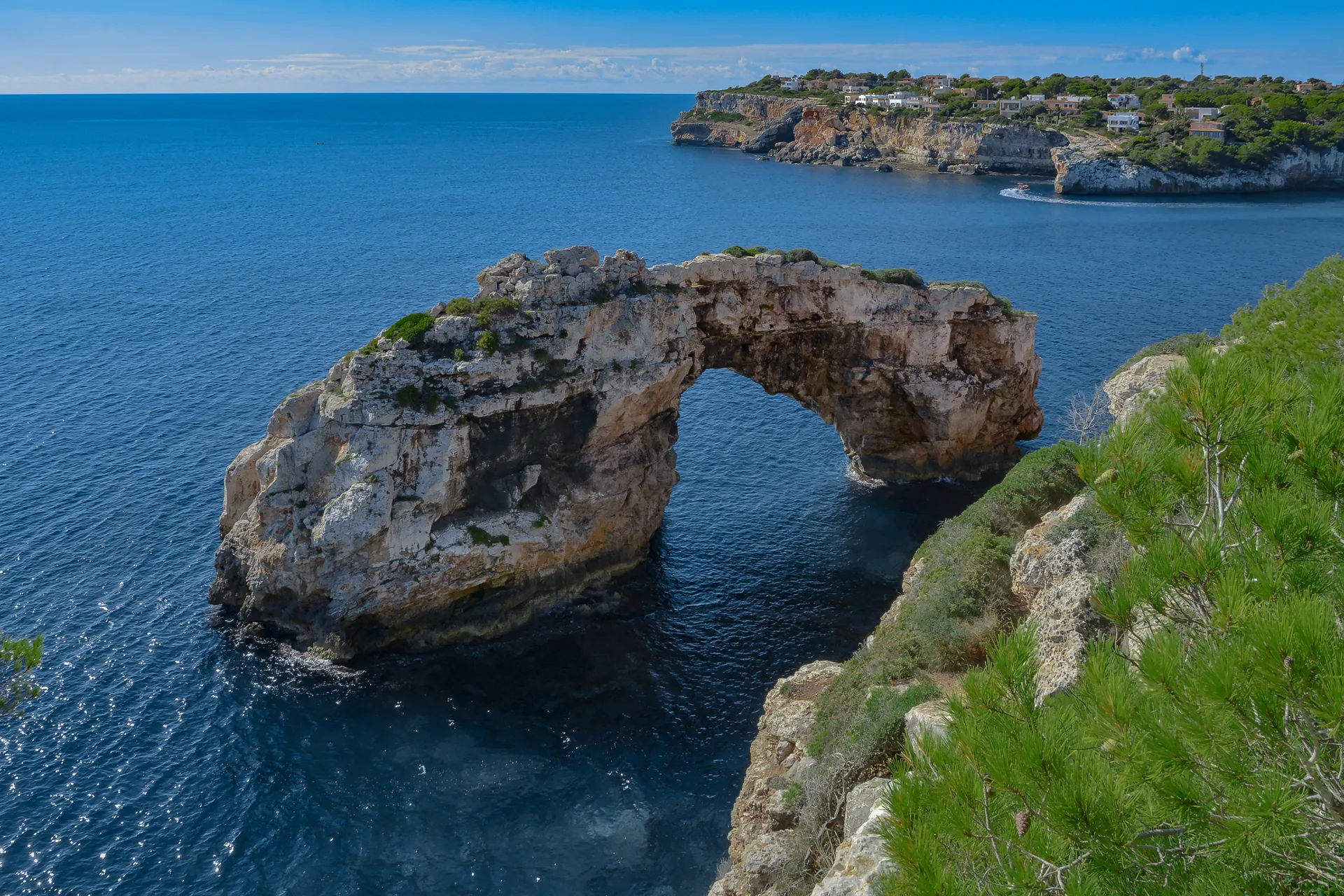
Park on Carrer de Sa Cova des Coloms and walk 400 meters to the cliff edge. Rising 20 meters from the sea, Es Pontàs gained global fame in 2006 when Chris Sharma free-soloed its arched underbelly without ropes, pioneering a landmark 9a+ deep-water solo route.
Afternoon & Evening: Cala Llombards & Santanyí
Drive 5 minutes to Cala Llombards to swim in a white-sand cove framed by pine cliffs and stone fishermen’s shelters (escars). In the evening, head into Santanyí, built from golden Pedra de Santanyí sandstone. Admire the Church of Sant Andreu (housing the 1762 Jordi Bosch organ) and dine on slow-roasted lamb shoulder (espatla de corder) in Plaça Major with local DO Pla i Llevant wine.
Day 6 Ground Truth Metrics
- Driving Distance: 78 km total.
- Transit Time: 1 hour 25 minutes.
- Primary Routes: Ma-4020, Ma-4014, Ma-19.
- Parking: Cuevas del Drach lot (free); Es Pontàs street parking (free); Cala Llombards lot (free, 50 spaces, fills by 10:30).
- Admissions: Cuevas del Drach (€17.50 online pre-booked); Es Pontàs viewpoint (free).
Day 7: The Untamed South Coast, Sea Cliffs & Watchtowers
Your final day visits southern headlands, where limestone cliffs plunge into transparent water, concluding with coastal watchtowers and a direct run to Palma Airport (PMI).
Morning: Caló des Moro & Cala S’Almunia
Visiting Caló des Moro requires strict timing. The municipal lot on Carrer del Caló des Moro holds roughly 80 cars and fills by 08:45 from May to October. Arrive by 08:15. Once full, police barricade access roads; verge parking incurs immediate towing and €200 fines.
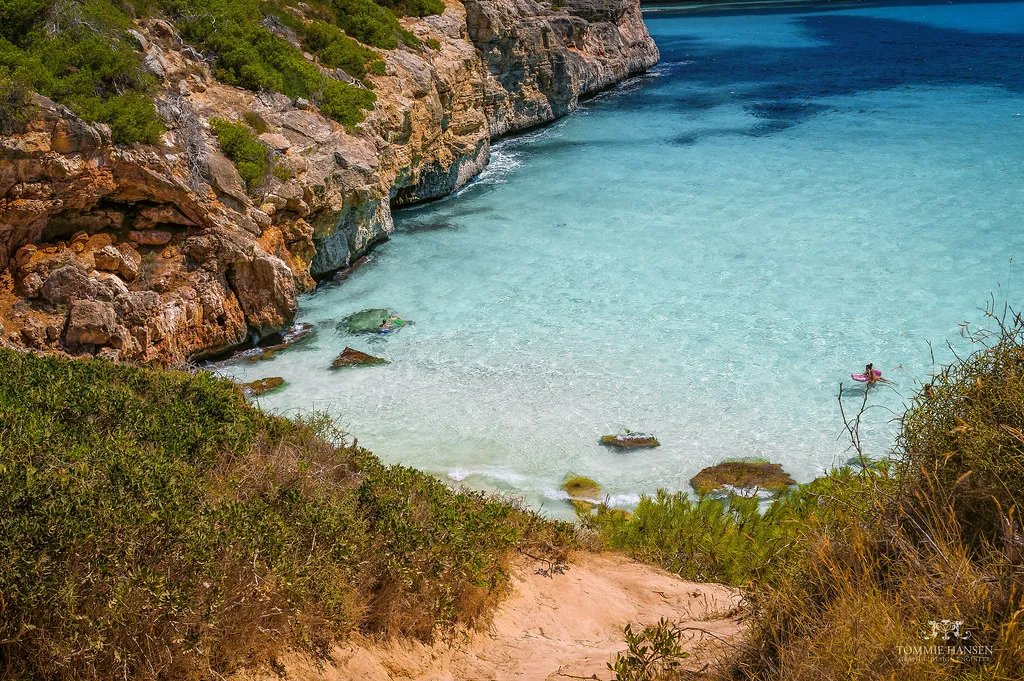
Walk 1.1 km down the paved lane and descend the steep dirt path (wear sturdy shoes) into the turquoise limestone fissure. Next, follow the coastal footpath 200 meters around to Cala S’Almunia to swim off stone slipways and explore the natural rock pool at Sa Cova.
Midday: Fjord-like Inlet & Torre de Cala Pi
Drive 35 km west along the Ma-6014 to Cala Pi. Walk along the clifftop to Torre de Cala Pi, built in 1663 from marés ashlar to protect the anchorage against Barbary corsairs. The view looks straight down the jade-green inlet cutting 400 meters inland between vertical cliffs.
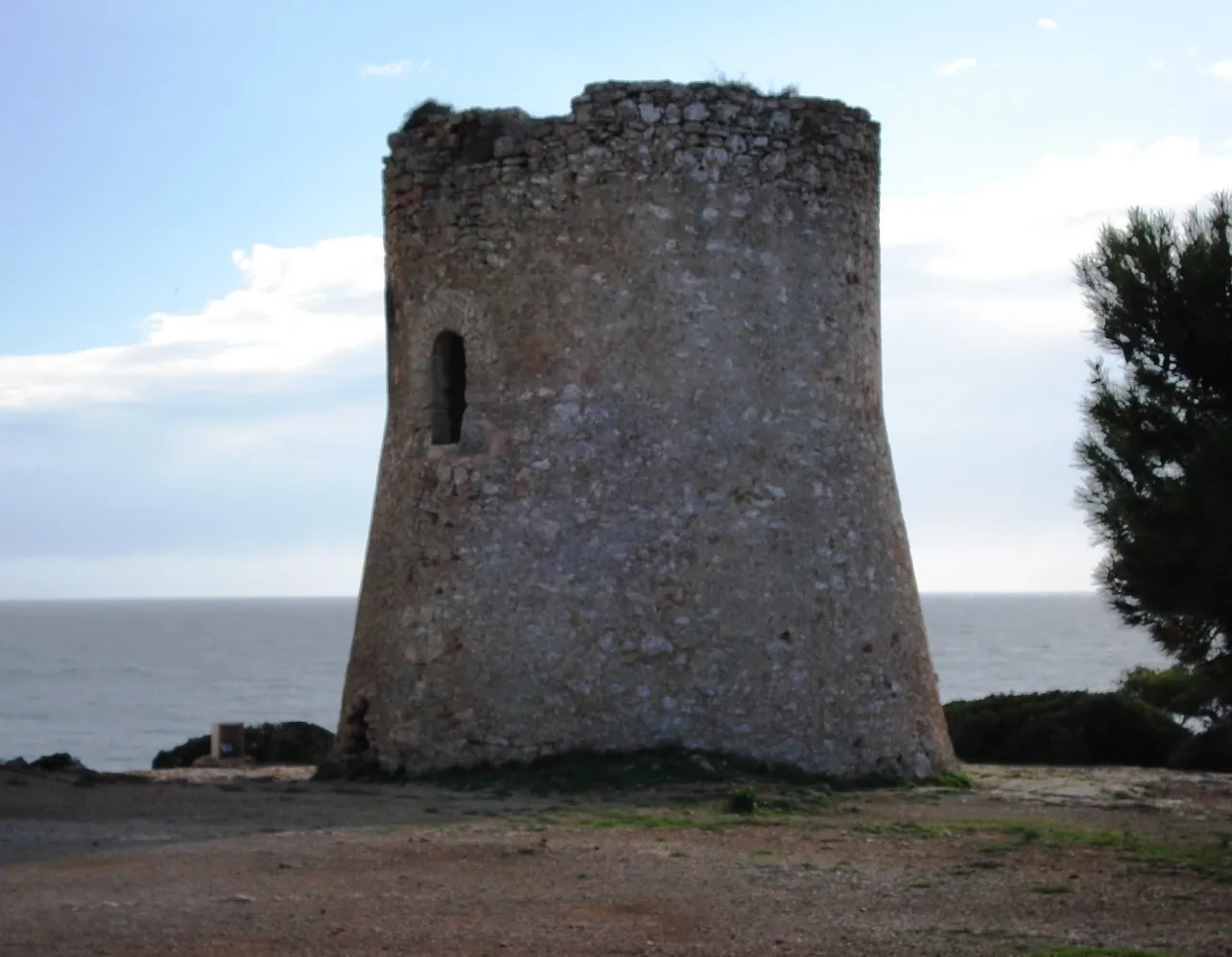
Descend the 147 stone steps to the sandy beach floor for a swim, followed by a paella lunch on a shaded terrace along Carrer Penyes.
Afternoon: Salinas d’Es Trenc & Airport Departure
Stop briefly at Ses Salines d’Es Trenc, where salt pans have operated since Phoenician times (400 BC), to purchase artisanal Flor de Sal. Steer north via the Ma-19 motorway to Palma de Mallorca Airport (PMI), refueling at the Repsol station at Exit 8 before returning your rental car.
Day 7 Ground Truth Metrics
- Driving Distance: 65 km total (to PMI Airport).
- Transit Time: 1 hour 15 minutes.
- Primary Routes: Ma-6102, Ma-6014, Ma-19.
- Parking: Caló des Moro lot (free, arrive by 08:15); Cala Pi street parking (free, fills by 11:30).
- Admissions: Caló des Moro and Cala Pi (free); Torre de Cala Pi (free).
Practical Mallorca Driving & Logistics Guide (2026)
Operating a vehicle in Mallorca requires navigating diverse road classifications, automated radar enforcement, and distinct island driving conditions. Understanding local motoring realities ensures a safe and fine-free journey.
Speed Cameras & Radar Traps
The Directorate-General for Traffic (DGT) and Guardia Civil maintain extensive automated radar systems. Fixed speed cameras monitor the Ma-19 airport motorway (limits 80–100 km/h) and the Ma-13 motorway to Sa Pobla. Average-speed section cameras (radar de tramo) monitor the Túnel de Sóller and Coll de Sóller pass. Unmarked patrol cars equipped with mobile radar also patrol the Ma-10 mountain road. Speeding fines in Spain start at €100, and rental agencies charge €40 to €50 processing fees per citation.
Cyclist Passing Mandate & Mountain Etiquette
As Europe’s premier cycling training ground, Mallorca hosts tens of thousands of riders in spring and autumn. Strict traffic regulations govern vehicle-cyclist interactions:
- 1.5-Meter Clearance: Maintain an absolute minimum lateral passing clearance of 1.5 meters (4.9 feet).
- Speed Reduction: Drop speed at least 20 km/h below the posted limit before initiating an overtaking maneuver.
- Crossing Solid Lines: You may cross a solid white centerline to pass cyclists provided oncoming visibility is clear.
- Mountain Driving: Downshift to 2nd gear for engine braking on steep descents (Sa Calobra, Coll de Sóller) to prevent brake fade. Descending vehicles must yield to climbing traffic on narrow roads. Tap your horn lightly before blind corners on rural stone-walled lanes (camins rurals).
Fuel, EV Charging & Parking Regulations
Fuel stations line major highways; mountain stations in Valldemossa and Sóller charge 5 to 10 cents more per liter. For electric vehicles, the Balearic MELIB public charging network operates over 500 Type-2 and rapid points across municipal lots; download the app before travel.
Observe curb paint markings closely:
- Blue Lines (Zona Blava / ORA): Paid street parking (09:00–14:00 and 16:30–20:00 weekdays). Pay at meters or via the Telpark or ElParking mobile apps.
- White Lines: Free, unrestricted parking.
- Yellow Lines: Prohibited parking; immediate tow-away zones with release fees exceeding €150.
- Green/Orange Lines: Reserved strictly for local residential permit holders (residents).
- Pine Scrub & Dunes: Never park on wild pine verges near calas; environmental officers (Ibanat) issue immediate fines of €100 to €300 for degrading protected coastal ecosystems.
Experiencing Mallorca: Guided Tours, Walking Explorations & Coastal Charters
While an independent road trip offers freedom, pairing self-drive days with curated guided experiences unlocks hidden cultural depths and protected marine waters.
Palma Historical Walking Tours
Palma’s medieval center contains layered history best understood with a local guide. Joining licensed free walking tours allows you to enter private aristocratic courtyards (patios) typically closed to travelers. Expert guides explain the history of the Xuetes (Mallorca’s crypto-Jewish community), decipher stonemasons’ marks on Gothic churches, and guide you through 11th-century Arab bath complexes.
Marine Reserves & Cabrera Boat Charters
Mallorca’s most pristine marine wilderness lies in Cabrera Archipelago National Park, 10 nautical miles off the southern coast. Day boats depart Colònia de Sant Jordi to explore the 14th-century castle on Cabrera Island, swim inside the iridescent Blue Cave (Cova Blava), and snorkel over Posidonia meadows teeming with marine life.
Sea Kayaking & Coastal Sea Caves
Limestone cliffs along the northern and eastern coasts hide sea caves inaccessible on foot. Guided kayaking tours from Port de Pollença or Port de Sóller equip you with sit-on-top kayaks and headlamps to paddle straight into cavernous sea grottos with subterranean pebble beaches.
Inland Wine Tastings in Es Raiguer
Beneath the Tramuntana’s southern slopes lies the Es Raiguer wine country, centered on Binissalem and Santa Maria del Camí. Family-run bodegas (like Bodegas Ribas, operating since 1711) host tastings of indigenous grape varieties: aromatic red Manto Negro and crisp white Moll (Prensal Blanc).
Frequently Asked Questions
Is 7 days enough to see Mallorca properly?
Seven days provides an optimal duration to explore Mallorca’s diverse geographical regions without driving exhaustion. A 7-day loop covers Palma’s historical monuments, the Serra de Tramuntana mountains, the northern peninsulas of Formentor and Alcúdia, eastern karst caves, and southern calas, allowing a balanced rhythm of morning sightseeing and afternoon swimming.
Do I need to rent a car, or can I rely on public transport?
A rental car is strongly recommended for executing this comprehensive itinerary. While Mallorca has a good public transit network of TIB buses and trains (detailed in our Mallorca public transport guide) connecting major towns, reaching remote mountain trailheads, dramatic watchtowers, and secluded coves like Caló des Moro or Cala Pi requires multiple transfers and long unshaded walks.
Should I book a single hotel or split my bases?
Splitting your stay into two distinct bases is strongly advised: Base 1 in the southwest (Palma, Sóller, or Valldemossa) for Days 1 to 4, and Base 2 in the northeast (Alcúdia or Pollença) or southeast (Santanyí) for Days 5 to 7. The Tramuntana mountain range divides the island; crossing it daily wastes 2 to 3 hours in redundant driving. Alternatively, book a central agroturismo in Inca or Santa Maria del Camí near the Ma-13 motorway.
What are the summer driving restrictions for Cap de Formentor in 2026?
Between June 1 and October 31, the Ma-2210 highway from km 8.7 to the Far de Formentor lighthouse is closed to unauthorized private vehicles between 10:00 and 19:00 daily. ANPR surveillance cameras record number plates and automatically issue €200 fines. During restricted hours, take public shuttle bus TIB Line 334 from Port de Pollença or Platja de Formentor. Private cars may drive to the lighthouse before 10:00 or after 19:00.
How difficult is driving the Sa Calobra mountain descent (Ma-2141)?
The Ma-2141 descent to Sa Calobra features 12 hairpin switchbacks and narrow 5.5-meter asphalt without center dividing lines. While fully paved and well-maintained, it requires disciplined engine braking (downshifting to 2nd gear) to avoid brake overheating, and yielding to oncoming tour buses. Descend before 09:15 or after 15:30 to avoid heavy tour bus congestion.
What are the parking rules and fines across Mallorca’s calas?
Designated municipal dirt lots at popular coves like Caló des Moro and Cala Llombards fill rapidly, often by 08:30 in peak summer months. Never park along narrow residential streets with yellow curb lines, across private driveways, or on pine verges. Environmental officers and local police actively tow unauthorized vehicles and levy fines between €100 and €300.
What is the best month of the year to execute this 7-day Mallorca road trip?
The optimal months are May, June, September, and October. Daytime temperatures range comfortably between 22°C and 27°C, sea temperatures remain pleasant for swimming (especially in September and October at 24°C), mountain roads have lighter traffic, and parking at iconic coves is manageable. July and August bring intense heat, heavy crowds, and rapid cala lot closures.