
Most visitors to our island have their eyes fixed firmly on the east coast, specifically teh famous caves of Porto Cristo. While those cavernous halls are impressive, there is a certain quiet dignity to be found right on the doorstep of Palma. I often walk my dog, Cala, through the narrow streets of Génova, a hilltop suburb that smells of wood smoke and grilled lamb. While she enjoys the scent of the carob trees outside, the real treasure of this neighborhood lies thirty-six metres beneath the limestone surface. The Cuevas de Génova are a proper local secret, discovered by accident in 1906 when a landowner was simply trying to find a reliable source of water for his cistern.
The Well that Became a Wonder
The story of these caves is one of pure serendipity. In the early 20th century, Mallorca was a different world, far removed from the international hub it is today. Life was defined by the search for water. When the pickaxe finally broke through the rock at the Barranc estate, the workers didn’t find a subterranean stream, but a vertical drop into a silent, alien world. This discovery changed the trajectory of the village. Unlike the massive *Coves del Drach* which you can read about on our Caves of Drach guide, the Génova caves are vertical and intimate. They feel less like a concert hall and more like a private sanctuary carved by time itself. The geological formations here have been growing for approximately four million years, a timeline that makes our modern worries feel quite insignifcant, mind you.
Génova itself has evolved into Palma’s culinary suburb. It is a place where locals congregate on Sundays for *arròs brut* (a wonderfully messy, soupy rice) or suckling pig. The entrance to the caves is actually part of a restaurant complex, which might seem odd at first, but it is a very Mallorcan way of doing things. You can enjoy a glass of local wine and then descend into the earth. The transition from the Mediterranean sun to the damp, 18-degree air of the galleries is a physical shock that stays with you. It is a place I like to go to. Even though Cala cannot join the descent, she is always happy to wait in the shade of the patio while I take a quick wander through the stone galleries.
| Feature | Detail |
|---|---|
| Maximum Depth | 36 Metres |
| Discovery Year | 1906 |
| Constant Temperature | 18°C – 20°C |
| Tour Type | Self-guided with Audio |
| Location | Carrer del Barranc, 45, Palma |
The 36-Metre Descent and the “Popcorn” Rock
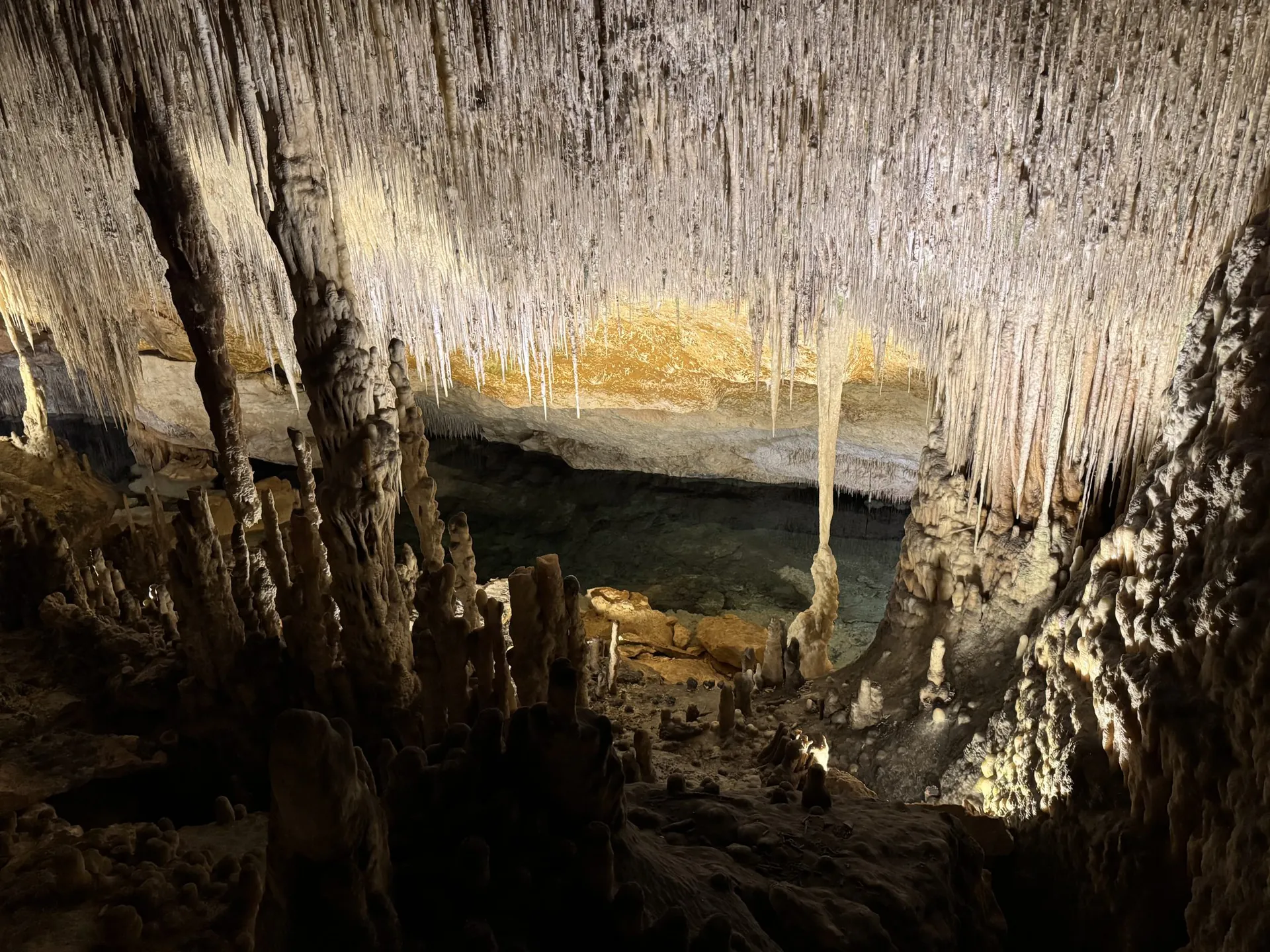
The path through the caves is a series of interconnected galleries linked by steep, winding stairs. This isn’t a place for those with mobility issues, as the steps are often damp and require a steady foot. As you move deeper, the sheer variety of speleothems is remarkable. While you see the standard stalactites and stalagmites, the real draw is the rare *espeleotemas coraloide*. These are coralloid formations, often called “popcorn” or “cauliflower” rock by the locals. They form when water rich in magnesium carbonate seeps through the porous limestone in a very specific way, creating delicate, knobby structures that look more like coral reefs than subterranean stone.
The lighting in the caves has been updated recently to highlight these textures without promoting the growth of algae. It is subtle and effective. Because the groups are kept small—usually no more than 20 or 25 people—you have the space to actually hear the drip of the water. It is a slow, rhythmic sound that reminds you the cave is still alive and growing. If you find the humidity of the Génova caves a bit much, you might prefer the drier air and easier paths of the Coves de Campanet in the north, but for those staying in Palma, this is the most accessible geological wonder available.
The caves gained international fame in the 1930s thanks to Natacha Rambova, the widow of Hollywood legend Rudolph Valentino. She was an artist and scholar who recognized the spiritual and historical value of the site, helping to open it to the public.
Dining at Ses Coves: A Proper Mallorcan Feast
One cannot discuss the Cuevas de Génova without mentioning the restaurant *Ses Coves* [Official Website]. In Mallorca, we believe that any cultural excursion should be followed by a heavy meal. The restaurant specializes in *carn a la brasa* (grilled meats), and the aroma of oak charcoal often drifts down into the first few metres of the cave entrance. It is a popular spot for family celebrations, so if you plan to eat there after your tour, booking a table is a necessity. The menu is a celebration of the island’s interior; you won’t find much “tourist food” here. Instead, look for *frit mallorquí* (a traditional fry-up of liver, potatoes, and peppers) or a plate of local *sobrassada*.
Many visitors ask about the celebrities who live on the island, like Brad Pitt or Michael Douglas. While you probably won’t see them queueing for a cave tour, the neighborhood of Génova is exactly the kind of place where high-profile residents come to eat quietly away from the cameras of the Paseo Marítimo. The atmosphere is grounded and authentic. It is the perfect place to practice your Mallorquín—though a simple “Bon dia” (Good day) or “Gràcies” (Thank you) will suffice, as most locals speak English quite well these days. Just remember that tipping isn’t mandatory here, but leaving a few Euros for good service is a gesture that goes a long way, mind you.
Logistics and Practical Advice for 2026
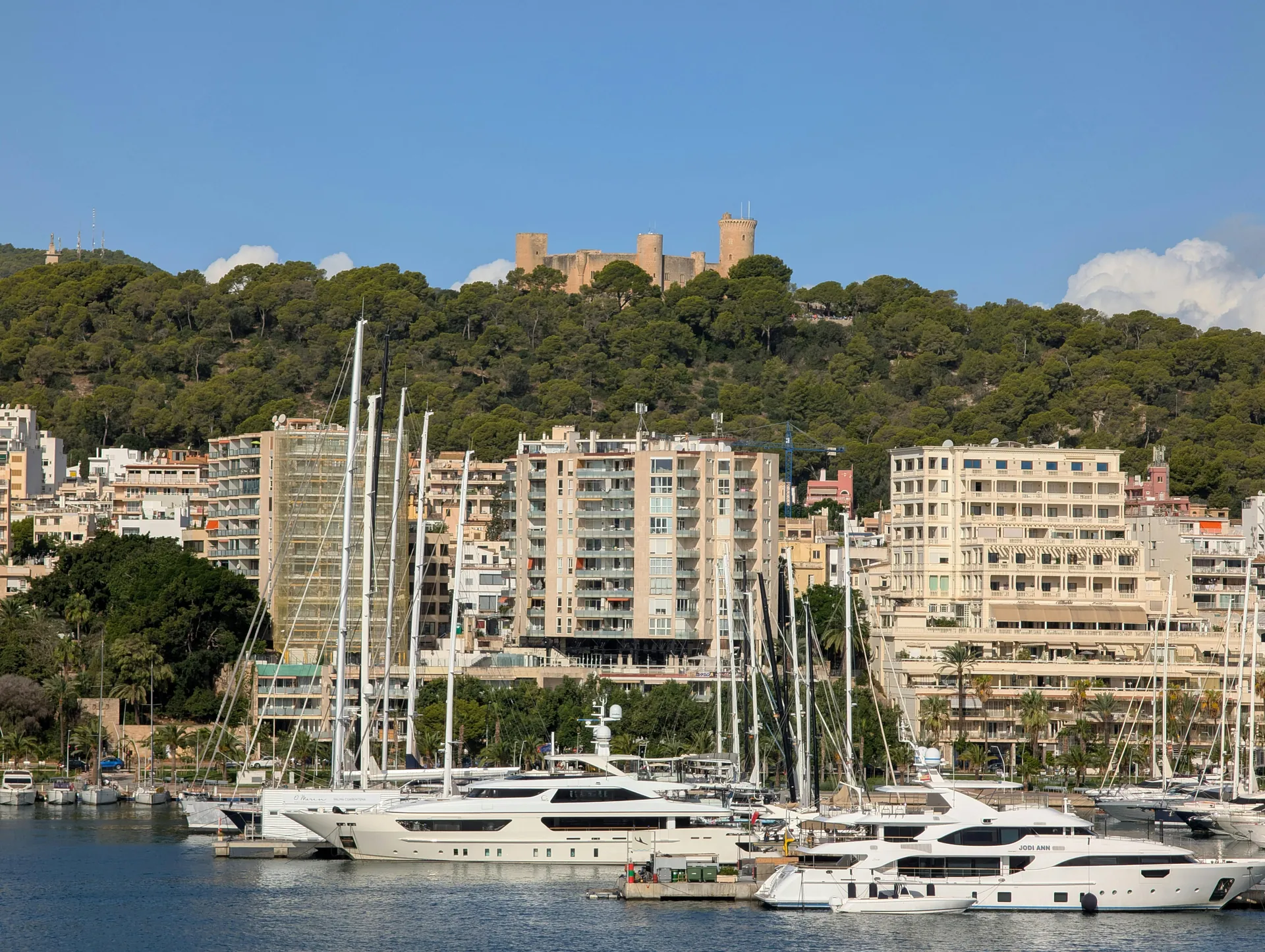
Reaching the caves is straightforward. If you are staying in central Palma, the EMT Bus Line 46 is your best friend. It winds its way up from the city, passing through the shadow of Bellver Castle before reaching the heart of Génova. If you are driving, the route via the Ma-1045 is quick, and the site has its own free parking, which is a rare luxury in the capital. The conection to the city is so good that you can be back at the Palma Cathedral in fifteen minutes.
- Opening Hours: Monday to Sunday, 11:00 AM to 5:00 PM.
- Tickets: Expect to pay around €12.00 for adults. Children under three enter for free, but keep in mind the stairs are quite a challenge for toddlers.
- What to Wear: Even if it is 35°C outside, the caves are cool and very humid. Wear shoes with a proper grip. Flip-flops are a recipe for a slipped disc on those wet limestone steps.
- Language: The digital guides are available in several languages, including English and German as well as Spanish.
The cost of a trip here varies depending on your choices, but a visit to these caves is significantly more affordable than the larger commercial attractions on the island. You get a similar geological experience for a fraction of the price and without the two-hour coach journey. If you are wondering how many days in Mallorca are enough, I always say five to seven days is the sweet spot. It gives you enough time to see the major sights like the Serra de Tramuntana while still having a morning to spend in a place like Génova.
Beyond the Cave: A Walk in the Hills
Once you emerge back into the light, don’t rush back to the beach. The hills behind Génova offer some of the best views of the Bay of Palma. I often take Cala up the trails toward the *Na Burguesa* lookout. From there, you can see the entire sprawl of the city, the masts in the marina, and the shimmering Mediterranean stretching toward Ibiza. It is a reminder that while the caves are a beautiful diversion, the island’s true heart is its landscape. If you are looking for more outdoor inspiration, our guide to the Finca Pública de Galatzó offers even more rugged hiking options for those who want to see the wilder side of the Balearics.
The Cuevas de Génova remain a vital part of our local heritage. They aren’t the biggest, and they don’t have a subterranean lake with a classical orchestra, but they have a soul that the larger sites sometimes lose in the rush of the high season. They are a testament to the island’s geological history and the simple curiosity of a man looking for water over a century ago. Whether you are a solo traveller or a family looking for a quick escape from the heat, these galleries are a fine choice for a morning in Palma.
Spanish Cooking Experience in Mallorca
Horse Riding in Mallorca on the Beach and Forest
Kayaking and snorkeling in the Mondragó Natural Park in Mallorca
Palma de Mallorca and Valldemossa Excursion from Cruise Port
Deluxe Cruise-Friendly Mallorca and Valldemossa Tour
Summary of Visit
If you find yourself in Palma with a free afternoon, make the trip up to Génova. The caves provide a cooling respite and a fascinating look at the “popcorn” rock formations that are so rare elsewhere. Pair the visit with a traditional lunch at the entrance restaurant, and you have experienced a day that is truly Mallorcan. Just remember to hold onto the handrails—the stone has been worn smooth by over a century of curious visitors, and it can be quite a slippery affair if you aren’t paying attention.