
The Sentinel of the Shore: An Introduction to La Almudaina
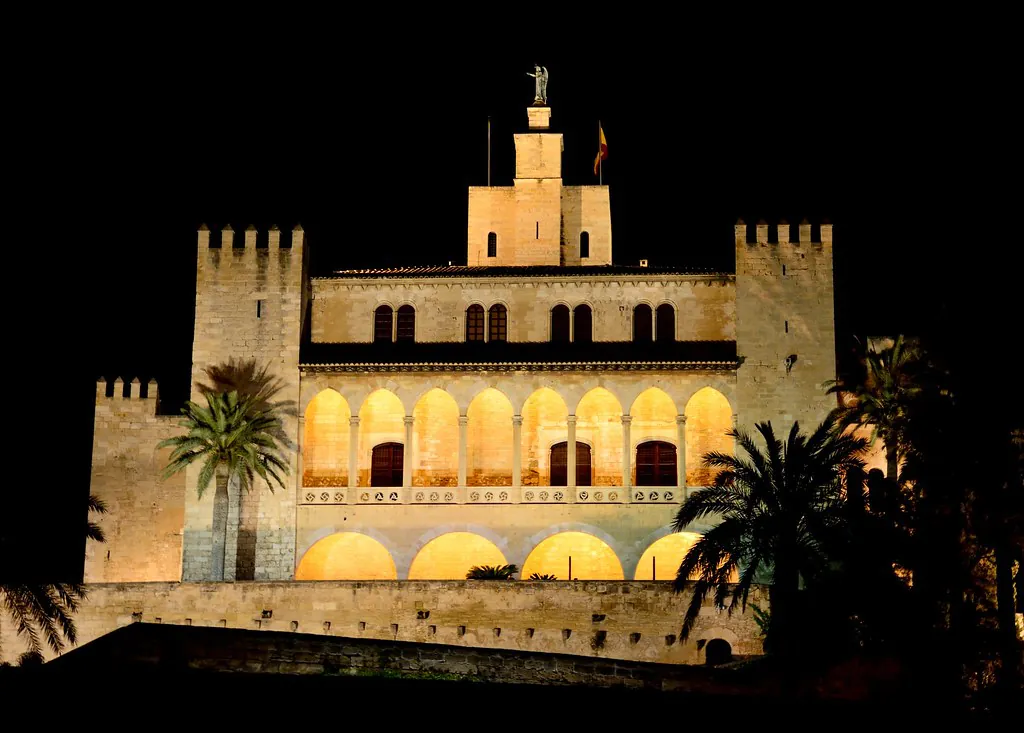
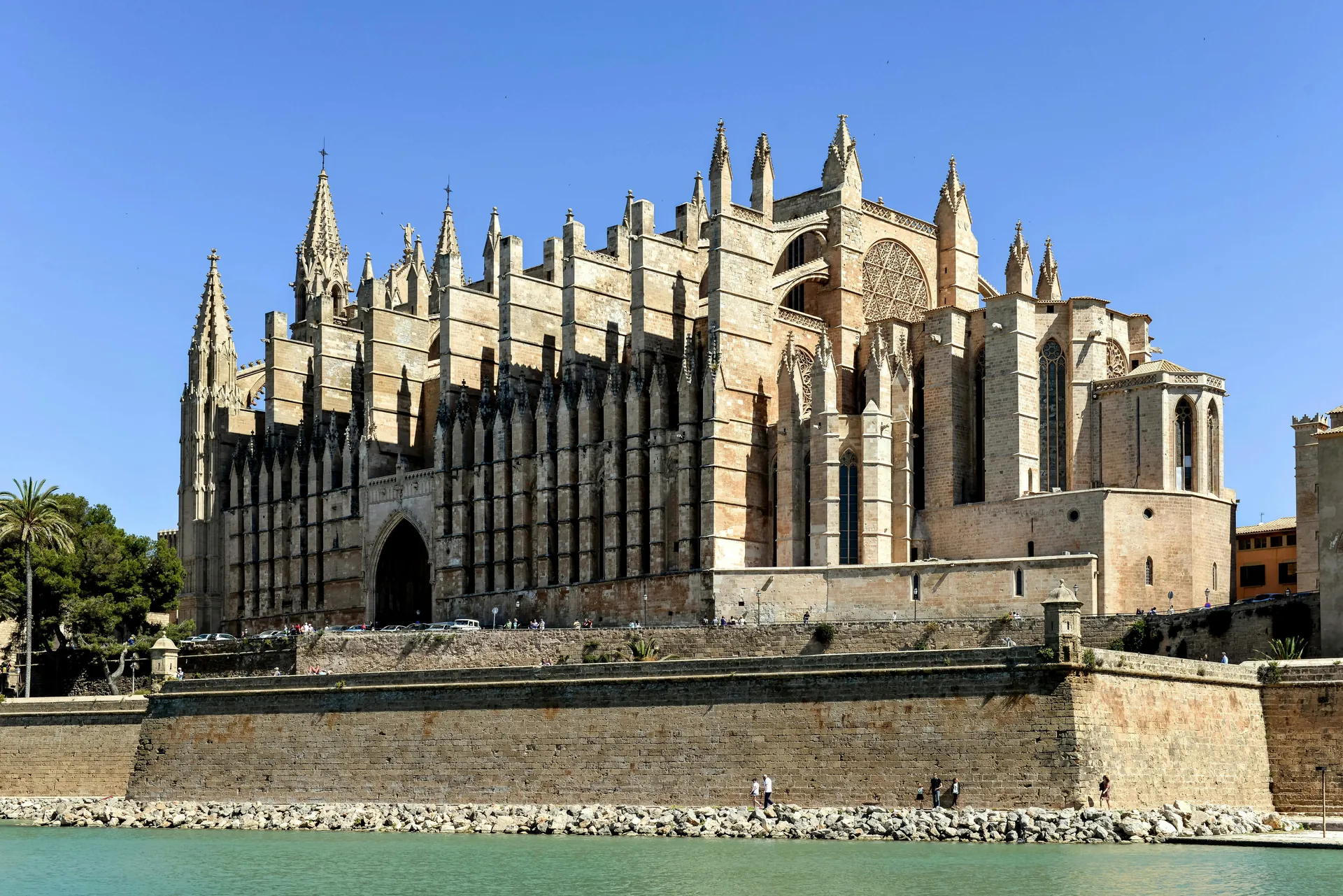
Whenever I walk along the seafront in Palma, the salt air usually carries a certain weight of the past. Standing tall right next to the Palma Cathedral, the Palau Reial de l’Almudaina is the stone-carved memory of our island. It is a site where history is very much alive in. The golden Santanyí stone glows with a particular warmth when the sun begins to dip, reflecting the transition of Mallorca from a Roman outpost to a Moorish citadel, and finally to the royal seat of the Kings of Mallorca. It is not a museum that feels frozen; it is an active royal residence, the official spot where the King of Spain stays when he visits our shores, mind you.
The name itself, Almudaina, comes from the Arabic word for “citadel” or “fortress,” a reminder of the time when the Wali (governor) watched the horizon for ships. Today, it stands as a layered chronicle of architecture. You see the heavy, defensive bones of the Islamic alcázar underneath the elegant Gothic arches and Renaissance flourishes added by the Christian monarchs. It is a place of sharp contrasts, where the cool shade of stone corridors meets the blinding light of the Mediterranean. My dog, Cala, often waits patiently in the gardens below teh palace walls while I lose myself in the quiet of the inner courtyards, though she is much more interested in the fountains than the history of the House of Bourbon.
The Moorish Foundations and Islamic Bones
Long before King James II arrived with his grand Gothic plans, the Moors had already recognised the strategic brilliance of this cliffside. In the 10th century, during the Umayyad Caliphate, they built a formidable fortress here. If you look closely at the lower sections of the walls, you can still see the Islamic influence in the layout and the heavy masonry. The palace was the heart of the Madina Mayurqa, the Islamic city that would eventually become the Palma we know today.
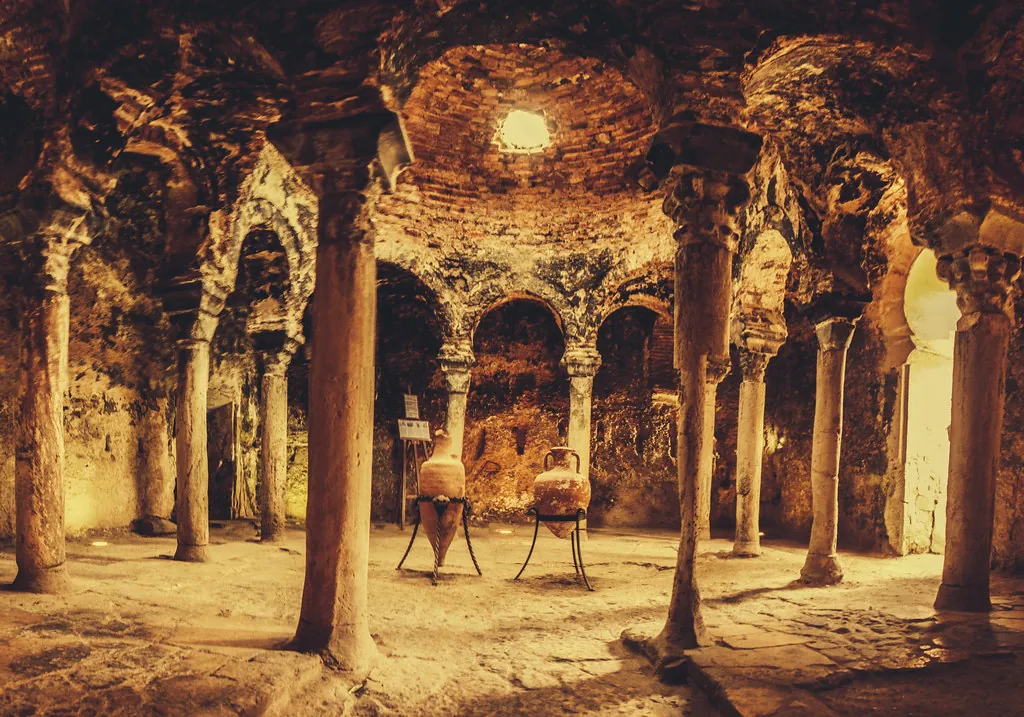
Inside the palace, the traces of this era are subtle but profound. The private baths of the Moorish governors remain as a quiet sanctuary of brick and light. While they are smaller than the public Banys Àrabs found deeper in the city, they provide a much more intimate glimpse into the daily life of the rulers of Islamic Mallorca. The way the light filters through the star-shaped openings in the ceiling creates a pattern on the stone that has not changed in a thousand years. It is a proper connection to a vanished world.
The Islamic Alcázar
Built as the primary defensive structure for the Moorish governors, the original fortress featured thick walls and strategic viewpoints over the bay to protect against maritime incursions.
The Christian Transformation
After the conquest, the structure was stripped of its purely defensive nature and reshaped into a residence that reflected the prestige of the new Mallorcan monarchy.
James II and the Gothic Transformation
The 14th century brought a massive shift for the palace. King James II, the first true King of Mallorca, decided that the old fortress was far too austere for his court. In the early 1300s, he and his successors commissioned a reconstruction that would define the palace’s silhouette for the next seven centuries. He wanted a residence that would rival the great courts of Europe, so he introduced the soaring arches and the verticality of the Gothic style. This was the era when the Saló del Tinell was born, a grand hall designed for the high ceremony of the medieval world.
Walking through the upper floors today, you feel the weight of this royal ambition. The rooms are high, the walls are thick, and the atmosphere is one of deliberate power. James II was responsible for the structural skeleton that we see today, ensuring that the palace was both a home and a statement of independence for the short-lived Kingdom of Mallorca. According to the [Official Website] of the Patrimonio Nacional, this period represents the most significant architectural evolution in the site’s long history.
The Angel of the Almudaina
If you look up at the highest tower of the palace, the Torre de l’Àngel, you will see a figure watching over the city. This is the Àngel de l’Almudaina, a weathercock representing the Archangel Gabriel. The original was crafted in the 14th century, though the one spinning in the wind today is a 19th-century replica. For us locals, the angel is a constant. It has seen the city grow from a medieval port into a modern capital, and it remains one of the most iconic parts of the Palma skyline. It is said that the angel holds the keys to the city, a symbolic guardian against the storms of the Mediterranean.
The Archangel Gabriel has stood atop the palace for centuries, a silent witness to the changing tides of Mallorca’s history and a beacon for the sailors returning to the bay.
The Chapel of Saint Anne
The Capella de Santa Anna is perhaps the most beautiful room in the entire complex. It features a Romanesque portal made of Santanyí stone, which is quite rare for Mallorca. Most of our religious architecture is purely Gothic, but this chapel retains a certain sturdy, rounded elegance that feels older and more grounded. The portal is decorated with various mythological creatures and floral motifs that suggest a Northern European influence, likely brought over by the craftsmen the King employed. Inside, the space is small and sacred, a stark contrast to the massive scale of the cathedral next door.
The air inside the chapel is always a few degrees cooler, and the silence is heavy. It was the private place of worship for the royal family, and you can still feel that sense of exclusivity. The altar and the reminaing stonework are remarkably preserved, offering a quiet moment of reflection away from the busy streets of the old town. It is one of those spots where you can truly hear the echoes of the past if you stay still long enough.
The Saló del Tinell and the Royal Apartments
The Saló del Tinell is the heart of the palace’s public life. This massive hall is divided by great diaphragm arches that support a wooden ceiling, a classic example of Catalan Gothic architecture. It was here that the kings received ambassadors and held grand banquets. Today, the hall is still used for official state receptions when the Spanish King is in residence. The room is vast, and the acoustics are such that even a whisper seems to travel across the stone floor. It is a proper space for the business of ruling.
Beyond the grand halls lie the Royal Apartments. These rooms are decorated with a magnificent collection of Flemish tapestries from the 16th and 17th centuries. These woven chronicles depict historical battles, mythological scenes, and the triumphs of the Spanish Empire. The detail in the weaving is incredible; you can spend an hour just tracing the threads of a single scene. While the furniture in these rooms has changed over the centuries to reflect the tastes of the Habsburgs and later the Bourbons, the sense of royal dignity remains constant. It is worth noting that these rooms are still used for official duties, so they have a polished, lived-in feel that many historical palaces lack.
The Patio de Armas: Where Worlds Meet
The Patio de Armas, also known as the Patio of Honour, is the central courtyard where the palace’s different histories converge. Here, the Moorish arches of the lower levels support the Gothic galleries above. It is a wide, open space that was once the scene of military drills and royal processions. In the centre, a fountain provides a gentle soundtrack to the visit. The sunlight in the courtyard is often intense, highlighting the textures of the stone and the intricate carvings on the columns. It is the best place to stand and appreciate the sheer scale of the building.
This courtyard also serves as the entrance to the Royal Palace. When you stand here, you are literally surrounded by the layers of Palma’s identity. To one side, you have the defensive walls that once held off invaders; to the other, the elegant residence of a modern monarchy. It is a crossroads of time, and if you visit during the late afternoon, the shadows of the arches stretch across the patio in a way that feels almost cinematic.
S’Hort del Rei: The King’s Gardens
Just below the palace walls lies S’Hort del Rei, the King’s Orchard. While these gardens were extensively redesigned in the 1960s by Gabriel Alomar, they sit on the site of the original medieval gardens. It is a public space now, and one of my favourite places to walk Cala. The gardens are a series of terraces, fountains, and shaded walkways that provide a much-needed escape from the heat of the city. You will find modern sculptures here, including Joan Miró’s “Egg” (L’Ocell), which sits comfortably alongside the ancient stone walls. Miró spent much of his life on the island, and his work is a vital part of our modern culture, as seen at the Fundació Pilar i Joan Miró.
The most striking feature of the garden is the Arc de la Drassana (Shipyard Arch). This is an original Moorish archway that once spanned a canal, allowing the sea to reach the very walls of the palace. It is a reminder that Palma was once much more connected to the water than it is today. The sound of the water in the fountains and the scent of the orange trees make it a proper Mediterranean sanctuary. Even in the height of summer, the gardens remain cool and inviting.
The Changing of the Guard
If you happen to be in Palma on the last Saturday of the month, you should make your way to the palace for the Changing of the Guard. This ceremony takes place at noon and is a colourful display of military tradition. The soldiers wear uniforms that date back to the early 19th century, specifically the 1808 era of the Mallorca Regiment. It is a formal, disciplined affair with drum rolls and shouted commands that echo off the palace walls. It is a bit of a spectacle, mind you, and it always draws a crowd of both locals and visitors. It is a reminder that the palace is not just a relic, but a functioning part of the state’s ceremonial life.
Practicalities for the 2026 Traveller
Visiting La Almudaina is straightforward, but a little planning goes a long way. The palace is managed by Patrimonio Nacional, and security is appropriately tight. You will need to pass through a metal detector, and large bags must be left in lockers. The palace is usually less crowded than the cathedral, but it is still wise to go early in the morning or about two hours before closing to avoid the largest groups. The light in the late afternoon is also much better for photography, as it hits the golden stone of the facade directly.
| Ticket Type | Price (May 2026) | Conditions |
|---|---|---|
| Standard Admission | €7.00 | General public |
| Reduced Admission | €4.00 | Seniors 65+, Students < 25, Children 5-16 |
| Free Entry | €0.00 | EU Citizens Wed & Sun (15:00-19:00) |
| Audio Guide | €4.00 | Available in multiple languages |
The opening hours for the summer season (April to September) are Tuesday to Sunday, 10:00 to 19:00. The palace is always closed on Mondays. If you are an EU citizen, take advantage of the free entry windows on Wednesday and Sunday afternoons, though be prepared for slightly longer queues during these times. For more detailed information on local events and holiday closures, the [Palma City Council] website is a reliable resource.
Accessibility and Visitor Tips
Most of the palace is accessible to those with limited mobility, as there is a lift that provides access to the upper floor (the Royal Apartments). However, the ground floor courtyards and the Arab baths have some uneven stone surfaces that can be a bit tricky. I recommend wearing comfortable, flat shoes; the stone floors have been polished by millions of feet over the centuries and can be surprisingly slippery. If you are planning a full day of sightseeing, you might want to look into our Mallorca Public Transport Guide to see how to reach the palace from other parts of the island without the hassle of parking in the old town.
- Footwear: Wear rubber-soled shoes to navigate the smooth stone floors safely.
- Photography: Photos are allowed in the courtyards and chapel, but restricted in the Royal Apartments.
- Best Time: Visit between 10:00 and 11:00 or after 17:00 to avoid the cruise ship crowds.
- Security: Be prepared for a quick security check at the entrance; avoid bringing large backpacks.
A Living Palace: Reflections on La Almudaina
La Almudaina is more than just a collection of rooms and tapestries. It is the architectural anchor of Palma. While the cathedral next door represents our spiritual history, the palace represents our political and social evolution. It is a place where you can stand in a 10th-century bathhouse while the King of Spain works in an office just a few dozen metres away. This continuity is what makes Mallorca so special; we don’t tear down the old to make room for the new; we simply build on top of it. It is a site that history is very much alive in, and no visit to Palma is complete without walking through its gates.
Spanish Cooking Experience in Mallorca
Horse Riding in Mallorca on the Beach and Forest
Kayaking and snorkeling in the Mondragó Natural Park in Mallorca
Palma de Mallorca and Valldemossa Excursion from Cruise Port
Deluxe Cruise-Friendly Mallorca and Valldemossa Tour
After your visit, I suggest walking through the gardens of S’Hort del Rei and heading towards the sea. The view of the palace from the Parc de la Mar is the one you see on all the postcards, and for good reason. It is the perfect place to sit, perhaps with a traditional ensaimada from a local bakery, and watch the light change on the walls. If you are hungry for more local flavours after your tour, you can check out our guide to Traditional Mallorcan Foods for the best spots to eat in the old city.