
The Soul of Rural Mallorca: A Visit to the Museu Etnològic de Muro
Muro sits away from the coast, a town where the wind smells of dry earth and ancient stone. While many visitors rush to the nearby sands of Playa de Muro, the town centre holds a quiet gravity. The Museu Etnològic de Muro is teh place where the island’s memory lives. It occupies Can Simó, a manor house from the 1600s that feels more like a home than a gallery. I often walk past these walls with my dog, Cala, and the thick sandstone always feels cool, even when the sun is at its peak. This is not a place of modern art or digital screens; it is a collection of the tools, clothes, and rooms that defined Mallorcan life for centuries. This museum is an extension of the [Museu de Mallorca](/places/museo-de-mallorca/) in Palma, but its focus is strictly rural. People often ask why Mallorca is so famous. Beyond the turquoise water, the answer is in the deep, stubborn resilience of the people who worked the *Pla de Mallorca* (the central plain). This building shows you how they survived, how they celebrated, and how they turned a rugged island into a home.| Detail | Information |
|---|---|
| Location | Carrer Major, 15, 07440 Muro |
| General Admission | Free |
| Reduced (Seniors/Students) | Free |
| Free Entry | Tuesday – Saturday (Always Free) |
| Contact | +34 971 86 06 47 |
The Architecture of Can Simó
The house itself, known as the Casal de Can Simó, is a masterpiece of *arquitectura popular*. You enter through a massive arched doorway into a courtyard that serves as the lungs of the estate. In the center sits a *noria*, a traditional water wheel once driven by a mule. This system was the lifeblood of the house, drawing water from a deep well to irrigate the garden and supply the kitchen. Mind you, the stone paving in the courtyard is original, so watch your step if you are wearing thin sandals.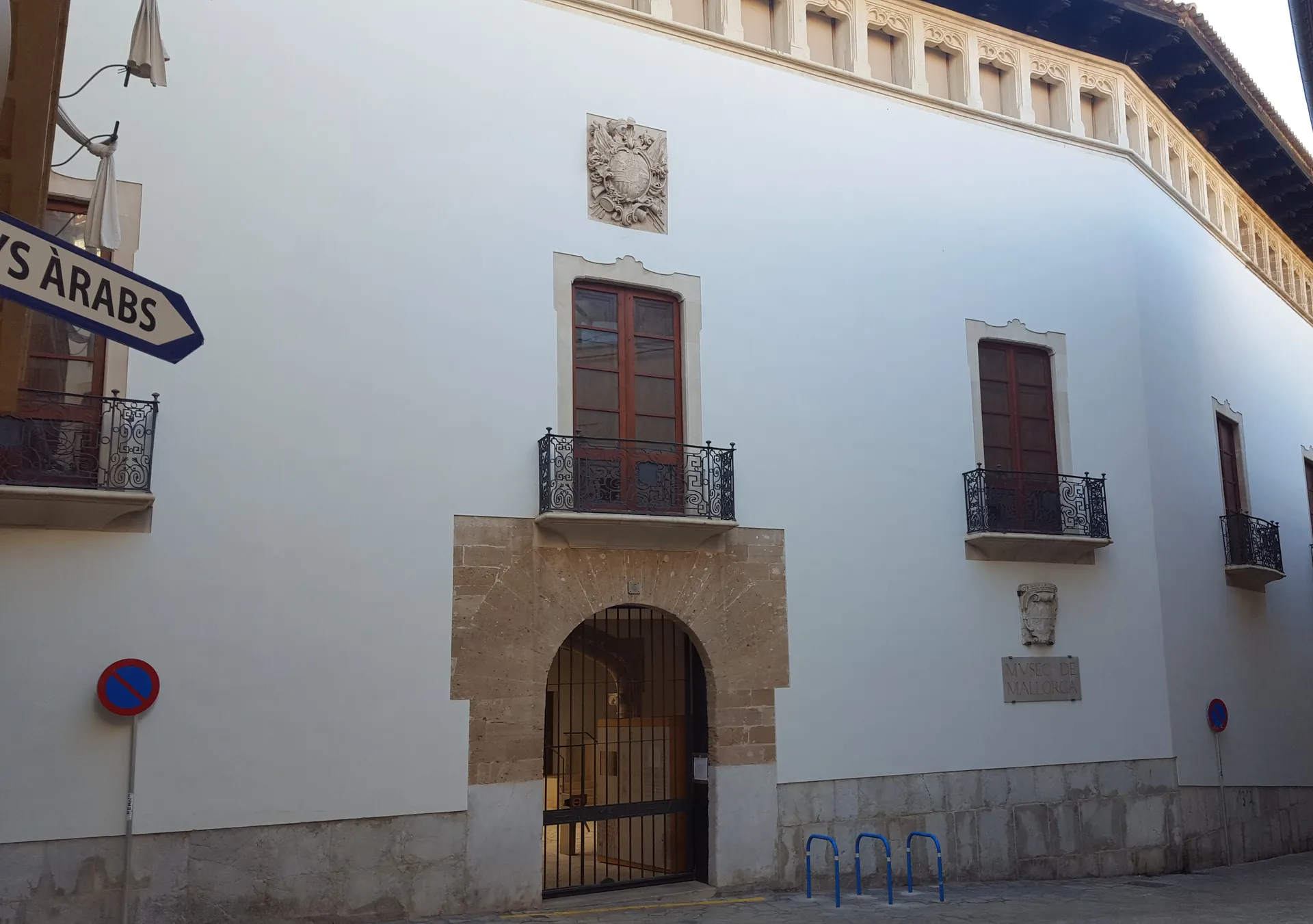
The Heart of the Home: The Traditional Kitchen
If you want to understand the [traditional foods of Mallorca](/traditional-mallorcan-foods/), you must see the kitchen at Can Simó. It is a large, open space with a fireplace that occupies an entire wall. This was where the *sobrassada* (cured pork paste) was hung to dry and where the family gathered during the short, sharp winters of the *Pla*. The shelves are lined with ceramic pots and copper pans that have a patina only a century of use can create.Next to the kitchen is the *apoticaria*, a 19th-century pharmacy that was moved here from the village. It is one of the most beautiful rooms in the museum. The walls are covered in dark wood shelving holding hundreds of ceramic jars, each labelled in elegant script. These jars held the herbs and minerals used to treat everything from fevers to heartache. It feels like a stage set, mind you, but every bottle was once part of a working business that served the families of Muro.Local Tip: If you visit on a Sunday, the museum is closed, but the Muro market is active in the nearby streets. It is the best time to buy local honey and almonds before the heat of the afternoon sets in.
Upper Floor Living
The first floor is where the family lived. The rooms are grander, with high ceilings and heavy furniture made of dark Mallorcan oak. You can see the *botons* (traditional silver buttons) used on waistcoats and the delicate *rebosillo*, the lace head covering worn by women for church. It is a glimpse into a world that was formal and deeply religious.The Siurells Collection
One room is dedicated to *siurells*. These are small clay whistles painted white with red and green splashes. They are one of the best souvenirs you can find in Mallorca. Historically, they were used by shepherds to call their flocks, but they also have a mythological history linked to ancient Phoenician gods.The Garden and the Siurells
Behind the house is a small garden planted with the same species that would have been here three hundred years ago. There are citrus trees, herbs, and a collection of larger agricultural machinery. Cala loves the garden because it is shaded and the stone walls keep the air still. It is a good place to sit and think about the pace of life before the arrival of the motor car. The museum shows the transition from animal power to the first mechanical threshers, a change that happened much later here than in the rest of Europe.The museum is a quiet rebellion against the fast-paced tourism of the coast. It asks you to slow down and look at the grain of the wood and the weight of the stone.
Practical Information for Your Visit
Getting to Muro is easy if you have a car, but you can also use the [TIB Public Transport](/mallorca-public-transport-guide/) network. The train from Palma stops at the Muro station, but it is a bit of a walk into the town centre from there. I recommend the bus if you want to be dropped closer to the Carrer Major.| Day | Hours |
|---|---|
| Tuesday – Saturday | 10:00 – 14:00 |
| Thursday (Afternoon) | 15:00 – 18:00 |
| Sunday & Monday | Closed |
Explore More of Mallorca
If Muro has whetted your appetite for the island’s history, there are several other sites that connect the dots of our heritage.- For Ancient History: Visit the [Talayot de Ses Païsses](/places/talayot-de-ses-paisses/) to see how the island’s first inhabitants lived.
- For Religious Art: The [Santuari de Cura](/places/santuari-de-cura/) offers a look at the spiritual life of the island with incredible views.
- For Coastal Defense: The [Torre del Verger](/places/torre-del-verger/) shows the flip side of Mallorcan history: the need to watch the horizon for pirates.
Family Friendly
🇺🇸
Spanish Cooking Experience in Mallorca
Nature Lovers
🇺🇸
Horse Riding in Mallorca on the Beach and Forest
Bestseller
🇺🇸
Kayaking and snorkeling in the Mondragó Natural Park in Mallorca
Family Friendly
Bestseller
🇺🇸
Palma de Mallorca and Valldemossa Excursion from Cruise Port
Best Value
🇺🇸