
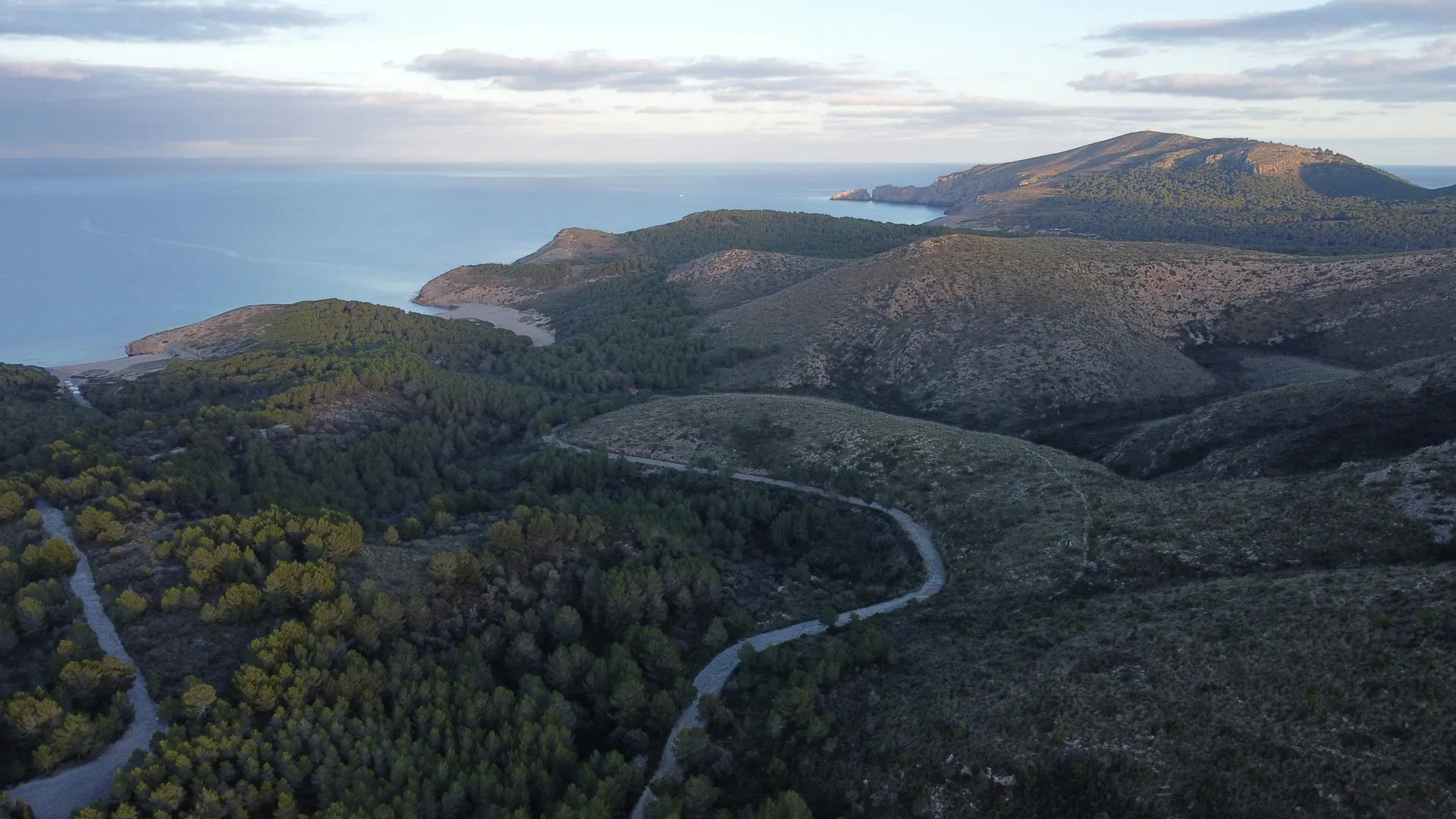
The north of Mallorca has a way of hiding its best secrets behind long, winding roads and the salt-crusted wind of the Mediterranean. When you leave the medieval walls of Alcúdia and drive toward the rugged peninsula of Victoria, the world begins to change. The tourist shops disappear. The noise of the resorts fades into the background. You find yourself on a narrow track where the pines lean over the road as if they are whispering. This is the path to the Museu Sa Bassa Blanca, a place that is less of a traditional gallery and more of a private dream made manifest on the edge of the sea.
The Vision of Yannick and Ben
It is impossible to discuss this estate without talking about Yannick Vu and Ben Jakober. They are the artists and collectors who transformed this remote coastal plot into a sanctuary for heritage. They established the Fundación Yannick y Ben Jakober with a specific goal in mind: to preserve art and nature in a way that feels intimate rather than institutional. The estate was once a simple farm, but today it is a sprawling complex where the boundaries between the cultivated garden and the wild scrubland of the coast are almost invisible.
Walking through the grounds, you feel the weight of their personal history. Yannick is a painter and sculptor of great depth, and Ben has a background that spans continents. Together, they have curated a collection that is eccentric and deeply moving. It is a proper reflection of their lives. They live on-site, and you can sense their presence in the way a stone is placed or how the old roses are trimmed. It is a project of “slow art,” where the goal is not to rush through a checklist but to sit and exist within the space. Mind you, this is not a place for those in a hurry to get back to the beach bar.
The Hassan Fathy House: An Architectural Masterpiece
The heart of the estate is the main house, which is a work of art in its own right. It was designed in 1978 by teh famous Egyptian architect Hassan Fathy. He is known for his “architecture for the poor” and his use of traditional materials, but here, he created something regal and timeless. The building is a Hispano-Moresque white fortress with battlements and internal courtyards that keep the air cool even in the height of August. It is one of the few examples of Fathy’s work in Western Europe, and its presence on a Mallorcan cliffside is nothing short of extraordinary.
Local Tip: You must book the guided tour for the house in advance. You cannot simply wander in. The interior holds a 15th-century Mudejar coffered ceiling from Tarazona that will leave you speechless. It is a proper piece of Spanish history that survived centuries only to find a home here by the sea.
Inside, the house has a rhythm of light and shadow. The windows are small to keep out the heat, but the light that does enter is deliberate. It hits the white walls and the tiled floors in a way that feels sacred. Fathy’s philosophy was about harmony with the environment, and you see that in how the building sits on the land. It does not dominate the coast; it belongs to it. For those interested in how we might live more sustainably without sacrificing beauty, this house is a vital study. If you have visited the Fundació Pilar i Joan Miró in Palma, you will recognise a similar spirit of architectural intentionality here.
The Nins Collection: Portraits of Childhood
Beneath the surface of the estate lies the *Aljibe*, a former underground water cistern that has been converted into a gallery. It is here that you find the Nins Collection. This is a series of 167 portraits of children, mostly from the 16th to 19th centuries. These are not modern, smiling photos. They are formal paintings of European royalty and nobility, often dressed in stiff, adult-like clothing. There is a haunting quality to these faces. You see the future kings, queens, and tragic figures of history before life had its way with them.
The space itself is dark and cool, which helps preserve the delicate canvases. The lighting is focused solely on the portraits, making the children seem to float in the darkness. It is an experience that stays with you long after you leave. The collection has been declared a Catalogued Asset of the Balearic Islands because of its historical importance. It is a rare chance to see how childhood was perceived—and often restricted—in the courts of Europe. It is a place I love to take my dog to, though she has to wait outside in the shade, mind you.
SoKraTES: The Experimental Space
If the Nins collection is about the past, the SoKraTES space is about the eternal dialogue between civilizations. This gallery is an exercise in juxtaposition. When you enter, you are greeted by a massive Swarovski crystal curtain, which is seven metres wide and contains 10,000 crystals. It glitters like a frozen waterfall. Right next to this modern luxury is the fossilised skeleton of a prehistoric woolly rhinoceros from the Pleistocene era. It sounds like it shouldn’t work, but it does. The museum asks us to consider the connection between the ancient earth and our modern desires.
The “dialogue between civilizations” is not just a theme; it is the physical reality of the SoKraTES gallery, where a 2,500-year-old Greek helmet sits near contemporary masterpieces.
There are works by contemporary giants like Miquel Barceló and Gerhard Merz here as well. The curators have an eye for the profound. They place tribal masks from Africa alongside gold from the pre-Columbian era. It is a reminder that humans have always sought to create beauty, regardless of the century or the continent. This is the kind of artistical depth that makes Sa Bassa Blanca stand out from the more commercial galleries you might find in the busier parts of the island.
The Sculpture Park: Granite Giants
Outside, the art continues in the Sculpture Park. This is where I spend most of my time with Cala. She isn’t much for 17th-century oil paintings, but she loves the smell of the wild rosemary in the park. The grounds are populated by monumental granite animal sculptures. These are massive, heavy works inspired by the art of Antiquity—Egypt, Mesopotamia, and the East. You will find a giant bull, a granite hippopotamus, and a towering dog that looks like it is guarding the entrance to another world.
The sculptures are tactile. You are encouraged to walk among them, to touch the rough stone, and to see how they change colour as the sun moves across the sky. Because they are made of granite, they have a permanence that feels right for this rugged coast. They are survivors. In the spring, the park is a beautifull riot of wildflowers, and in the autumn, the light turns a deep gold that makes the stone animals look alive. It is a wonderful way to experience art without the hushed, sterile atmosphere of a typical museum.
2026 Practicalities: Hours and Entry Options
Planning a visit to Sa Bassa Blanca requires a bit of foresight. It is not a place you just stumble upon while looking for a beach. The museum has a tiered ticketing system, so you should decide what you want to see before you arrive at the gate. If you want the full experience, the “Complete Visit” is the way to go, but make sure you have at least three or four hours to spare. The official information is available on the [Official Website](https://www.msbb.org).
| Ticket Type | General Price | Reduced Price |
|---|---|---|
| Complete Visit (House + Galleries + Park) | €38.00 | €28.00 |
| Hassan Fathy House Guided Tour | €28.00 | €20.00 |
| Galleries Only (Nins + SoKraTES + Park) | €12.00 | €10.00 |
| Sculpture Park & Rose Garden Only | €7.00 | €5.00 |
The museum is open Tuesday to Saturday, from 10:00 to 18:00. Note that they are closed on Sundays and Mondays, which is a common trap for visitors. If you are coming in the winter months (November to February), the museum itself closes at 17:30, meaning the galleries shut thirty minutes earlier at 17:00. Children under the age of seven get in for free, and there are discounts for residents, seniors, and students. It is worth every cent for the peace you find here.
The Journey: Navigating the Road to Es Mal Pas
Getting here is part of the adventure. From the town of Alcúdia, you follow the signs for “Mal Pas” and “Coll Baix.” The road is paved at first, winding through residential areas and past the small harbour of Cocodrilo. Eventually, the asphalt gives way to a compacted dirt track. It is perfectly drivable in a standard car, but you should take it slow. The dust will kick up, and you might encounter a few potholes. Just follow the magenta signs; they are your breadcrumbs in the forest.
Parking is free and located behind a large green gate that opens automatically as you approach. There is no public transport that reaches the museum. If you do not have a car, a taxi from Alcúdia is your only real option. It should cost around €15 to €20 each way. If you are a hiker, you can walk from the Ermita de la Victòria, but it is a proper trek, so bring plenty of water and wear sturdy boots.
Visiting with Children
While many art museums are a nightmare for parents, Sa Bassa Blanca is surprisingly welcoming for families. The Sculpture Park is a natural playground. Children can run between the stone animals and explore the Rose Garden, which has over 100 varieties of old roses. The Nins collection often fascinates older children because the subjects are people their own age, albeit from a different world. It is an education in history without the boredom of a classroom. The open space allows kids to be kids, provided they respect the art and the silence of the galleries.
The Local Loop: Combining Art with the Coast
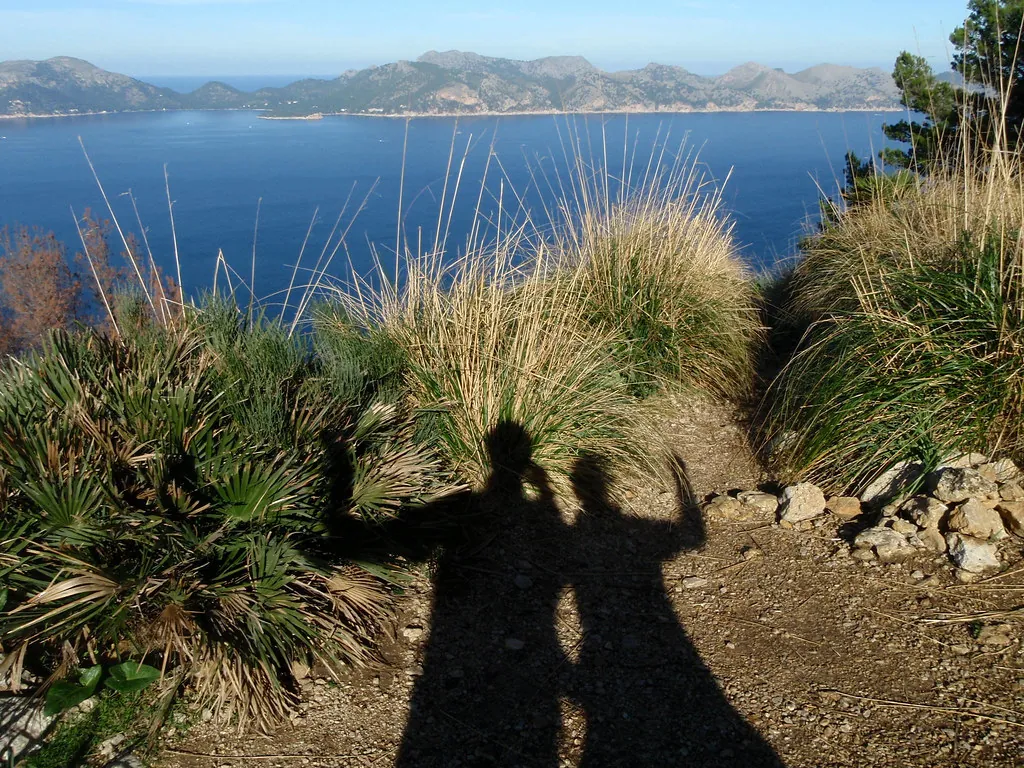
Since you are already out on the peninsula, it is a shame not to see the rest of the area. After your museum visit, you can head further down the track to the trailhead for Platja de Coll Baix. It is one of the most beautiful beaches on the island, reachable only by a 45-minute hike down a steep cliff. It is rugged, wild, and the water is a shade of blue that doesn’t seem real. If you prefer something less strenuous, the views from the Mirador de la Victòria are some of the best in Mallorca, looking out over the Bay of Pollença toward Formentor.
For a bit of local flavor, stop in the village of Es Mal Pas for a late lunch. There are a few small restaurants near the marina that serve proper Mallorcan seafood. It is a quiet corner of the island that hasn’t changed much in decades. This is the Mallorca that celebrities like Brad Pitt or Michael Douglas come to find—the quiet, unpretentious side of the Mediterranean. It is a far cry from the “party island” reputation that some parts of Mallorca have. Here, the only party is the sound of the cicadas in the trees.
Spanish Cooking Experience in Mallorca
Horse Riding in Mallorca on the Beach and Forest
Kayaking and snorkeling in the Mondragó Natural Park in Mallorca
Palma de Mallorca and Valldemossa Excursion from Cruise Port
Deluxe Cruise-Friendly Mallorca and Valldemossa Tour
Final Reflections: Why Sa Bassa Blanca Matters
In a world that is increasingly digital and fast-paced, Sa Bassa Blanca is a necessary pause. It reminds us that art is not just something to be consumed; it is something to be lived with. The Jakober foundation has created a legacy that protects the soul of Mallorca. Whether you are looking at a 10,000-year-old fossil or a 21st-century crystal curtain, you are forced to slow down. You listen to the wind in the pines and the waves on the rocks below. It is a sanctuary in every sense of the word. When I leave, driving back down that dusty track with Cala sleeping in the back, I always feel a little more human than when I arrived. That is the power of this place.
If you have more time to explore the island’s cultural landscape, I highly recommend visiting the [City Council of Alcúdia](https://www.alcudia.net) portal for local event listings, or checking out the [Balearic Islands Government](https://www.caib.es) site for more on the region’s protected historical assets. Mallorca is a place of deep layers; you just have to be willing to drive a little further to find them.