
A Sanctuary Above the Sea
People often ask me which part of Mallorca is the nicest. The southwest has the luxury resorts, the Tramuntana has the sheer cliff drops, but the Serres de Llevant in the northeast holds a quieter, more austere magic. Ermita de Betlem sits high on a ridge in this range, a solitary hermitage overlooking the deep blue expanse of the Mediterranean. I brought my dog, Cala, here just last week after a heavy autumn rain. We sat on the stone wall watching the grey clouds roll over the Bay of Alcúdia. The tabloids often label Mallorca as a party island, but standing in the silent courtyard of this monastery, that reputation feels entirely irrelevant. It is a proper escape from the dense coastal crowds and the heat of the lower plains. The appeal of Betlem is its isolation. You do not come here for guided tours or interactive exhibits. You come for the wind cutting through the cypress trees and the smell of wild rosemary drying in the sun. The site demands a bit of effort to reach, and that effort acts as a natural filter, keeping the massive tour buses far away.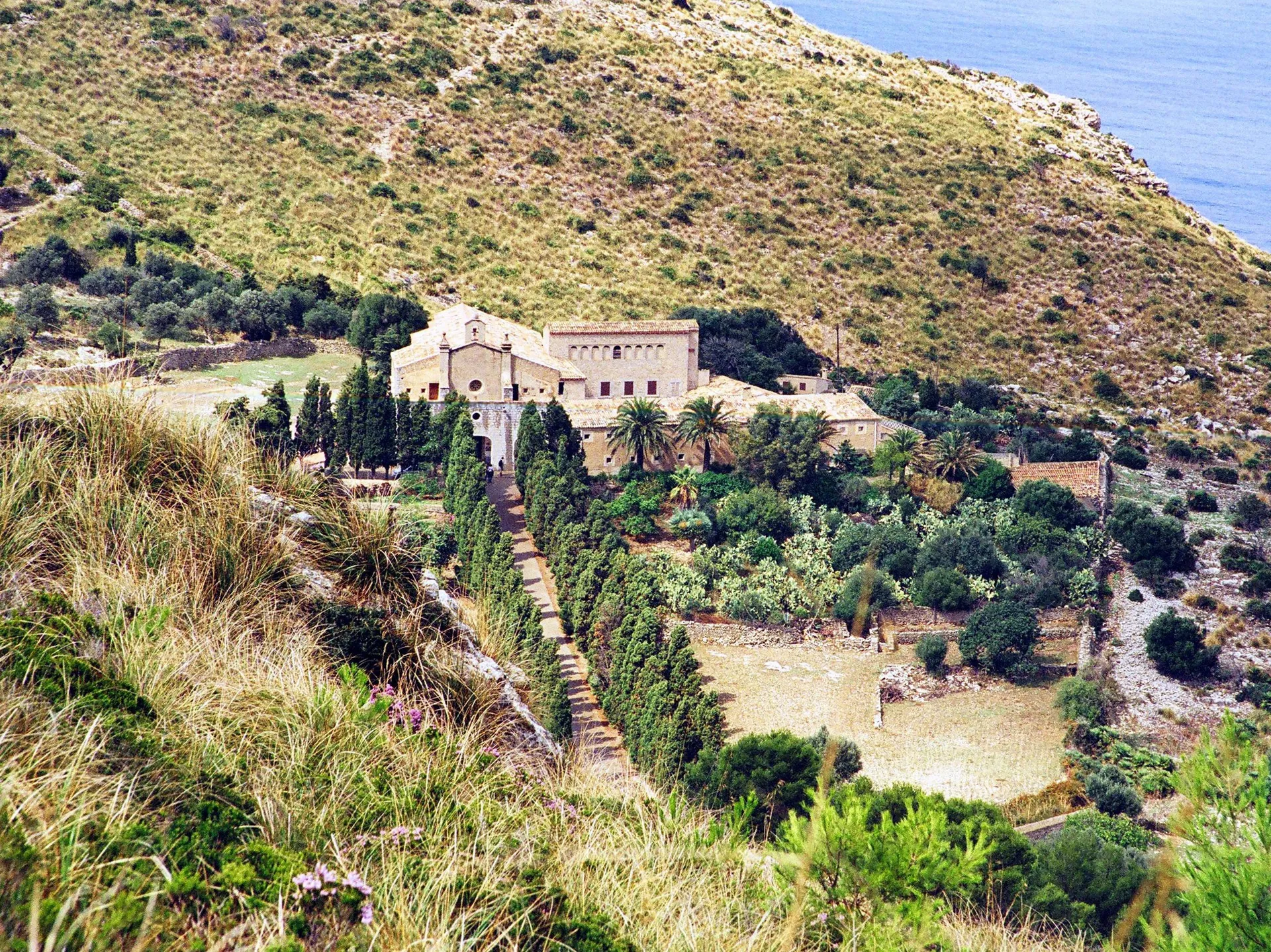
A Glimpse into the Past
Monks from the Order of Saint Paul and Saint Anthony founded this site in 1805. They came from the established monasteries of Randa and Valldemossa, seeking a harsher, more secluded environment for their contemplation. They built their small chapel over teh foundations of an ancient Moorish watchtower and an old defensive farming estate. For over two centuries, the residents lived a life of strict self-sufficiency. The monks cultivated terraced olive groves, kept bees for honey, and grew carob and almonds. Their days were measured by the ringing of the chapel bell and the physical labour required to survive on a dry, rocky mountain. The official monastic chapter at Betlem closed in 2010. The last ageing brothers were relocated to a more accessible facility in Valldemossa, leaving the buildings in the care of a local trust managed by the Consell de Mallorca. Today, the structures remain intact, echoing a way of life that has entirely disappeared from the island.The Winding Road from Artà
You drive the MA-3333 to get here. It is a nine-kilometre ribbon of tarmac starting from the town of Artà. Tourists frequently ask what to be careful of in Mallorca, and these narrow, crumbling mountain roads are exactly the sort of thing you need to watch out for. There are blind corners, sudden hairpin twists, and sections where the asphalt drops away into rocky gullies. As you climb, the dense pine forests scrape the roof of your car. The air temperature drops noticeably. You crest the final ridge, and the road descends sharply into a hidden valley. The hermitage suddenly appears below, framed by the grey limestone peaks of the surrounding mountains. It is a drive that requires absolute concentration, but the visual reward at the end is immense.Two Wheels or Four Paws: Alternative Routes
Cycling the Ascent
Road cyclists favour this route during the cooler months. The gradient kicks up sharply just outside Artà, demanding a solid, sustained effort out of the saddle. The pavement is generally smooth until the final kilometre, but the isolation is the real draw. You rarely share the road with more than a handful of cars. It is a staple climb for amateur riders training for the larger Tramuntana routes.
Hiking from the Coast
If you prefer walking, start down at the coast. The trail from the village of Betlem near Colònia de Sant Pere is a challenging six-kilometre round trip. Cala loves this path. We scramble up rocky goat tracks through low, scratching scrubland. The ascent is steep, and you need thick-soled boots for the loose scree near the top, but the changing perspectives of the sea are exceptional.
Architectural Highlights and the Cypress Avenue
A long, straight driveway lined with towering cypress trees greets you at the entrance. The dark green spires of the trees contrast sharply against the pale stone of the surrounding hills. The main building has a simple, heavy neoclassical facade. A traditional stone sundial is mounted above the arched wooden doorway, casting a sharp shadow across the masonry. A large circular rose window pierces the upper wall, allowing the only natural light into the main nave. The entire complex is built from local limestone, giving it a rough, weathered texture that blends directly into the mountain it sits on.Inside the Chapel: Frescoes and Stalactites
The interior is a stark contrast to the austere exterior. The walls are bright and whitewashed, creating a cool, illuminated space. Intricate frescoes decorate the vaulted ceiling, painted by the Mallorcan artist Francesc Parietti in the 19th century. The main altar is a heavy piece carved from rich, red-veined local marble. The most unusual feature is a small diorama of the Nativity set into a cave-like recess in the wall. The builders decorated this scene with real stalactites and stalagmites. They carried these rock formations up the mountain from the marine caves scattered along the Llevant coastline. It is a strange, fascinating piece of folk art integrating the island’s geology directly into its religious iconography.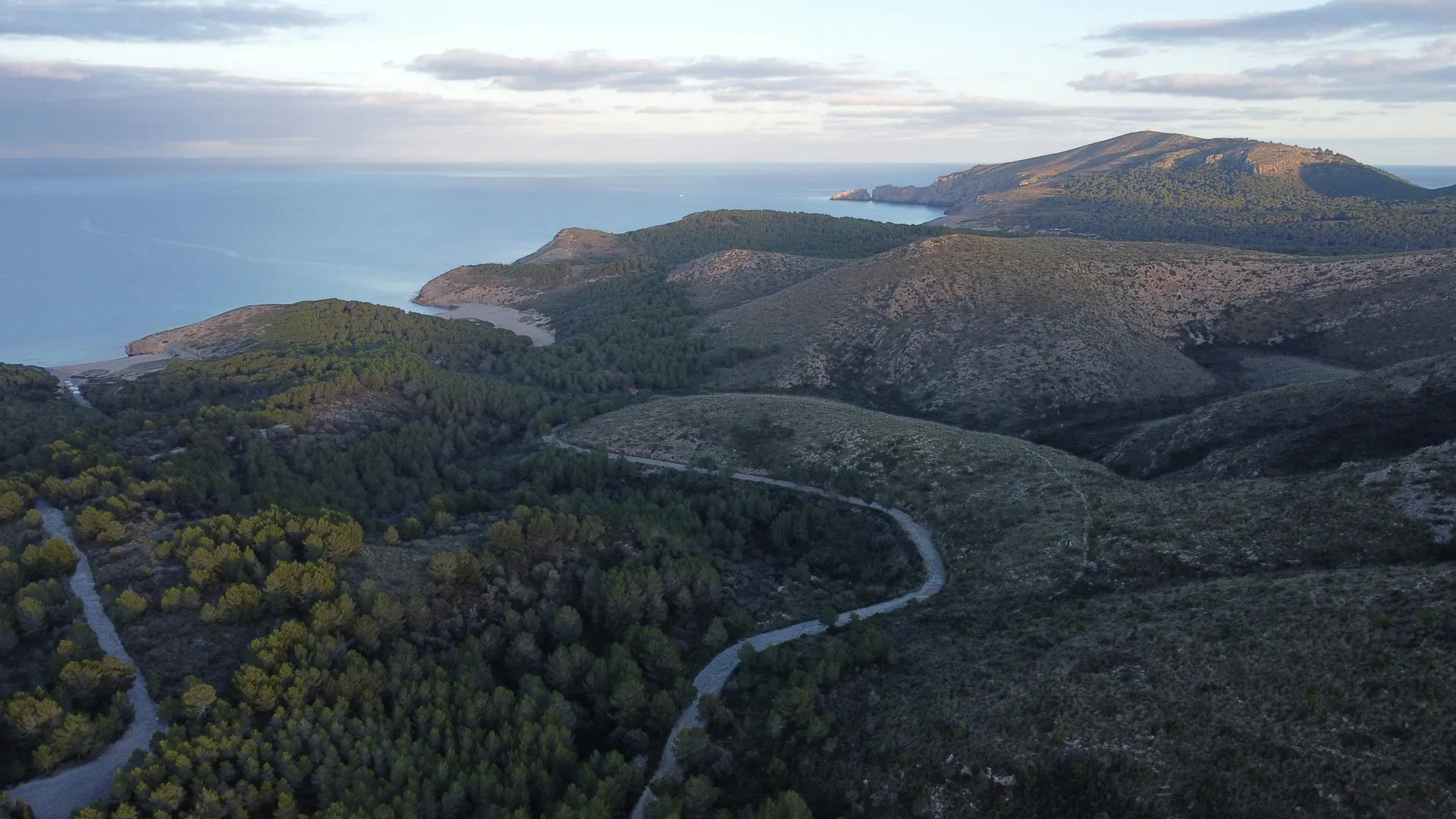
The Monastic Grounds and Natural Spring
The surrounding grounds are slowly returning to nature. You can explore the ruins of the old olive press and the stone stables where the monks kept their mules. Just down a shaded dirt path, you will find the Font de s’Ermita. This natural freshwater spring sustained the isolated community for generations. The water flows from the rock into a small, artificial grotto containing a shrine to the Virgin Mary.Fill your water bottle at the Font de s’Ermita before the hike back down. The water is freezing cold, entirely clear, and tastes faintly of the mineral rock.
Mateo Valero
A Local’s Picnic: Provisions for the Hermitage
Heavy stone tables sit under the broad shade of plane trees near the spring. It is the best spot for lunch in the entire municipality. Visitors frequently ask what food Mallorca is known for, and the traditional bakery items are perfect for a mountain picnic. I always stop at a forn (bakery) in Artà before driving up. You should pack a few panades—savoury pastry pies filled with peas and pork—and some local cheese. A spread of crusty bread with sobrassada is practically mandatory. If you want to know more about the island’s baked goods, I cover the specifics in our guide to Traditional Mallorcan Foods You Must Try. There is no café here, so whatever you want to eat, you carry in yourself.Overlooking the Bay of Alcúdia
Walk out past the old circular threshing floor to the edge of the ridge. The viewpoint here is massive. You see the entire sweeping curve of the Bay of Alcúdia below, stretching from the sandy beaches of Can Picafort all the way to the Cap des Pinar headland. On a clear winter morning, after the wind has blown the sea haze away, the flat profile of neighbouring Menorca is visible on the far horizon. People often debate how many days in Mallorca is enough. You could spend two weeks just exploring the hiking trails that radiate from this single viewpoint.Flora and Fauna of the Llevant Peninsula
The Serres de Llevant is a designated natural area. The Balearic Government’s Environmental Department lists it as a protected zone for indigenous birdlife. You will likely spot Eleonora’s falcons or booted eagles riding the warm thermals above the cliff faces. Wild mountain goats roam freely across the slopes, their bells clanking loudly in the quiet air. The vegetation is tough and low-lying, built to survive the fierce tramontana winds and the baking summer heat. The hillsides are dominated by Mediterranean garrigue scrub: dwarf fan palms, wild rosemary, lentisc bushes, and hardy Aleppo pines. The air up here smells strongly of salt, dry earth, and hot pine needles.Combining Your Visit
The town of Artà is only ten minutes away by car, serving as the logical base for this trip. The Artà Tourism Board maintains excellent maps of the region in their town centre office. You should pair a morning at the hermitage with an afternoon exploring the town’s historical sites. Visit the Santuari de Sant Salvador, which commands its own impressive walled hilltop right in the middle of Artà. History enthusiasts will also appreciate the nearby Talayot de Ses Païsses, one of the most complete Bronze Age settlements in the Balearics. If you are extending your trip to the western mountains later in the week, you might book a Valldemossa, Deià, and Sóller Experience to compare the grand Carthusian monastery of Valldemossa with the humble, isolated reality of Betlem.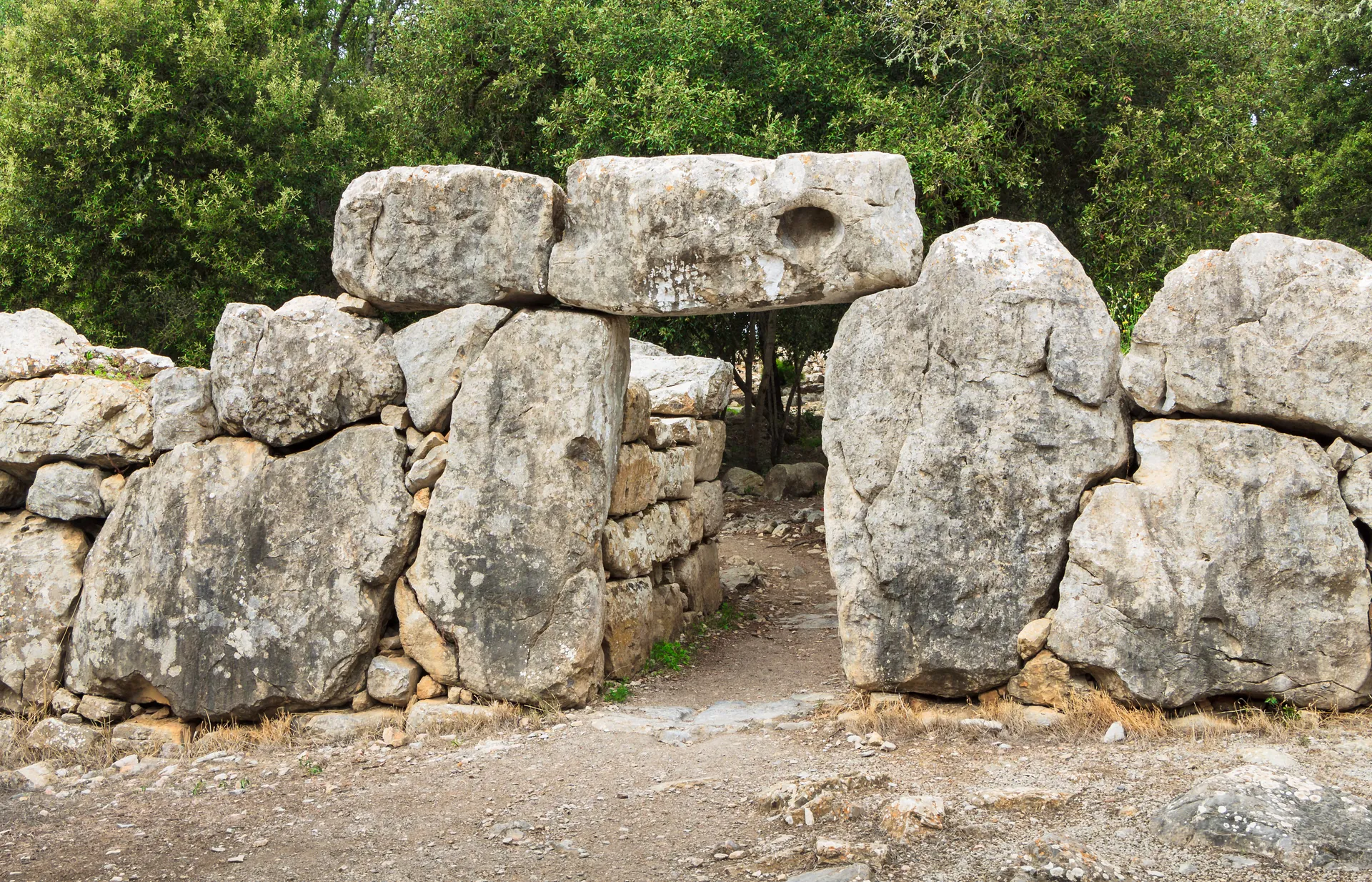
Practical Information for Visitors
The chapel is generally open to the public during daylight hours, though the interior is sometimes locked without notice if maintenance is occurring. Admission is entirely free. There is a small, unpaved parking area at the end of the cypress avenue. People often wonder if Mallorca is cheap or expensive. Renting a car is certainly an expense, but experiences like Betlem prove you do not need to spend heavily on tickets to find the island’s authentic core.| Detail | Information |
|---|---|
| Opening Hours | Daily, approx. 09:00 to 17:00 (Chapel access varies) |
| Admission | Free |
| Parking | Free dirt lot on site (Limited spaces) |
| Public Transport | None. You need a car, bicycle, or to hike. |