
There is a specific kind of stillness you only find at the top of the Puig de Randa. It is not the silence of a vacuum, but rather a heavy, ancient quiet that seems to seep out of the very limestone. I often bring my dog, Cala, up here when the heat in the valley becomes too much to bear. As we wind our way up the Ma-5018, the air thins and cools, and teh scent of wild rosemary begins to dominate the breeze. This is the “Roof of Mallorca,” a place where the island reveals its true shape, stretched out like a map at your feet. For those wondering why is Mallorca so famous, it is because of spots like this, where the spiritual history of the Mediterranean meets a landscape that feels almost biblical in its scale.
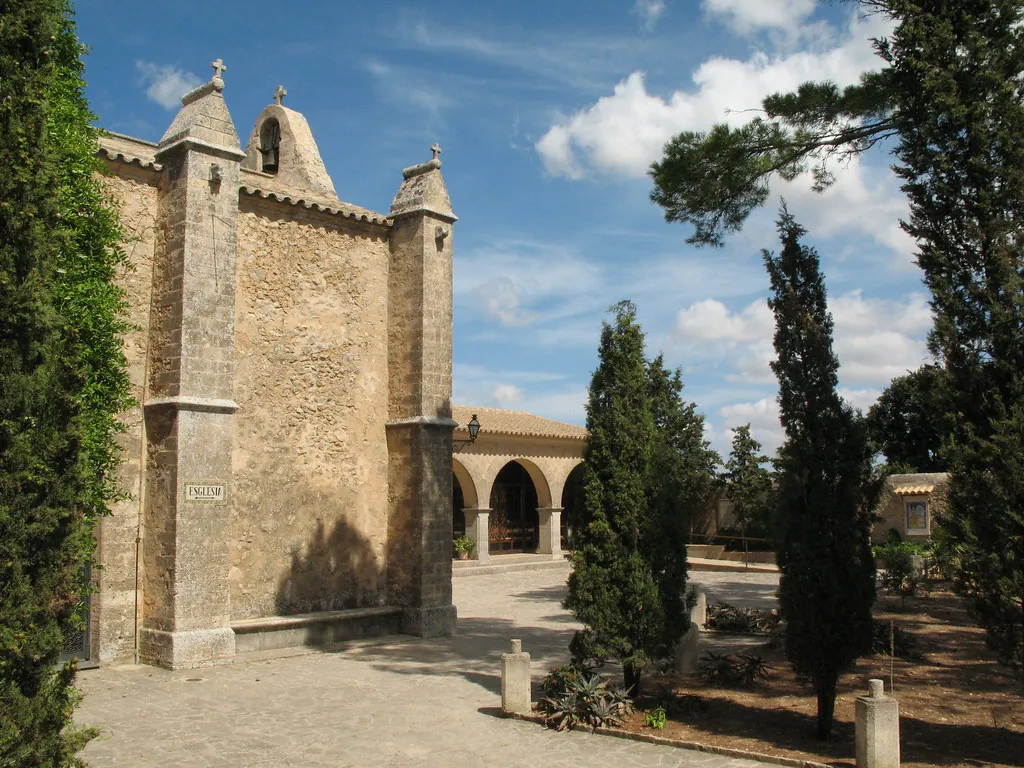
The Santuari de Nostra Senyora de Cura is the crown of the Puig de Randa, standing 543 metres above sea level. It is the highest of three sanctuaries located on this single massif, rising abruptly from the flat expanse of the Pla (the central plain). While many visitors stick to the coast, the heart of the island beats here. From the summit, you can see the entire circumference of Mallorca: the jagged peaks of the Serra de Tramuntana to the north, the salt flats of Llucmajor to the south, and the distant silhouette of the Cabrera archipelago on a clear day. It is a view that puts all the things the island is known for into a single, breathtaking frame.
| Feature | Details & Timing |
|---|---|
| Museum Entry | €5.00 (Adults), Children under 10 are free. |
| Opening Hours | 10:00 – 18:00 (Summer), 10:00 – 17:00 (Winter). |
| Restaurant | Lunch: 13:00 – 15:30. Dinner: 19:30 – 21:30. |
| Hospedería | 33 rooms available, prices from €95 per night. |
| Official Resource | [Official Website] |
The Shadow of Ramon Llull
You cannot talk about Cura without mentioning Ramon Llull. He is the island’s patron saint in all but official Vatican title, a 13th-century polymath who was a poet, philosopher, and mystic. Legend has it that in 1273, after a life of courtly excess, he retreated to a small cave on this mountain to seek “Illumination.” He lived as a hermit here, and it was in this solitude that he developed his Ars Magna, a complex system of logic intended to find common ground between Christianity, Islam, and Judaism. The man is a titan of Western thought, and his presence is felt in every stone of the current sanctuary.
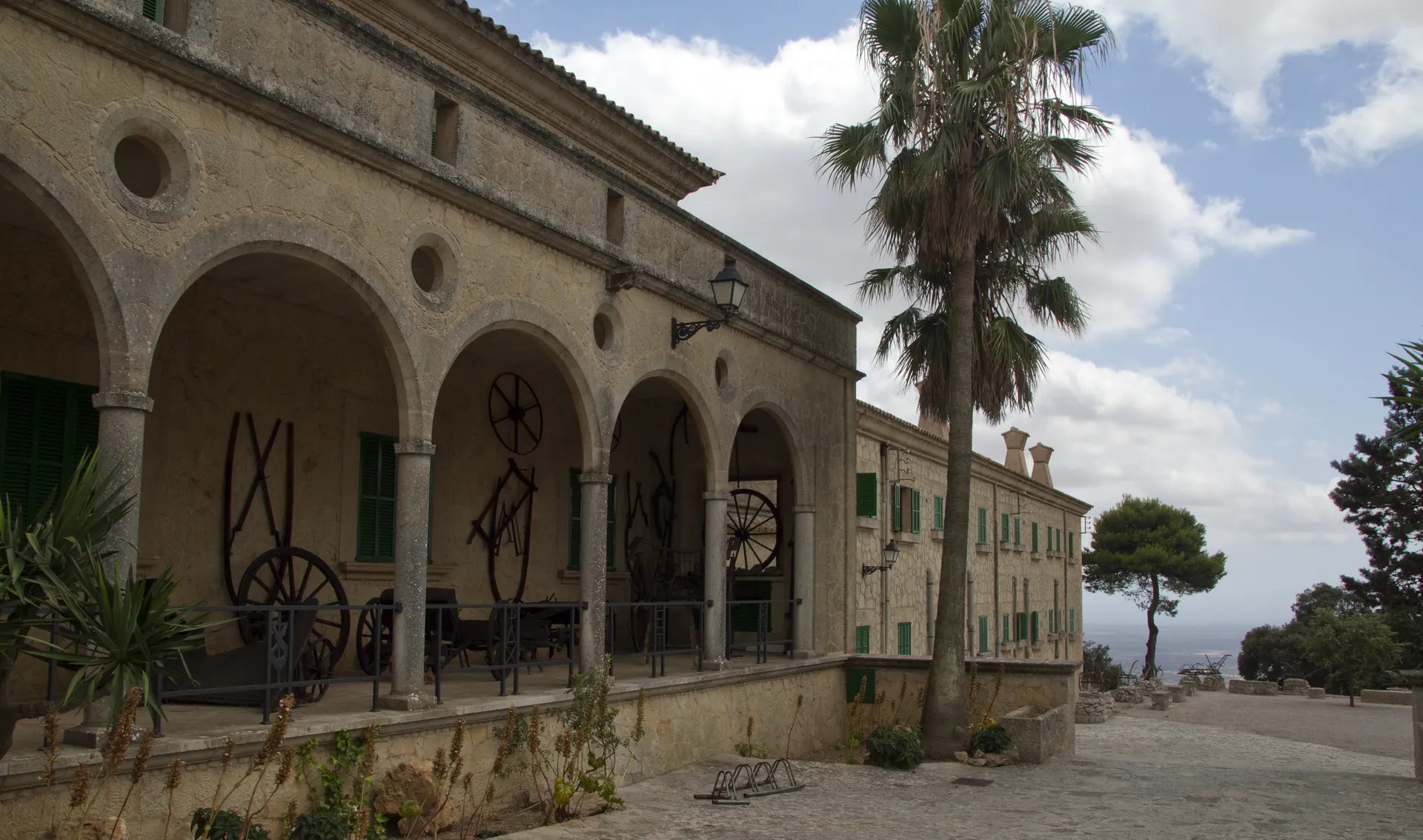
The Aula Gramàtica (Grammar School) within the complex is a particularly evocative space. Founded in the 15th century, it was one of the island’s first major centres of learning, dedicated to teaching the Latin and philosophy required to understand Llullian thought. Today, it houses a museum that is well worth the six-euro entry fee. You will find old manuscripts, religious icons, and a collection of scientific instruments that reflect the intellectual rigour of the monks who lived here. It is a proper museum, mind you, not just a collection of dusty relics. It provides the context needed to understand why this mountain has been a place of pilgrimage for over seven hundred years.
The Architectural Heart
The current buildings date mostly from the 17th and 18th centuries, built around a central courtyard that provides a cool refuge from the sun. The chapel is dedicated to the Virgin of Cura, and its interior is a masterclass in Mallorcan baroque restraint. It is a small, intimate space where the smell of beeswax and old wood lingers. I find the courtyard to be the most peaceful spot; it is where the Franciscan monks of the Third Order Regular still maintain a quiet presence, overseeing the site as they have since 1913.
A 360-Degree Panorama
The geography of the site is its most powerful asset. Because the Puig de Randa stands isolated in the middle of the island, the views are unobstructed in every direction. If you visit during the best month to visit Mallorca—usually May or October—the clarity is astounding. You can trace the coastline from the Bay of Palma all the way to the Alcúdia peninsula. It is the only place on the island where you can truly grasp the scale of the Pla, with its patchwork of almond groves and vineyards.
Local Insight: If the Tramuntana wind is blowing hard from the north, the visibility at Cura becomes almost supernatural. You can see the white crests of the waves in the far north while the southern plains remain bathed in a golden, hazy light. Always bring a jumper, even in summer; it is always five degrees cooler up here than in Algaida.
Hiking and Cycling the Randa Massif
For those with a bit of energy, I highly recommend the “Three Sanctuaries” hike. Cala and I usually start in the tiny village of Randa at the base of the mountain. The trail winds upwards, first reaching the Santuari de Gràcia, which is literally built into the side of a cliff. From there, you continue to the Santuari de Sant Honorat before the final push to Cura. It is a steep walk, but the path is well-marked and shaded by holm oaks and pine trees. If you are looking for a day trip that combines nature and history, you could easily pair this with a visit to the Necròpolis de Son Real on the coast later in the afternoon.
If you prefer two wheels, the climb to Cura is a rite of passage for road cyclists. It is a Category 2 climb with a series of hairpin bends that offer better views with every turn. The tarmac is in excellent condition, and the gradients are steady rather than punishing. You will see groups of cyclists at the summit cafe, refuelling on pa amb oli (bread with oil and tomato) and coffee. It is part of the local culture; the island is a haven for the sport, and this mountain is one of its most iconic peaks. Just be mindful of the tour coaches that occasionally navigate the narrow bends, mind you.
Dining and Staying at the Summit
The Cura Restaurant is far better than your average tourist-trap summit cafe. They serve proper Mallorcan food, focusing on seasonal ingredients from the surrounding plains. If you want to try traditional Mallorcan foods, this is a great place for arròs brut (a spicy, “dirty” rice soup) or slow-roasted suckling pig. Eating out on the terrace as the sun begins to dip towards the Tramuntana is one of the great joys of living on this island. The prices are reasonable, considering the logistics of getting supplies up the mountain.
For a realy unique experience, you can stay overnight in the Hospedería. These are the former monastic cells, now converted into 33 guest rooms. They are simple but comfortable, stripped of the distractions of modern resort life. Staying here allows you to experience the mountain after the day-trippers have left. The sunrise from the Puig de Randa is a spiritual event in itself, even if you aren’t a follower of Ramon Llull. This kind of “slow travel” acommodation is becoming rarer in Mallorca, and it offers a necessary counterpoint to the busy hotels in Palma or the crowded beaches of Cala Pi.
Practicalities and Access
Getting to the Santuari de Cura is straightforward by car. It is about a 35-minute drive from Palma via the Ma-15 motorway. Follow the signs for Algaida and then Randa. Parking at the summit is free and plentiful, though it can get busy on Sunday mornings when local families head up for lunch. If you rely on public transport, it is a bit more of a challenge. You can take the TIB Bus 401 to Algaida, but from there, you will need to take a taxi or commit to the ten-kilometre walk to the summit.
The village of Randa itself, located at the foot of the mountain, is worth a short stop. It is a tiny, stone-built hamlet with a few bars and a very quiet atmosphere. It feels worlds away from the “Majorca” often portrayed in British tabloids. This is the authentic Mallorca, where Catalan is the primary language spoken in the streets, though everyone is happy to switch to Spanish or English for visitors. If you are looking for a souvenir, the local honey and olive oil from the Algaida region are exceptional. You can find more information on local events at the [Algaida Town Council Portal].
Spanish Cooking Experience in Mallorca
Horse Riding in Mallorca on the Beach and Forest
Kayaking and snorkeling in the Mondragó Natural Park in Mallorca
Palma de Mallorca and Valldemossa Excursion from Cruise Port
Deluxe Cruise-Friendly Mallorca and Valldemossa Tour
Whether you come for the history of Ramon Llull, the physical challenge of the climb, or simply to see the island from a different perspective, the Santuari de Cura remains a vital part of the Mallorcan soul. It is a place that demands you slow down and look at the horizon. As Cala and I head back down towards the plain, leaving the cool air of the summit behind, I am always reminded that the best parts of this island are often found exactly where the land meets the sky.