
The Ancient Bones of the South: Exploring Capocorb Vell
Driving through the south of Mallorca is a lesson in patience and perspective. The landscape here is a flat, sun-bleached expanse of limestone and reddish earth where the salt-heavy air from the coast meets the scent of dried almond husks. It is a world away from the crowded beaches of Palma, a place where the horizon is wide and the silence is heavy. This is the setting for the Poblado Talayótico de Capocorb Vell, one of the most significant prehistoric sites in the Western Mediterranean and a place I have always been fond of. I took my dog, Cala, there last Tuesday afternoon when the heat was beginning to soften. She knows the drill with these old stones; she stays on the path and sniffs at the wild rosemary while I try to imagine the lives of the people who dragged these massive blocks into place three thousand years ago. There is no mortar here, mind you. These structures are “cyclopean,” built by stacking enormous stones so precisely that gravity does all the work. It is a rugged, honest form of architecture that has outlasted almost everything else on the island.
Planning Your Visit to the Talayotic Village
Getting here requires a car, as the public transport links to this specific stretch of the Ma-6014 are nearly non-existent. You can find more details on our public transport guide, but for this trip, a rental is your best bet. The site is well-signposted and has a dedicated parking area right at the entrance.| Detail | Information |
|---|---|
| Entry Fee | €3.00 (Standard Adult Rate) |
| Opening Hours | 10:00 AM – 5:00 PM (Daily) |
| Closed Days | Thursdays |
| Location | Ma-6014, Km 23, Llucmajor |
| Facilities | Free Parking, Café, Toilets |
The Architecture of the Talaiots
The word *talaiot* (or talayot) comes from the Catalan word for “watchtower,” and that is exactly what they look like from a distance. At Capocorb Vell, there are five of these towers still standing. Three are circular and two are square. While they might have served as defensive positions, they were also the symbolic heart of the community, likely used for ceremonies or as a display of power by the local chieftains. Walking through teh ruins, you notice how the village is organized. There are 28 documented houses here, small dwellings where families lived and worked. The stone walls are thick, designed to keep the interiors cool during the brutal Mallorcan summers and warm during the damp winters. It is a primitive design, but it works better than many modern apartments I have seen in Palma.The Circular Towers
The circular talayots are the most impressive. One of them still has two storeys, with a central stone pillar that once supported a wooden or stone ceiling. You can actually step inside and feel the temperature drop instantly. It is a strange sensation to stand in a room that was occupied before the Romans ever set foot in Iberia.The Square Structures
The square towers are located towards the edges of the settlement. These are often more ruined than their circular counterparts, but they show a different style of stonework. The base blocks are massive, some weighing several tonnes. How they moved these without modern machinery remains one of the great mysteries of our island.The best time to visit is either right at 10:00 AM or an hour before closing. The low sun creates long shadows across the limestone, making the details of the dry-stone walls pop in a way that is perfect for photography.
A History Unearthed
For centuries, these ruins were just piles of rocks used by local shepherds. It wasn’t until the early 20th century that the site was given the respect it deserves. An archaeologist named Josep Colominas began the first serious excavations here in the 1910s. He cleared away the overgrowth and revealed the sheer scale of the village. You can see a small monolith dedicated to his work near the entrance. In 1931, the Spanish government declared Capocorb Vell a National Historic-Artistic Monument. This protection is why the site is in such good condition today. While other prehistoric settlements were torn down to make way for roads or farms, Capocorb survived. You can read more about the island’s conservation efforts on the [Consell de Mallorca] official heritage portal.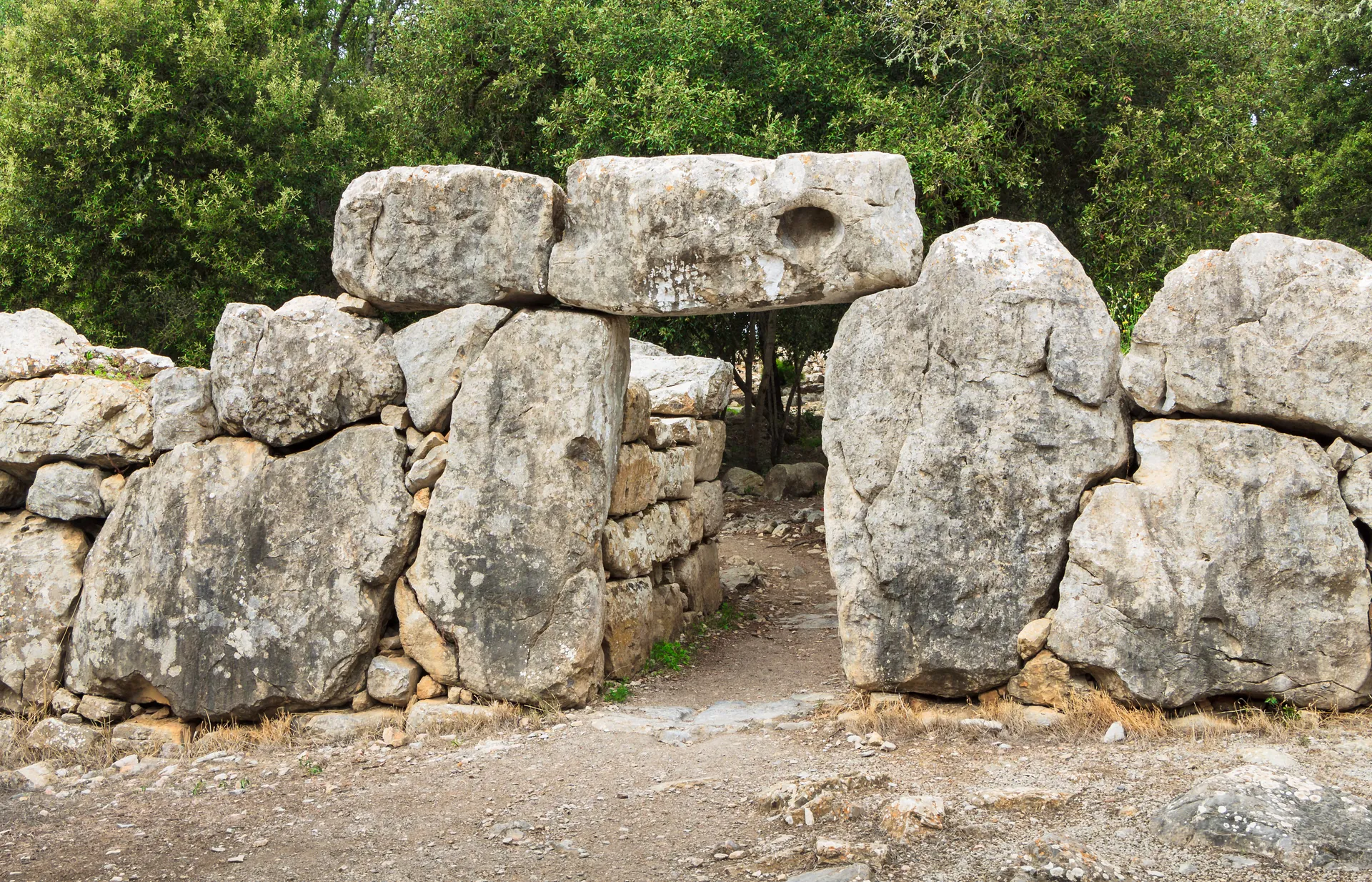
Local Rituals: The Bar Capocorb
You cannot leave this place without stopping at the small bar at the entrance. It is a simple affair, but it is famous among locals for its *pa amb oli*. This is the quintessential Mallorcan meal: rustic bread rubbed with *tomàtiga de ramellet* (a specific type of hanging tomato), drizzled with local olive oil, and topped with cheese, ham, or *sobrassada* (cured pork paste).If you are wondering what food Mallorca is known for, this little snack bar provides the perfect introduction. They use ingredients from the surrounding farms in Llucmajor, and you can really taste the difference in the oil. It is a quiet spot to sit and reflect on the ruins you just walked through.Mateo’s Tip: Order the mixed plate with a glass of local red wine. It is the proper way to end an archaeolgoical trek. The bar is unpretentious and the service is Mallorcan-style—which is to say, friendly but never in a hurry.
Practical Advice for Your Visit
- Footwear: Wear sturdy shoes. The ground is uneven and the limestone can be slippery if it has rained recently. Sandals are a bad idea.
- Dogs: Dogs are welcome but must be on a lead. Cala usually finds a shady spot under a carob tree while I take photos, as the stones can get quite hot for their paws.
- Heat: There is very little shade within the ruins themselves. Bring a hat and plenty of water, especially if you visit between June and September.
- Tickets: You buy your tickets at the bar. The €3.00 fee is a bargain considering the maintenance costs of such a large site.
Beyond the Ruins
Once you have finished at Capocorb Vell, you are perfectly positioned to explore the rest of the south coast. A ten-minute drive will take you to the Faro de Cap Blanc, a lighthouse perched on dramatic white cliffs that look out toward Africa. The views there are some of the best on the island, and the road leading to it is wonderfully scenic. If you are in the mood for a swim, the turquoise waters of Cala Pi are also nearby. It is a narrow inlet that looks like a fjord, with a steep staircase leading down to a sandy beach. It can get busy, mind you, so having the quiet ruins of Capocorb as a counterpoint makes for a balanced day out. For those interested in more ancient history, you might also enjoy the Talayot de Ses Païsses on the other side of the island.
Top Rated
🇺🇸
Spanish Cooking Experience in Mallorca
Best Value
🇺🇸
Horse Riding in Mallorca on the Beach and Forest
Top Rated
🇺🇸
Kayaking and snorkeling in the Mondragó Natural Park in Mallorca
Best Value
Nature Lovers
🇺🇸
Palma de Mallorca and Valldemossa Excursion from Cruise Port
Couple's Choice
🇺🇸