
Cala s’Almunia is less of a beach and more of a feeling, a memory of a Mallorca that existed before the concrete and the crowds. It is a place my soul feels at home in. Located in the far south-eastern corner of the island within the municipality of Santanyí, this tiny cove is a sharp reminder of why Mallorca is so famous; its water has a clarity that seems almost impossible, a liquid turquoise that looks like it has been poured straight from a Mediterranean dream. My dog, Cala, knows teh routine well; she sits by the top of the cliffs, ears twitching at the sound of the swell hitting the rocks, waiting for me to adjust my pack before we begin the descent. There are no hotels here, no kiosks selling overpriced ice cream, just the salt, the sun, and the silence of the escars (traditional boat houses) that line the water’s edge.
| Feature | Details |
|---|---|
| Location | Santanyí (South-east Mallorca) |
| Access | 120 steep concrete steps |
| Facilities | None (No toilets, showers, or bars) |
| Parking | Free car park at Avinguda de Cala Llombards (1.5km walk) |
| Lifeguard | No |
The Descent and the Architecture of the Sea
To reach the water, you must first survive the staircase. There are roughly 120 concrete steps that drop sharply from the residential road down to the cove. It is a proper workout on the way back up, mind you, especially under the midday sun. This steepness is exactly what keeps the cove feeling secluded, as it is entirely unsuitable for heavy strollers or anyone with limited mobility. As you descend, the view opens up to reveal the escars, those small, rustic boat houses carved into the rock or built with local stone. These are not just for show; fishermen still use them to shelter their small wooden llauts (traditional Mallorcan boats) from the winter storms.
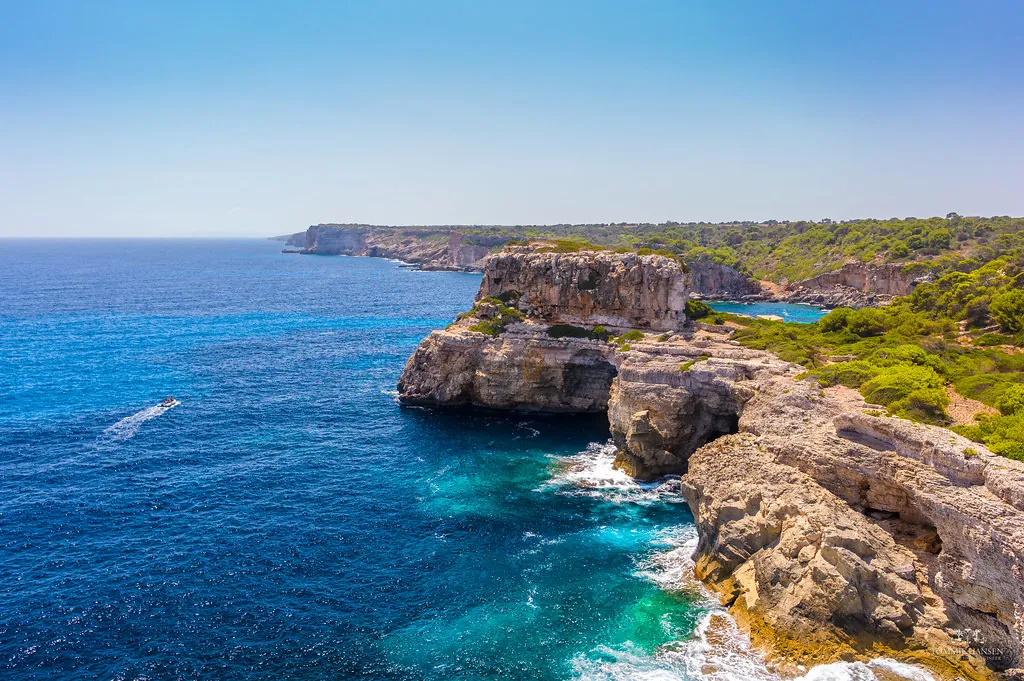
Unlike its famous neigbour, Caló des Moro, Cala s’Almunia has very little sand. Most people find a flat spot on the concrete ramps of the boat houses or the smooth, sun-baked rocks to the left. It is intimate and often crowded in July, but the atmosphere remains respectful. People come here to read, to dive, and to simply exist in the presence of the sea. If you are looking for a sandy stretch to build castles, you might prefer the nearby Cala Llombards, but for a raw connection to the Balearic coast, this is the spot. For those wanting to explore the coastline without the parking stress, a Cala des Moro & Hidden Coves Paddleboard Snorkel Tour provides a brilliant perspective from the water.
Swimming in Liquid Glass
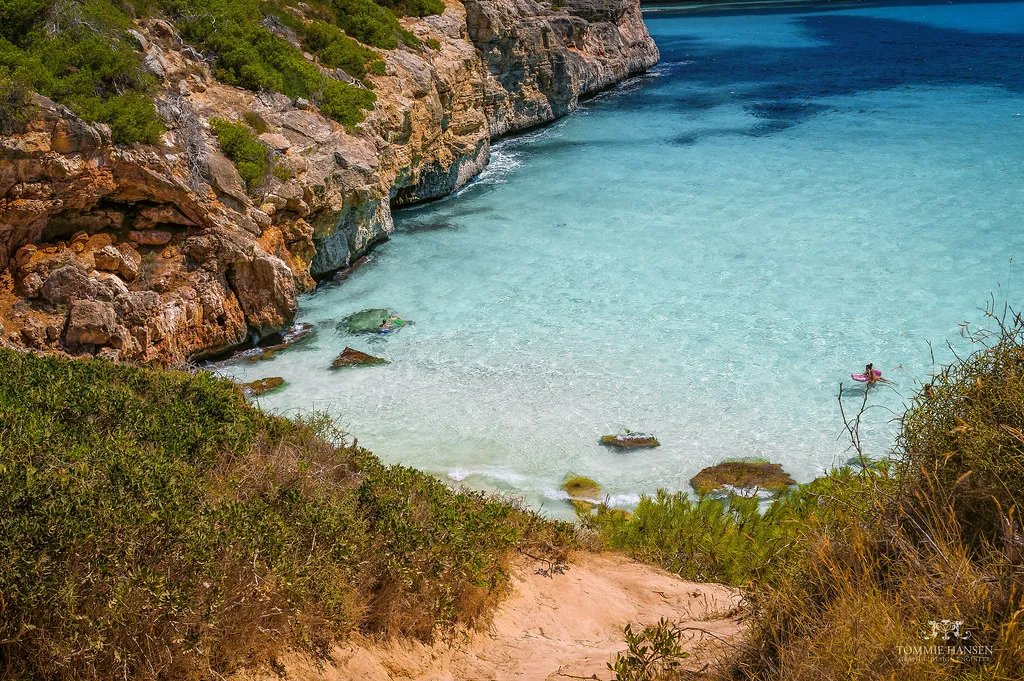
The water here is part of the “Jelly Sea” phenomenon. On calm days, the light hits the white sandy patches on the seabed and reflects back through the translucent water, making the boats appear as if they are floating in mid-air. This clarity is maintained by the meadows of Posidonia oceanica, the protected seagrass that acts as the lungs of the Mediterranean. It is vital to respect this ecosystem; the dried seagrass you see on the shore is a sign of a healthy beach, acting as a natural barrier against erosion. Organisations like the Save the Med Foundation work tirelessly to ensure these waters remain pristine.
The sea at s’Almunia is so clear that you lose the sense of depth. You think you can touch the bottom, but the blue just goes on forever.
Adrenaline and the Deep Blue
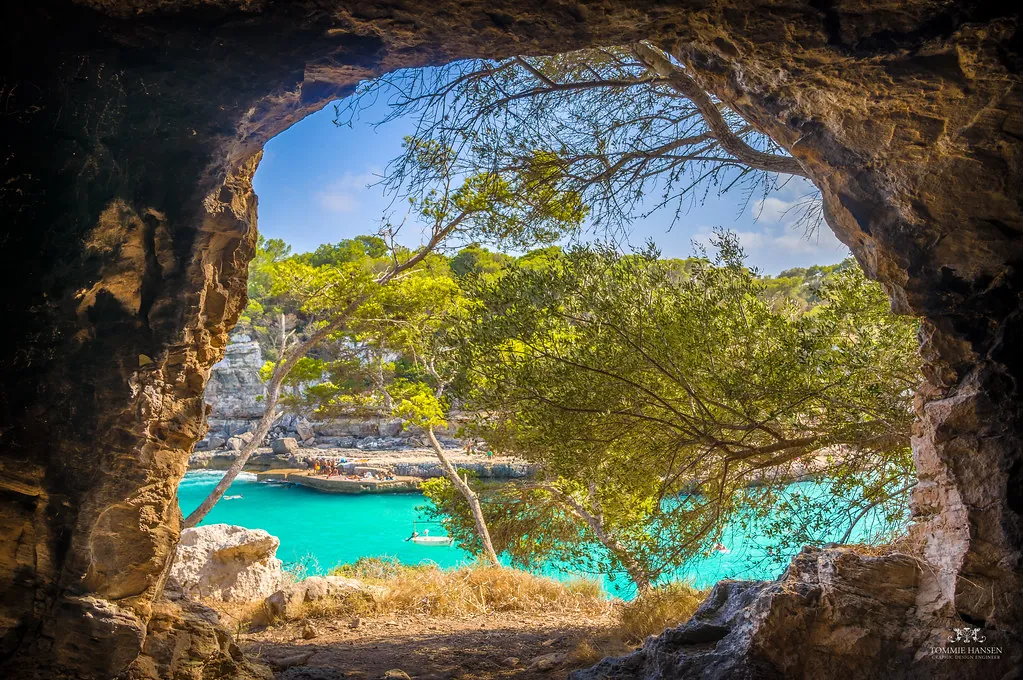
To the right of the boat houses, a natural rock arch forms a perfect bridge over the water. This is the local theatre for cliff jumping. It is a thrilling sight, but you must be careful. Shifting sands and winter currents can change the water depth from year to year. I always tell visitors to swim out and check the depth manually before following the local teenagers into a jump. If you prefer a more tranquil experience, the snorkelling is world-class. Follow the rocky edges of the cove to see schools of obladas (saddled seabream) and the occasional octopus hiding in the crevices. The lack of boat traffic in the immediate swimming zone makes it feel safe and enclosed.
The Parking Puzzle and Transport (2026 Update)
Navigating the logistics of the south-east coast requires a bit of local knowledge. The residential area surrounding the cove is an Área de Circulación Restringida (Restricted Circulation Area). Do not attempt to drive down to the steps; cameras scan every number plate, and the fines are a steep €90. Visitors must leave their cars in the large, free car park on Avinguda de Cala Llombards. From there, it is a 15-minute walk along the asphalt. It is hot and unshaded, so carry plenty of water. If you want to avoid the car entirely, the TIB Bus Network operates Line 517 from Santanyí, which drops you a manageable walk away. This is the most sustainable way to visit and helps protect the local community from the seasonal gridlock.
Beyond the Cove: Cala es Maquer and Caló des Moro
Just a few metres from the boat houses of s’Almunia lies Cala es Maquer. This is a tiny, often overlooked sister cove that has a small patch of sand and more shade provided by the overhanging tamarisk trees. It is a lovely spot if the main rocks at s’Almunia are too crowded. If you feel like a hike, a rugged coastal path connects s’Almunia to Caló des Moro. It is only a ten-minute walk, but the path is uneven and requires proper shoes—flip-flops are a recipe for a twisted ankle here. Along this trail, you get the best views of the dramatic cliffs that define this part of the island. For more information on local regulations and events, the Santanyí Municipal Council website is a helpful resource.
After a day of salt and sun, I usually take Cala for a slow walk through the town of Santanyí. It is one of the prettiest towns in Spain, built almost entirely from the warm, honey-coloured stone quarried nearby. If you visit on a Wednesday or Saturday, the market is a great place to pick up local sea salt or a proper ensaimada (a spiral yeast pastry) for the journey home. Just remember that this corner of Mallorca is fragile. We don’t have many places left that feel this authentic, so please carry all your rubbish back to the bins at the car park and keep the noise to a minimum. The locals who live in the small houses above the cove will thank you for it.
Spanish Cooking Experience in Mallorca
Horse Riding in Mallorca on the Beach and Forest
Kayaking and snorkeling in the Mondragó Natural Park in Mallorca
Palma de Mallorca and Valldemossa Excursion from Cruise Port
Deluxe Cruise-Friendly Mallorca and Valldemossa Tour
While you are in the area, do not miss the chance to see Es Pontàs, the massive natural bridge rising out of the sea just up the coast. It is a site of pilgrimage for rock climbers from all over the world and a stunning example of the geological power of the Mediterranean. Whether you are jumping from the rocks at s’Almunia or hiking the coastal trails, this region remains the beating heart of Mallorca’s wild side.