
The Digital Pulse of teh Mediterranean: Navigating Mallorca’s Airwaves
I remember a time when the only way to share a sunset from Sa Foradada was to wait until you got home and developed the film at a chemist. Today, the island is draped in a silent web of 5G signals, though some corners of our limestone wilderness still refuse to be tamed. Whether you are here to work from a sun-drenched terrace or simply need Google Maps to find that one specific panadería (bakery) in Sineu, getting your tech sorted is the first thing you should do after landing. Connectivity here is generally excellent, mind you, but there are nuances to the Spanish telecommunications market that can catch a traveler off guard if they aren’t prepared for the local way of doing things.
Mallorca has transitioned from dial-up days to a 5G-saturated hub, yet the mountains still hold their secrets in silence.
EU Roaming: The “Roam Like at Home” Reality
For those arriving from within the European Union, the transition is invisible. Under the “Roam Like at Home” regulations, your domestic plan from Germany, France, or Italy works exactly as it does back home. You use your minutes, texts, and data without those terrifying surcharges that used to haunt holidaymakers. However, for my friends from the UK, the situation is a bit more fragmented. Since Brexit, many British providers have reintroduced roaming fees. While some carriers still include Spain in their “Europe Zone,” others charge a daily fee of around £2. It is worth checking your contract before you fly to Palma de Mallorca, as those daily fees add up quickly if you are staying for a fortnight.
If you are coming from further afield—the United States, Canada, or Australia—avoid your domestic roaming plans at all costs. They are notoriously expensive and often throttle your speeds to a crawl. The local solution is always better, whether that is a physical SIM or a modern eSIM. It’s not just about the money; it’s about having a local connecion that actually gives you the speed you need to upload a video of the Palma Cathedral at night without the buffering wheel of death.
The Major Carriers: Who Owns the Air?
Three giants dominate the Spanish landscape, and each has its own personality. In Mallorca, coverage is nearly universal in the plains and urban centers, but the differences appear when you head into the hills or out to sea. People often ask me which is the best, and the answer usually depends on where you plan to plant your beach umbrella.
- Movistar: This is the heritage provider, owned by Telefónica. They have the widest coverage in rural areas and the Serra de Tramuntana. Their 5G SA (Standalone) network is currently active in Palma, Manacor, and Inca. If you are staying in a remote finca (country estate), Movistar is your safest bet.
- Vodafone: Known for having the fastest 5G speeds in the heart of Palma. A unique perk of Vodafone Spain’s prepaid plans is that they often include roaming in the US and UK, which is a rare find.
- Orange: Usually the best value for those who consume massive amounts of data. Their 5G signal covers over 90% of the island’s population, making them a solid all-rounder for holidaymakers staying in the major resorts.
| Provider | Plan Name | Estimated Price | Data Allowance |
|---|---|---|---|
| Vodafone | Prepago M | €15 | 100GB + EU/UK Roaming |
| Orange | Tu Mundo | €20 | 100GB |
| Digi Mobil | Ilimitodo | €20 | Unlimited (Movistar Network) |
| Movistar | Prepago Plus | €10 | 40GB |
The Rise of the eSIM: Digital Convenience
The days of fumbling with a metal paperclip at the airport are largely over. If your phone was made in the last few years, an eSIM is the most elegant way to handle connectivity. You can buy it while sitting in the departure lounge in London or New York and activate it the moment the plane wheels touch the tarmac at PMI. Two providers currently lead the pack for Mallorca travelers.
Airalo: Their Spain-specific plans, often playfully named “Guiri Go” (a local term for a foreign tourist), are incredibly user-friendly. You can get 1GB for about $4.50 for a short trip, or 20GB for $32 for a month-long stay. It is perfect for those who just need to check emails and use maps.
Holafly: If you are a digital nomad or someone who cannot live without streaming, Holafly offers unlimited data plans. They are more expensive, starting around €19 for five days, but they use the robust Movistar network, which is where the signal is at.
Landing at Palma Airport (PMI): Where to Buy
If you prefer a physical SIM card, you can find them at the airport, but you will pay a “convenience tax.” The shops at the airport typically charge about 30% more than the shops in the center of Palma. If you can wait until you get into town, you will save enough for a proper ensaimada (a spiral-shaped pastry) and a coffee. However, if you need the signal immediately for a taxi or bus, look for the Tabacos shop or the WHSmith kiosks in the Arrivals hall (Floor 0). They stock prepaid kits from the major carriers.
Registration and the Law: Bring Your Passport
This is the part that often confuses visitors. In Spain, under the Ley de Conservación de Datos (Data Conservation Law), every mobile line must be registered to a verified identity. You cannot simply walk into a shop and buy an anonymous SIM card with cash. You must present a physical passport or an EU National ID card. A driving license is usually not accepted by the carrier’s activation software. The shop assistant will take a scan of your passport, and the activation takes about ten minutes. Don’t worry about the language barrier; in most mobile shops in Palma or the coastal resorts, the staff speak excellent English.
Dead Zones: Where the Signal Dies
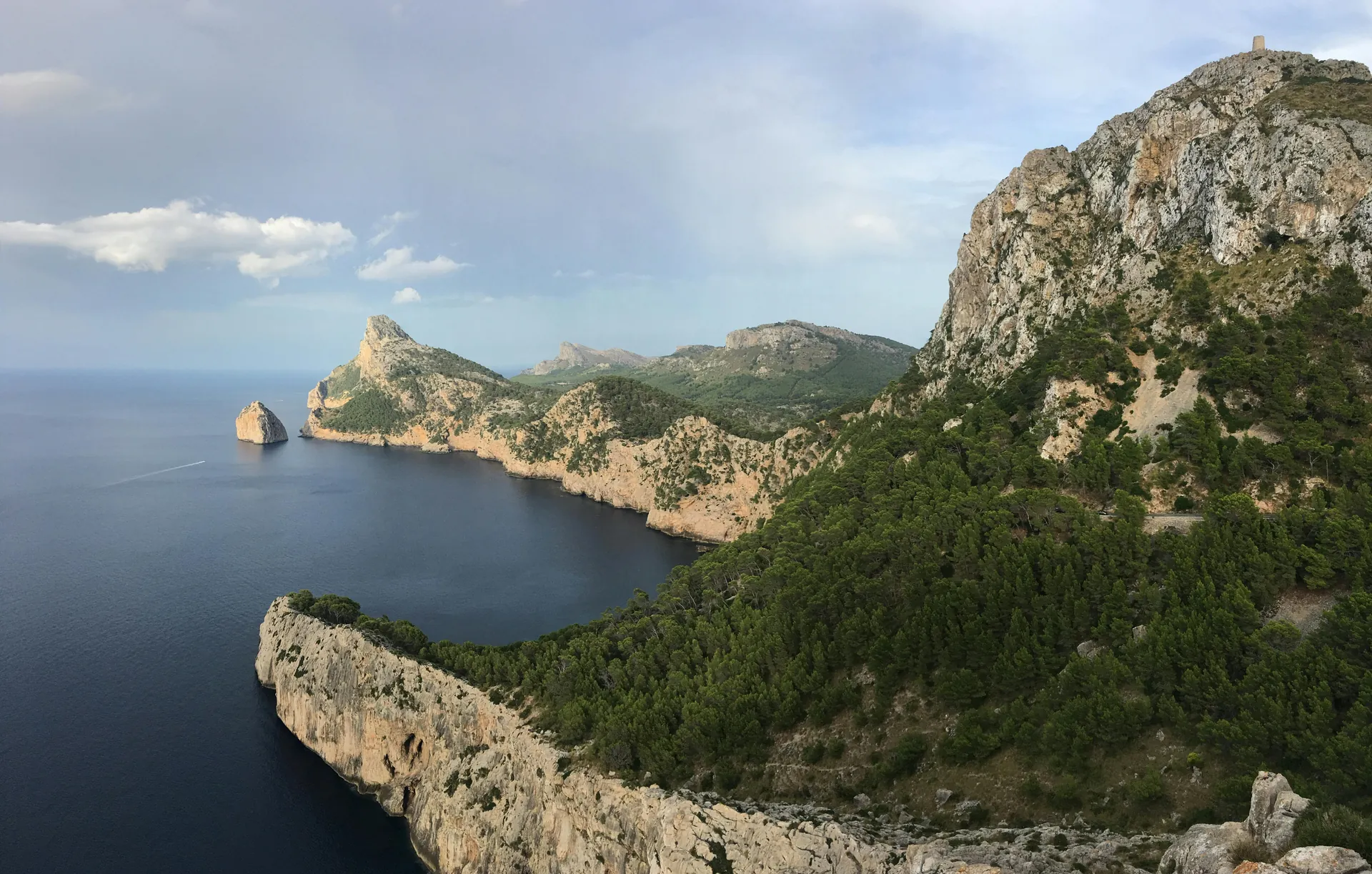
Mallorca’s geography is dramatic, and limestone is a formidable enemy of radio waves. When Cala and I go hiking in the Serra de Tramuntana, I know there will be hours where my phone is nothing more than a camera. The deep valleys near Escorca and the winding road down to Cala Tuent are notorious dead zones. Similarly, the high cliffs around Platja de Coll Baix will block almost any signal. If you are planning a serious hike, download your maps for offline use on the Official IGN Spain App. It is a proper tool for safety when the bars on your phone disappear.
Connectivity at Sea and Public WiFi
If you are taking one of the many boat tours along the coast, you will find that the signal remains surprisingly strong as long as you are within a mile of the shore. The masts are often placed on high coastal ridges, giving you a clear line of sight. However, as soon as you tuck into a deep cove like Cala s’Almunia, the limestone walls will cut the connection instantly. It is nature’s way of telling you to put the phone down and jump into the turquoise water.
As for WiFi, Palma offers a public “Palma WiFi” network in the city center. It is fine for checking a quick message, but it is unencrypted and often quite slow. Most cafes and restaurants have high-speed fiber-optic WiFi now. Just ask for the contraseña (password). Be careful with open networks in very touristy areas; using a VPN is always a wise move when connecting to public airwaves in any major city.
Topping Up (The Recarga)
Running out of data in the middle of a trip is a nuisance. You can top up, or recargar, your line in several ways. The easiest is through the provider’s app, but these often require a Spanish credit card, which is useless for most travelers. Instead, head to an estanco (a licensed tobacco shop with a brown and yellow “T” sign), a supermarket like Mercadona, or a local post office (Correos). You give them your phone number and the amount you want to add, and the credit is applied instantly. Most locals use these shops for everything from stamps to bus passes, so don’t be shy about walking in.
Summary of Local Tips for Connectivity
- Download Offline Maps: Essential for the mountain roads where GPS can be patchy and mobile data nonexistent.
- Use Digi Mobil for Budget: They use the Movistar network and offer incredible value if you find a local dealer in Palma.
- Passport is King: Never leave your hotel to buy a SIM card without your original passport.
- Avoid Airport Shops: If your budget is tight, get your SIM in the city center where competition keeps prices lower.
- Emergency Number: Remember that 112 is the universal emergency number and will work on any network, even if you don’t have a SIM card or credit.
Mallorca is a place that invites you to be present. While having 5G at the top of Castell d’Alaró is a marvel of the modern world, some of my best memories are the ones I couldn’t post until the next day. Get your connectivity sorted so you have the safety of a map and the convenience of a booking, but don’t forget to look up from the screen. The island has a way of showing you things that no digital sensor can truly capture.
Ready to Explore?
Now that your phone is ready, it is time to see the island. Whether you want to head into the mountains or sail the coast, there is always something new to discover.
Spanish Cooking Experience in Mallorca
Horse Riding in Mallorca on the Beach and Forest
Kayaking and snorkeling in the Mondragó Natural Park in Mallorca
Palma de Mallorca and Valldemossa Excursion from Cruise Port
Deluxe Cruise-Friendly Mallorca and Valldemossa Tour
For more practical advice on getting around, check out our Guide to Transport in Mallorca or find the perfect place to stay for your next adventure.