
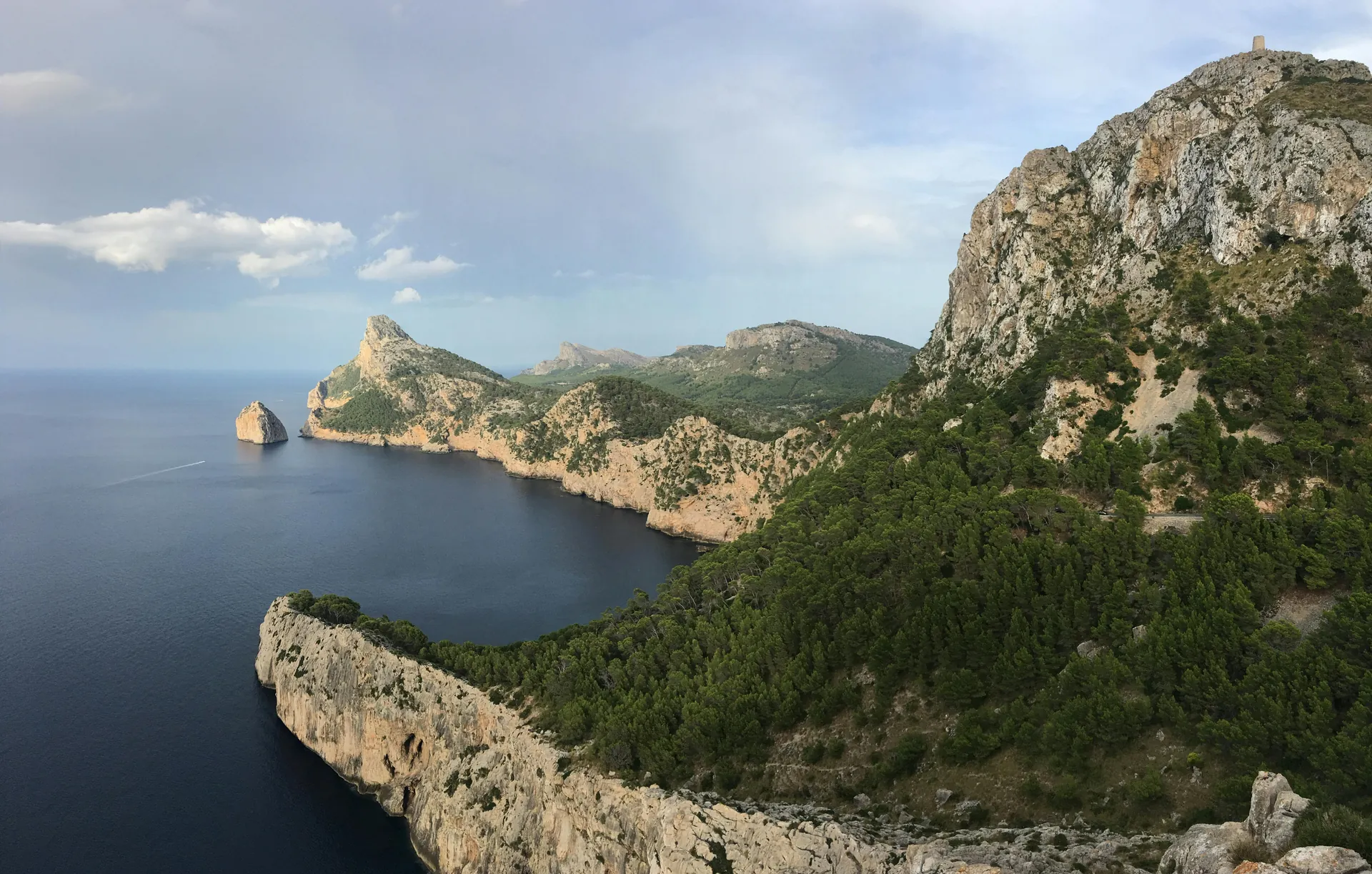
The Far de Muleta is a silent observer of the western cliffs of Port de Sóller. Most people call it the Faro de Cap Gros, but for those of us who have spent a lifetime watching the light sweep across the bay, it is simply Muleta. It sits atop a limestone precipice, 120 metres above the churning Mediterranean, acting as the final sentinel for sailors coming home to the harbour. Unlike many of the more manicured lighthouses on the island, this one has a rugged, salt-caked dignity that feels entirely proper for the Serra de Tramuntana coastline. It is a place I often find myself returning to.
There is a specific sort of peace found here, far removed from the clatter of the tram in the port below. My dog, Cala, knows the path well: she starts pulling at the lead the moment we turn off the main road, sensing the cooler air that clings to the cliff edge. The lighthouse doesn’t just mark the land; it anchors the history of Sóller to the sea in a way that modern navigation never could. Mind you, the views back toward the Puig Major, teh highest peak on the island, are often enough to make even the most hurried visitor pause for a good while.
| Feature | Detail |
|---|---|
| Official Name | Far del Cap Gros |
| Tower Height | 22 Metres |
| Luminous Range | 19 Nautical Miles |
| Access | Pedestrian (2.5km walk) or Car (Limited parking) |
| Refuge Capacity | 30 Beds (Dormitory style) |
The Sentinel’s Path: A Walk with Cala
The journey to the lighthouse is as much a part of the experience as the structure itself. We usually start at Platja d’en Repic, following the winding camí (path) that hugs the western side of the bay. It is a gentle incline, paved but narrow, lined with ancient olive trees that have been twisted into impossible shapes by the wind. Cala usually spends her time investigating the stone walls, while I watch the yachts in the harbour shrink into toy-sized dots. This route is part of the famous GR 221, the Dry Stone Route, which connects the mountain villages of Mallorca.
The light at Muleta has a rhythm of three white flashes every fifteen seconds, a heartbeat that has guided the Sóller fishing fleet for over 160 years.
As you climb higher, the scent of the sea mixes with the sharp aroma of wild rosemary and Aleppo pines. There are no shops or cafes on this stretch, so you must bring your own water. The path is popular with hikers heading toward Deià, but the stretch to the lighthouse is accessible enough for families. The road eventually opens up to the Muleta Gran estate, a historic farmhouse with a defensive tower that once protected the valley from North African pirates. It is a reminder that this coast was once a frontier of high stakes and constant vigilance.
The 1859 Legacy
The lighthouse we see today has a somewhat unusual history. In 1842, the Sóller Town Council built a tower here, but it was never actually lit because it lacked the proper technical oversight from the national lighthouse board. It wasn’t until 20 February 1859 that the Far del Cap Gros officially opened as a 4th-order lighthouse. In those early years, the keepers used olive oil lamps, which required constant attention through the night. The transition to electricity didn’t happen until 1944, and even then, nature had other plans; a lightning strike in 1952 destroyed the cables, forcing the keepers to rely on backup Aladdin lamps for over a decade.
Refugi de Muleta
Directly adjacent to the lighthouse is the Refugi de Muleta, a vital stop for hikers on the Dry Stone Route. This building has its own story, having served as a military wireless telegraph station from 1912 until 1956. Today, it is managed by the Consell de Mallorca and offers 30 dormitory beds. It is one of the most sought-after spots on the island for a simple night’s sleep, largely because of the communal dinners and the chance to wake up to the sound of the sea hitting the rocks 100 metres below. You must book months in advance during the spring hiking season.
Shadows of the Past: Quarantine and War
The area around Cap Gros has a darker history that many visitors overlook. Near the lighthouse stands the ruins of the Lazaret, a quarantine station built in the 19th century. In an era when maritime trade brought both wealth and disease, ships arriving in Port de Sóller suspected of carrying the plague or yellow fever were forced to anchor here. The sailors remained in isolation on the cliffs until they were deemed safe. It was a lonely, wind-swept existence, and the stone remains still carry a certain melancholy air when the sea mist rolls in.
During the Spanish Civil War, the strategic importance of the Far de Muleta made it a focal point for military activity. The cliffs were used as lookout points, and the telegraph station became a hub for coastal defense. Local legends even speak of contrabandistas (smugglers) using the caves and hidden tunnels near the cape to move goods like penicillin, tobacco, and coffee during the lean years of the mid-20th century. These secret passages are mostly inaccessible now, but they remain a staple of the stories told in the bars down in the port.
Flora of the Cap Gros
For those interested in the natural world, the cliffs around the lighthouse are a rare botanical sanctuary. This is the only place in the entire Serra de Tramuntana where certain species of juniper bushes grow in abundance, clinging to the salt-sprayed limestone where nothing else survives. If you are lucky, you might see Eleanor’s falcons soaring on the thermals or the bright flash of a blue rock thrush. The Jardí Botànic de Sóller often studies the resilience of the plants here, which have adapted to high salinity and fierce northern winds.
Local Tip: Don’t just look at the lighthouse. Walk fifty metres south along the cliff edge to find the best vantage point for photographing the Puig Major and the Penyal Bernat ridge as the sun begins to drop.
The Sunset Ritual
While most tourists head to Sa Foradada for sunset, we locals often prefer Muleta. There is more space to breathe here, and the way the orange light hits the face of the mountains behind Sóller is nothing short of espectacular. As the sun dips below the horizon, the lighthouse beam begins its nightly work, a steady, rotating pulse that cuts through the dusk. It is a moment of deep transition on the island, when the heat of the day finally gives way to the cool Tramuntana evening. Cala usually sits quiet by my side then, both of us watching the lights of the port flicker to life in the distance.
Spanish Cooking Experience in Mallorca
Horse Riding in Mallorca on the Beach and Forest
Kayaking and snorkeling in the Mondragó Natural Park in Mallorca
Palma de Mallorca and Valldemossa Excursion from Cruise Port
Deluxe Cruise-Friendly Mallorca and Valldemossa Tour
Practicalities and Access
Accessing the lighthouse is straightforward, but it requires a bit of planning. If you are driving, the Camí del Far is narrow and has very few passing places. Parking at the refuge is strictly for guests, so I always recommend walking from the port if you have the stamina. The walk takes about 45 minutes to an hour from the end of the tram line. For those who aren’t keen on the climb, the public transport system in Sóller is excellent, though it won’t take you all the way to the gate.
- Opening Hours: The exterior and cliffs are accessible 24/7, but the lighthouse tower itself is closed to the public.
- Best Time to Visit: Late afternoon to catch the sunset and avoid the midday heat.
- Facilities: Public toilets and a small snack bar are available at the Refugi de Muleta during its operating hours.
- Footwear: While the road is paved, the cliff edges are sharp limestone; proper shoes are a must.
The Far de Muleta represents the true Mallorca—the one that exists beyond the beach umbrellas and the all-inclusive resorts. It is a place of history, hard work, and natural beauty that hasn’t changed much since the first oil lamp was lit in 1859. Whether you come for the hike, the history, or just to watch the sea, it is a spot that stays with you long after you have descended back into the bustling lights of the port.