Things to Do in Sóller & Port de Sóller: The Definitive 2026 Guide
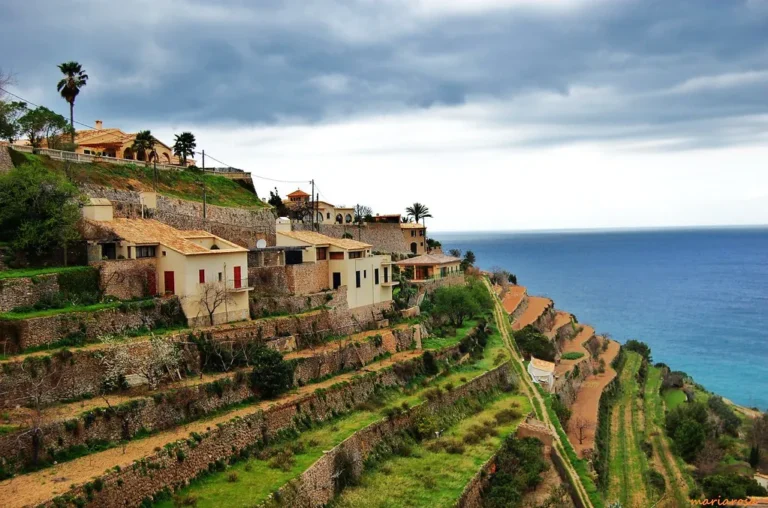
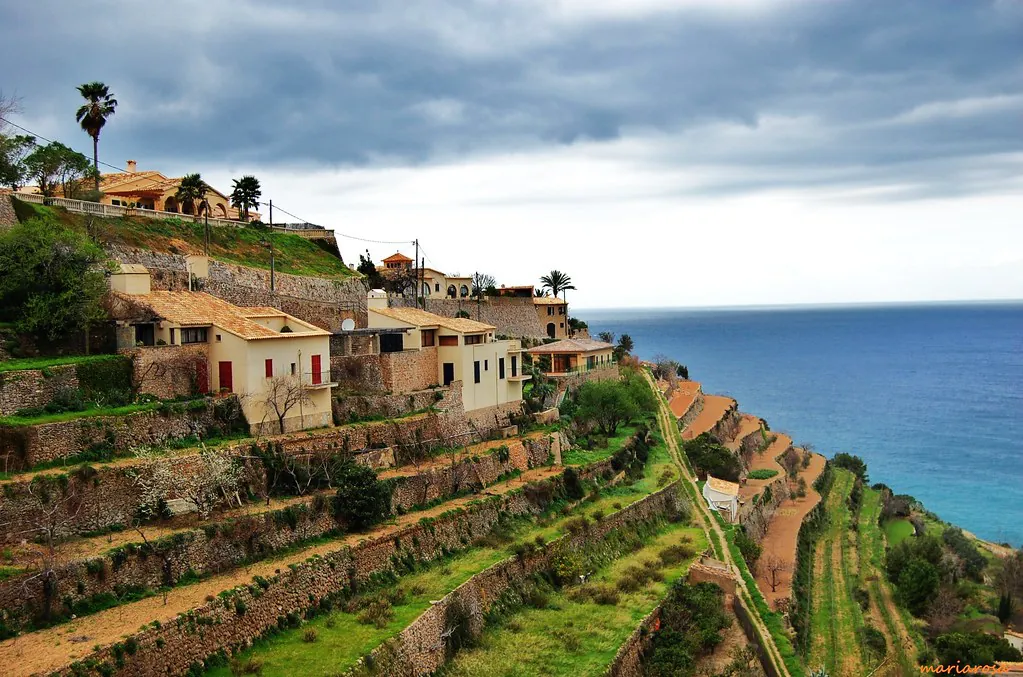
Walled off from the rest of Mallorca by the sheer limestone ramparts of the Serra de Tramuntana, the fertile basin of Sóller—historically celebrated as the Vall d’Or (the Golden Valley)—spent centuries living in physical isolation from Palma. Hemmed in by the 1,436-metre crags of Puig Major, Penyal del Migdia, and Els Cornadors, reaching the capital once demanded a grueling, eight-hour trek on mule-back over the treacherous Coll de Sóller. Facing formidable mountain barriers behind it, Sóller turned its eyes toward the sea, exporting fragrant shiploads of sweet Canoneta oranges directly from Port de Sóller to Marseille, Port-Vendres, and Sète.
That 19th-century maritime citrus boom transformed this agricultural pocket into one of the most culturally distinctive towns in the Balearic archipelago. French francs and Parisian architectural aesthetics flooded into the valley alongside returning emigrants, financing grand Art Nouveau mansions, intricate ironwork, and the monumental Catalan Modernisme facades designed by Antoni Gaudí’s close collaborator, Joan Rubió i Bellver. In 1912, local capital broke the mountain blockade forever by driving an electric wooden railway through thirteen tunnels straight into Palma’s Plaça d’Espanya, followed a year later by an electric wooden tram linking the town center directly to the sheltered horseshoe bay of Port de Sóller.
Today, navigating Sóller and its coastal harbor requires moving beyond surface-level postcard views. Experiencing this valley authentically means timing your visit to avoid the midday train surges, wandering the pebble-mosaic alleys of Carrer de Sa Lluna, savoring deep-sea ruby red prawns (Gamba vermella de Sóller) unloaded straight from working trawlers at the fishing quay, and tracing the dry-stone paths of the GR 221 through terraced olive orchards up to the maritime lighthouses of Muleta and Cap Gros.
Sóller Valley Fast Facts: Strategic Overview (2026)
- Topography & Location: Elevation 50 m (Sóller town) to sea level (Port de Sóller); situated 27 km north of Palma within the UNESCO-listed Serra de Tramuntana.
- Transit Time from Palma: 25 minutes by car via the Ma-11 motorway (toll-free Túnel de Sóller); 25 minutes on direct express TIB Bus Line 204; 60 minutes via the 1912 vintage Ferrocarril de Sóller.
- Primary Heritage Landmarks: Ferrocarril de Sóller (1912), Tranvía de Sóller (1913), Parròquia de Sant Bartomeu (Modernisme facade by Joan Rubió i Bellver), Banco de Sóller (1912), and Museu Modernista Can Prunera.
- Maritime Attractions: Horseshoe Bay of Port de Sóller, Santa Catalina fishing quarter, Museu de la Mar, Far de Muleta, and daily ferry excursions to Sa Calobra.
- Signature Gastronomy: Gamba vermella de Sóller (deep-sea red prawns), freshly pressed Canoneta orange juice, citrus ice cream from Fet a Sóller, and cold-pressed Oli de Mallorca DOP olive oil.
- Weekly Traditional Market: Every Saturday, 08:30 to 14:00 across Plaça de la Constitució, Carrer de Sa Lluna, and Plaça des Mercat.
- Crowd Management Strategy: Day-trip tour coaches and train crowds peak between 10:45 and 15:00. Arrive before 09:15 to explore the town center in peace, take the vintage tram to Port de Sóller for a midday seafood lunch, and return to Sóller town in late afternoon.
The Historic Ferrocarril & Tranvía de Sóller: Complete Riding Guide (2026 Fares, Timetables & Tips)
No journey into the valley is more steeped in living history than the iron road: the Ferrocarril de Sóller and its companion tramway, the Tranvía de Sóller. Far from a manufactured tourist gimmick, this rail network was born out of economic necessity, constructed with private capital raised by the citrus barons and returning emigrants who refused to remain trapped behind the mountain range.
The 1912 Vintage Wooden Train (Palma to Sóller)
Inaugurated on 16 April 1912 and electrified in 1929 with a 1,200-volt direct-current overhead catenary system by Siemens-Schuckert, the railway traverses 27.3 kilometres of narrow-gauge (914 mm / 3-foot) track between Palma and Sóller. The rolling stock remains an artisanal wonder: polished mahogany carriages, brass window catches, reversible leather-upholstered benches, and ceiling lamps that hum with vintage electrical relays.
Departing from the dedicated vintage terminal at Carrer d’Eusebi Estada 1 in Palma (adjacent to Plaça d’Espanya and the underground Estació Intermodal), the train rumbles across the flat almond plains of Es Raiguer before tackling the northern ramparts. The engineering required to cross the mountains remains extraordinary: the convoy climbs steadily, passing through thirteen separate tunnels bored by hand and dynamite through hard limestone. The longest passage, the Túnel Major (Great Tunnel), measures 2,856 metres in length, carving directly under the Serra d’Alfàbia ridge.
Upon emerging from the northern portal into daylight, the train crosses the graceful arches of the Viaducte dels Cinc-Ponts (Five Bridges Viaduct). On northbound departures from Palma, the train halts for 5 to 10 minutes at the Mirador Pujol d’en Banya. Here, passengers step onto an elevated stone terrace overlooking the entire Sóller amphitheatre—a panoramic vista taking in the red-tiled roofs of Sóller, the terraced hamlets of Biniaraix and Fornalutx, and the glittering blue strip of the Mediterranean Sea in the distance.
The 1913 Wooden Tram (Sóller Town to Port de Sóller)
Upon arrival at Sóller Station (a handsome converted 17th-century fortified estate, Ca’n Mayol), visitors step straight onto the platform of the Tranvía de Sóller. Inaugurated on 4 October 1913, this was the first electric tramway operating on Mallorca, initially designed to haul both passengers and crates of freshly landed fish and vegetables between harbor and market.
The tramline spans 4.8 kilometres. The original fleet consists of motor cars numbered 1 through 3 and open-sided summer trailers (*jardineras*) built in 1913 by Carde y Escoriaza in Zaragoza, complemented by authentic mid-century rolling stock acquired from Lisbon and Bilbao. Leaving Sóller station, the tram rings its heavy brass foot-pedal bell as it threads through the café terraces of Plaça de la Constitució, inches from diners sipping morning coffee. It then descends through the fragrant orange and lemon groves of the valley floor, follows the bed of the Torrent Major stream, and swings onto the pedestrian seafront promenade along Passeig Es Través before terminating at the Port de Sóller marina pier (stop: Sa Torre / La Parada).
2026 Train & Tram Practical Fares, Schedules & Ticketing
- Combined Return Ticket (Train + Tram): €38.00 per adult; €19.00 for children aged 3–12. This covers Palma–Sóller–Port de Sóller and the return leg.
- Individual Train Ticket: €20.00 one-way; €28.00 return.
- Individual Tram Ticket: €9.00 one-way (purchased onboard with card or cash, or online).
- Operating Hours & Departures: Trains run year-round with frequent departures in high season (between 10:10 and 18:30 from Palma; 09:00 to 18:30 from Sóller). Trams run every 30 to 45 minutes between 08:00 and 20:30 (until 21:30 in midsummer).
- Seat Selection Tip: When departing Palma toward Sóller, take a seat on the left side of the wooden train car to enjoy the pastoral plains and initial Tramuntana ascents. After the darkness of the Túnel Major, the spectacular sweeping views of the valley open up predominantly to the right side.
- Booking Advice: In peak season (May through October), purchase tickets in advance online at trendesoller.com to skip ticket-window queues in Palma and secure guaranteed seating on your preferred departure.
Top Things to Do in Sóller Town: Modernisme, Markets & Secret Courtyards
Sóller town is arranged around a lively civic square, flanked by cobblestone alleyways that climb upward toward ancient irrigation terraces. Taking time to walk through its architectural layers reveals how deeply the citrus trade enriched local culture.
Parròquia de Sant Bartomeu: Joan Rubió i Bellver’s Modernist Masterpiece
Dominating the northern perimeter of Plaça de la Constitució, the Parròquia de Sant Bartomeu (Parish Church of Saint Bartholomew) presents one of the most arresting architectural silhouettes in the Mediterranean. While the parish was consecrated in 1236 following the Christian conquest of King Jaume I and underwent extensive Baroque remodeling during the late 17th century, its monumental facade is pure Catalan Modernisme.
Designed between 1904 and 1912 by Catalan architect Joan Rubió i Bellver—one of Antoni Gaudí’s most brilliant disciples who also collaborated on Palma’s Cathedral La Seu—the facade is executed entirely in rough-hewn, unpolished grey limestone quarried from the surrounding Tramuntana mountains. Rubió replaced the crumbling Renaissance frontispiece with a soaring, organic composition featuring deep parabolic portal arches, sculpted floral capitals, and a dramatic neo-Gothic central rose window framed by scalloped gables and pointed pinnacles. Step inside the cavernous nave to escape the afternoon heat, admire the Gothic rib vaults and gilded Baroque altarpieces, and compare Rubió’s expressive stone detailing with Gaudí’s monumental works at Palma Cathedral.
Banco de Sóller: Organic Stone Waves and Forged Iron
Directly flanking the church stands the historic headquarters of the Banco de Sóller (now a Santander branch). Commissioned by the financial institution established in 1899 to manage the flow of citrus revenue between France and Mallorca, the bank’s headquarters was also entrusted to Joan Rubió i Bellver and erected between 1910 and 1912.
Rubió created an exquisite dialogue between heavy limestone and fluid organic design. Notice the wave-like, sinuous lintels surrounding the arched windows, the asymmetrical corner entrance, and the masterfully forged wrought-iron window grilles, which curve outward like organic plant tendrils. The styling draws unmistakable inspiration from Gaudí’s Casa Calvet and Casa Batlló in Barcelona, representing one of the finest surviving examples of rural Modernisme anywhere in Spain.
Museu Modernista Can Prunera: Art Nouveau Splendour
A short five-minute walk east of the main square along Carrer de Sa Lluna brings you to Can Prunera Museu Modernista (Carrer de Sa Lluna 86–90). Built between 1909 and 1911 for wealthy merchant Joan Magraner Oliver—who made his fortune in the citrus trade in Puerto Rico and France—this mansion is the crown jewel of Sóller’s domestic architecture.
Interior Craftsmanship
The ground floor is anchored by a cantilevered spiral staircase that twists upward toward a stained-glass skylight without a central supporting pillar. Rooms are paved in original polychrome hydraulic mosaic tiles (rajoles hidràuliques), with plaster ceilings adorned with high-relief floral wreaths and original art-nouveau furnishings made from polished walnut and pear wood.
Fine Art Collection
Beyond its architectural beauty, Can Prunera houses an outstanding modern art collection featuring original drawings, prints, and paintings by Joan Miró, Pablo Picasso, Henri de Toulouse-Lautrec, Paul Klee, Fernand Léger, and celebrated contemporary Mallorcan painter Miquel Barceló, alongside a serene rear garden dotted with contemporary sculptures.
Practical Info: Open Tuesday through Sunday from 10:30 to 18:30 (winter hours: 10:30 to 15:00; closed Mondays). General admission is €6.00 (€3.00 for students and seniors; free for children under 12).
Carrer de Sa Lluna and the Saturday Morning Market
The pedestrian backbone of Sóller is Carrer de Sa Lluna (Street of the Moon), named after an ancient stone crescent relief set into the wall of house number 23. Paved with smooth, river-worn Tramuntana cobbles set in decorative geometric patterns, this street is lined with traditional espadrille makers, leather artisans, delicatessens, and historic bakeries like Forn de Barri, where the aroma of warm ensaïmadas drifts into the alley.
If your schedule allows, plan your visit for Saturday morning (08:30 to 14:00), when the town hosts the weekly Mercat de Sóller. Market stalls spill across Plaça de la Constitució, down Carrer del Born, and into the municipal indoor market (Plaça des Mercat). Local farmers assemble crates overflowing with sweet Canoneta oranges, sun-wrinkled dried figs, woven braids of garlic, clusters of sweet ramellet tomatoes (used for rubbing on crusty rustic bread for pa amb oli), wheels of cured raw-milk Mahón cheese, and spicy sobrassada de porc negre. The sensory highlight occurs every fifteen minutes when the vintage wooden tram slowly parts the market crowds, its driver gently sounding the warning bell as vendors pull back produce awnings.
Jardí Botànic de Sóller & Museu Balear de Ciències Naturals
Located on the south-western edge of town along the road leading toward the port (Ctra. Palma-Port de Sóller, 19), the Jardí Botànic de Sóller is an essential sanctuary for naturalists and botanical enthusiasts. Founded in 1985 and opened to the public in 1992, this living conservation ark covers four hectares dedicated to preserving the fragile, endemic, and endangered plant species of the Balearic Islands and wider Mediterranean basin.
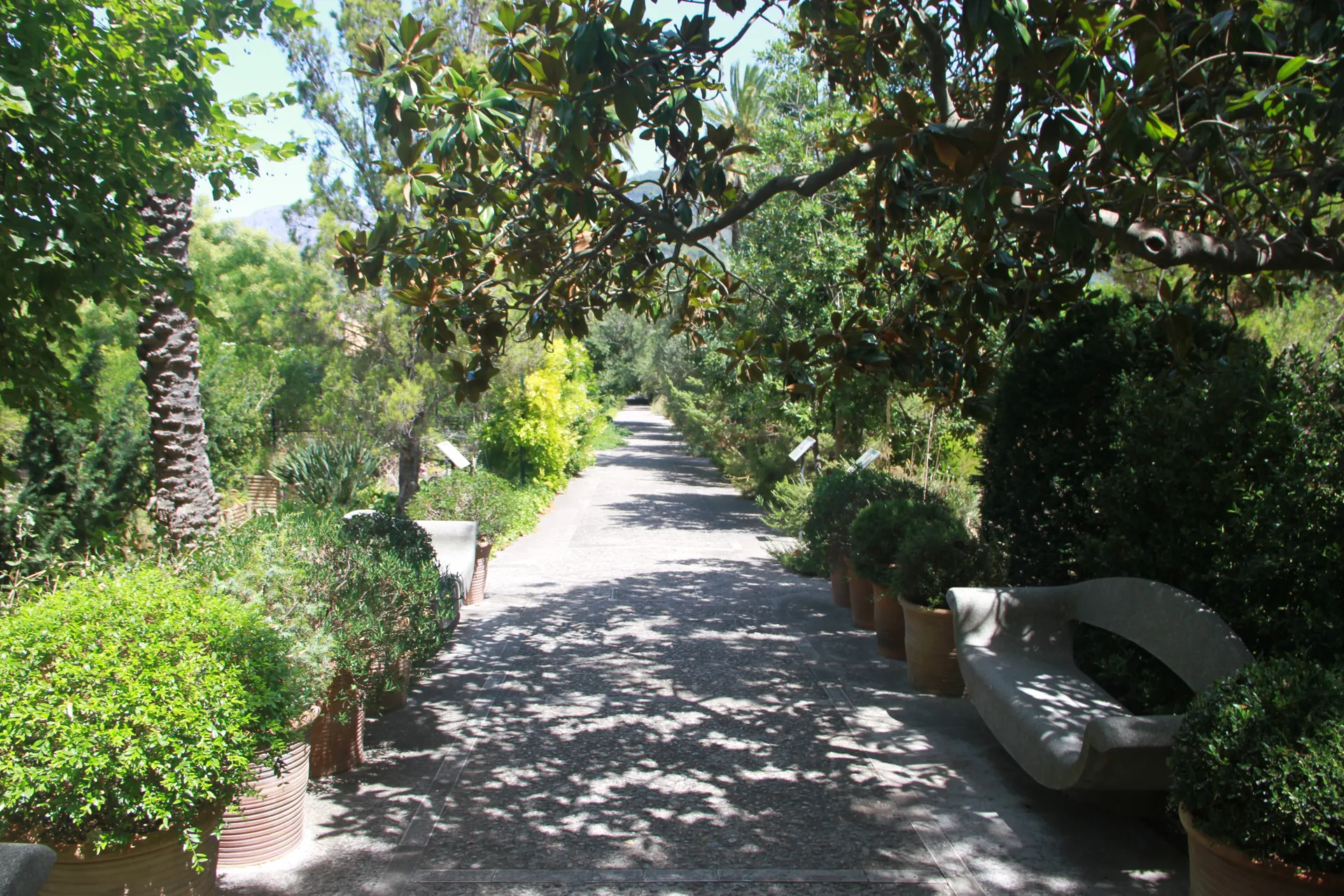
The botanical garden is thoughtfully organized into distinct ecological sectors:
- Balearic Endemics: Terraced rockeries safeguarding over 120 endemic plants found nowhere else on earth, including the elusive wild Mallorcan peony (Paeonia cambessedesii), mountain foxglove (Digitalis minor), rock-clinging Balearic St. John’s wort (Hypericum balearicum), and white rockrose (Cistus albidus).
- Mediterranean Island Floras: Dedicated conservation beds representing native species from Corsica, Sardinia, Crete, Cyprus, and Sicily.
- Ethnobotany & Heirloom Orchards: Displays illustrating centuries of traditional Mallorcan herbal medicine, natural dyeing plants, and historical citrus cultivars once cultivated across the valley floor.
Directly adjoining the garden, the Museu Balear de Ciències Naturals is housed in an early 20th-century modernist estate (El Camp d’en Prohom). The museum exhibits impressive fossil collections, including skeletal remains of Mallorca’s extinct endemic prehistoric dwarf goat, the Myotragus balearicus. Admission to the botanical garden is €8.00 for adults, €6.00 for students and seniors, and free for children under 6. Open Tuesday through Saturday from 10:00 to 18:00 (closing at 14:00 in winter; closed Sundays and Mondays).
Jardines de Alfabia: The Mountain Pass Oasis
Positioned on the southern approach to the Sóller pass near Bunyola, Jardines de Alfabia forms a natural cultural gateway to the valley. Dating back to the Moorish era of the 13th century when it was the mountain estate of the Moorish governor Ben-Abet, Alfabia seamlessly blends Islamic hydro-engineering, Gothic courtyards, and Renaissance landscaping.
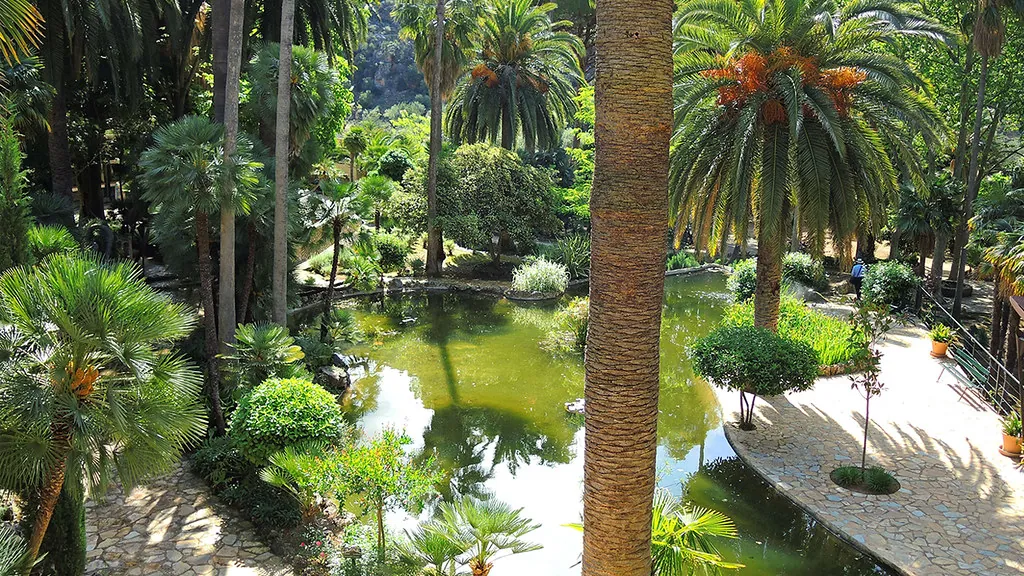
The highlight of Alfabia is its pergola walkway, framed by 72 stone columns and 24 carved stone hydrants that erupt into cross-arched water jets (juegos de agua) at the push of a hidden button. Exploring the manor house reveals coffered cedar ceilings carved with Islamic and Christian motifs from 1229, historical chambers occupied by Queen Isabella II during her 1860 royal tour, and vast shaded gardens irrigated by mountain springs channeled from the high Tramuntana peaks.
Top Things to Do in Port de Sóller: Horseshoe Bay, Lighthouses & Sea Excursions
Downhill from Sóller town, the mountain valley opens out into Port de Sóller (known locally simply as El Port). This almost perfectly enclosed natural horseshoe bay is the only sheltered deep-water natural harbor along Mallorca’s rugged 90-kilometre north-west coast, flanked by two towering limestone promontories: Cap Gros to the west and Punta de Sa Creu to the east.
The Horseshoe Bay: Platja d’en Repic and Platja des Traves
The shoreline of the bay is divided into two distinct beaches linked by a broad, car-free pedestrian promenade:
Platja des Traves
Bordering the eastern section of the bay directly alongside Passeig Es Través, this narrow golden-sand strip is where the 1913 wooden tram clatters gently past sun loungers and tamarisk trees. The water here is glassy and shallow, making it safe for wading, family swims, and launching paddleboards (SUP rentals available at €15–€20/hr).
Platja d’en Repic
Sweeping along the southern crescent of the bay, Platja d’en Repic is wider, combining fine golden sand and smooth gravel pebbles. The backdrop is lined with relaxed seafood bistros, shaded palm terraces, and stone benches looking straight out between the twin lighthouses toward the open Mediterranean horizon.
The Historic Fishing Quarter of Santa Catalina & Museu de la Mar
Perched on the steep rocky bluff rising behind the commercial marina sits Santa Catalina, the historic fishermen’s quarter. While the waterfront below has modernized, Santa Catalina retains the tranquil atmosphere of an old Mediterranean fishing village. Wander up the steep stone ramps and whitewashed alleys (such as Carrer de Santa Caterina and Carrer d’Anglada Camarasa), where weathered wooden shutters are painted sea-green and terracotta pots of bougainvillea spill down sunny stairways.
At the highest crest of the headland stands the Museu de la Mar (Maritime Museum), housed within the restored 13th-century Oratori de Santa Caterina d’Alexandria. Originally built in 1280 and reconstructed in 1572 after pirate corsair Uluj Ali pillaged the settlement during the legendary 1561 Ottoman raid (an event reenacted every May during the festival of Es Firó), this stone chapel now chronicles Sóller’s intimate relationship with the sea.
Inside, exhibits display historical boatbuilding tools used by traditional shipwrights (mestres d’aixa), scale models of lateen-rigged wooden llaüts, 18th-century compasses, and salvaged shipwreck anchors. Admission is free (open Tuesday to Saturday 10:00–14:00 and 17:00–20:00; Sunday 10:00–14:00). After exploring the museum, step out onto the adjacent Mirador de Santa Catalina lookout terrace. The view here drops vertically down sheer cliff faces into azure surf, offering an exhilarating panorama of the open Mediterranean Sea crashing against the outer sea walls.
The Sentinel Lighthouses: Far de Muleta & Far de Cap Gros
Two historic lighthouses guard the narrow mouth of Port de Sóller, each offering exceptional walking trails and sunset perspectives:
- Far de Muleta (East Headland): Built in 1865 and standing 205 metres above sea level, this active light is reached via a scenic 45-minute coastal hike from the southern end of Platja d’en Repic along the signposted Camí de Muleta (GR 221). The trail winds through ancient gnarled olive orchards supported by centenary dry-stone walls. Directly beside the lighthouse stands the Refugi de Muleta, a converted 1950s military telegraph station that now provides rustic dormitories and hearty hiker meals on the Dry-Stone Route.
- Far de Cap Gros (West Headland): Erected in 1859, this 22-metre cylindrical whitewashed stone tower crowns the dramatic limestone bluffs of Cap Gros, marking the western boundary of the bay. Accessible on foot or by bicycle via the paved Camí del Far (a pleasant 35-minute stroll from Platja d’en Repic), it offers an unmatched vantage point looking directly back into the horseshoe harbor as the late afternoon sun casts a golden glow over Santa Catalina and the Tramuntana peaks.
Boat Excursions: Barcos Azules to Sa Calobra & Torrent de Pareis
For visitors wishing to experience the sheer vertical drama of Mallorca’s northern coastline from the water, Port de Sóller is the primary launchpad for coastal sea cruises. The most celebrated excursion is the daily ferry operated by Barcos Azules, departing from the commercial pier in the marina and cruising north-east to Sa Calobra and the Torrent de Pareis.
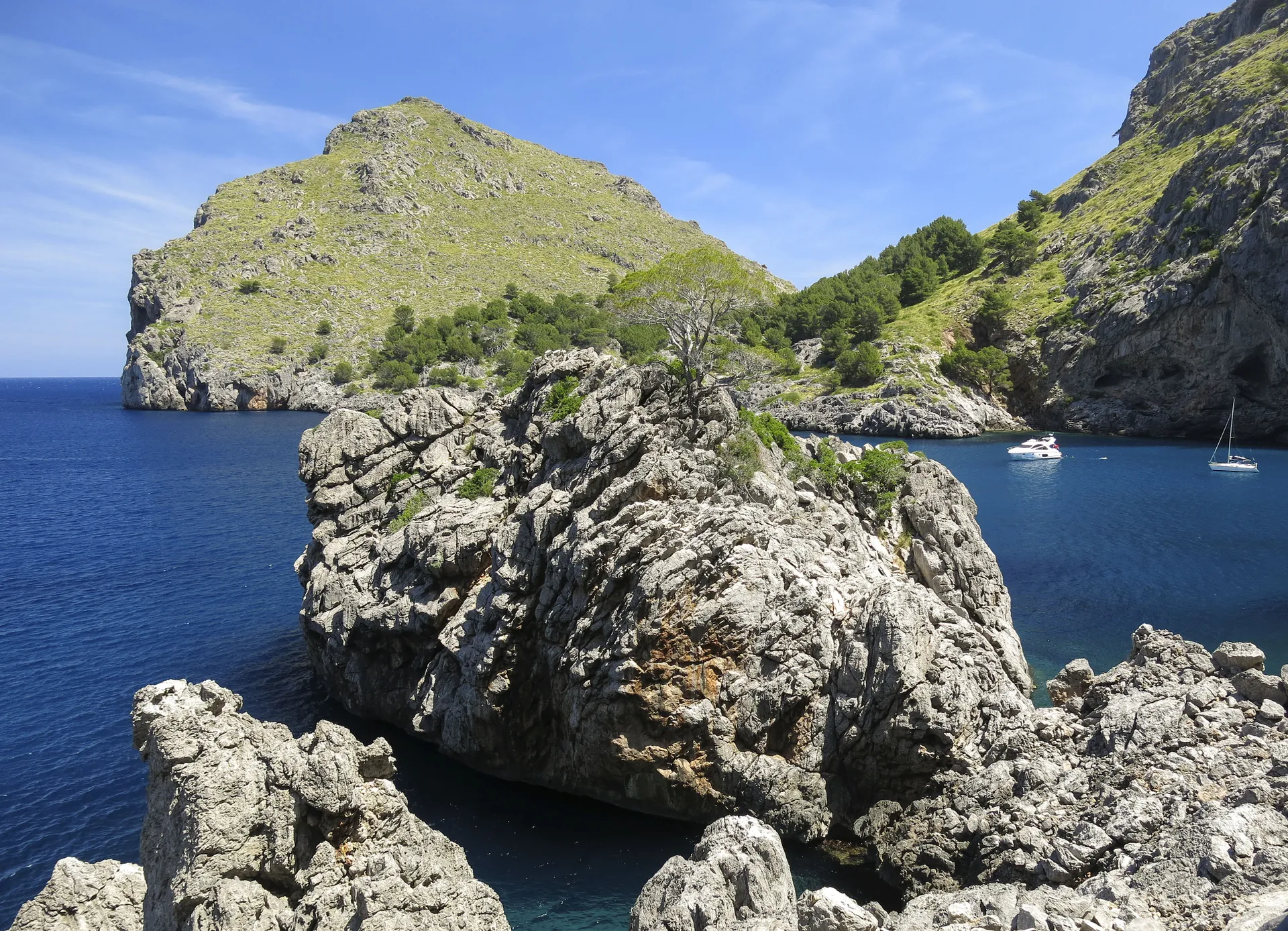
The 50-minute cruise hugs the formidable base of the Serra de Tramuntana, gliding beneath 1,000-metre vertical sea cliffs, hidden marine caves, and the forbidding knife-edge ridge of Morro de Sa Vaca. Disembarking at the landing dock of Sa Calobra, passengers walk through two narrow, rock-cut tunnels illuminated by ambient footlights to emerge onto a hidden pebble cove where the mighty Torrent de Pareis gorge meets the turquoise sea. Carved by millenia of torrential winter mountain runoff flowing down from the high plateaus near Cúber Reservoir, the gorge walls tower over 200 metres overhead.
Logistical Details: Return ferry tickets cost €33.00 for adults (€16.50 for children aged 6–11). Departures operate between April and late October, running 3 to 4 times daily depending on sea conditions. Always verify marine forecasts before departure; strong north-westerly winds (the Tramuntana) prompt ferry cancellations due to swells at the unprotected Sa Calobra landing dock.
Culinary Guide: Sóller Red Prawns, Orange Groves & Gelat Artesà
The cuisine of Sóller reflects the extraordinary geography that sustains it: rich mountain soils yielding sweet citrus fruits, terraced hillsides producing robust olive oils, and an abyssal marine trench yielding one of the world’s most prized culinary delicacies.
Gamba Vermella de Sóller: The Deep-Sea Ruby
The undisputed crown jewel of Mallorcan seafood gastronomy is the Gamba vermella de Sóller (red prawn / Aristeus antennatus). Unlike coastal shallow-water crustaceans, these deep-sea prawns inhabit the freezing, sunless underwater trenches off the north-west coast of Mallorca at depths between 500 and 800 metres.
Only a handful of licensed, traditional bottom-trawlers (barques de bou) operate from the Moll de Pescadors in Port de Sóller. Each afternoon around 17:00, the fleet docks at the quayside, where crates of glistening, ruby-red crustaceans are unloaded and immediately auctioned at the local fish exchange (llotja). The harsh depth and high salinity of their habitat give Sóller prawns their signature firm, sweet flesh and an extraordinarily rich, buttery concentration of flavorful lipids inside the cephalothorax (head).
“Never overwhelm a fresh Sóller prawn with garlic, oil sauces, or citrus. It requires only three minutes on a blistering cast-iron plancha, a dusting of coarse sea salt, and two hands to crack the shell and savor the sweet juices inside the head.”
— Master Fishmonger, Moll de Pescadors, Port de Sóller
When dining at respected waterfront establishments in Port de Sóller (such as Kingfisher Restaurant in Santa Catalina, Es Canyís, or Nenuphar), or at fine-dining institutions in town like Ca’n Boqueta, order them simply a la plancha. Pair them with a crisp, chilled glass of local Mallorcan white wine made from the indigenous Prensal Blanc grape. For a wider appreciation of the island’s culinary traditions, explore our comprehensive guide to traditional Mallorcan foods.
The Valley of Oranges: Canoneta Citrus & Co-op Traditions
Citrus trees were first introduced to the valley by Arab agronomists in the 10th century, who developed the gravity-fed canal networks (séquies) that still divert mountain spring water through the stone terraces today. The pride of the valley is the Canoneta orange, an indigenous heirloom cultivar characterized by its thin, smooth rind, deep flame-orange color, and high sugar content balanced by a clean, bracing acidity.
A single fresh Canoneta orange yields up to 60% of its weight in juice, making it the premier juicing orange in Spain. In any café on Plaça de la Constitució, ordering a suc de taronja natural (€3.50–€4.50) delivers a glass squeezed from fruit harvested that very morning.
To purchase artisanal citrus products to take home, visit the Cooperativa Agrícola de Sóller (Carrer de Sant Bartomeu, 67). Founded in 1899, this working cooperative unites over 300 local growers. Their farm shop stocks extra virgin olive oil cold-pressed from centenary olive trees (Oli de Mallorca DOP), pure citrus blossom honey (mel de taronja), organic orange and bitter lemon marmalades, and artisanal balsamic citrus vinegars.
Gelat de Sóller & Fet a Sóller: Artisanal Citrus Confectionery
No warm afternoon in the valley is complete without sampling artisanal citrus ice cream. The valley’s ice cream heritage is anchored by Sa Fàbrica de Gelats (founded in 1994 and operating out of Plaça des Mercat) and the artisan brand Fet a Sóller.
Their ice creams and sorbets are churned daily using fresh whole milk and raw valley fruit, free from artificial flavorings or chemical stabilizers. Essential scoops to order include:
- Sorbet de Taronja de Sóller: A crisp, deeply aromatic sorbet that tastes like frozen, sun-ripened Canoneta orange juice.
- Gelat de Flor de Sauco i Llimona: Infused with wild elderflower blossoms and tart mountain lemons.
- Ametlla Torrada: Rich, nutty ice cream made from toasted Mallorcan almonds (*Ametlla de Mallorca IGP*).
- Figa de Moro: Seasonal late-summer prickly pear sorbet, intense magenta and delicately sweet.
Complete 1-Day Sóller & Port de Sóller Itinerary
This master schedule is engineered to optimize light conditions, minimize waiting times for public transit, and ensure you explore the historic core before the peak midday crowds arrive from Palma:
| Time Window | Location & Activity | Key Experience Details | Tactical Ground Tip |
|---|---|---|---|
| 08:30 – 09:30 | Breakfast in Plaça de la Constitució | Freshly squeezed Canoneta orange juice, café con leche, and warm ensaïmada de crema at Café Sóller as the town awakens. | Arrive before 09:00 to find easy parking at Parking Desbrull or alight from the early TIB 204 bus. |
| 09:30 – 11:00 | Modernisme & Heritage Walking Tour | Examine the stone facade of Parròquia de Sant Bartomeu, admire the Banco de Sóller ironwork, and tour the Can Prunera Museum of Modernism. | Visit Can Prunera promptly at its 10:30 opening to photograph the spiral staircase in pristine morning light. |
| 11:15 – 11:45 | 1913 Vintage Tram to Port de Sóller | Board the wooden tram at Sóller Station; rumble through the market square and down through orange groves toward the sea. | Board at the main station terminal rather than the square to ensure you secure an exterior bench seat on an open jardinera car. |
| 12:00 – 14:15 | Santa Catalina Quarter & Seafood Lunch | Stroll the quiet stone lanes of the fishing quarter, visit the Museu de la Mar (Oratori), and settle in for a leisurely seafood lunch. | Order Gamba vermella de Sóller a la plancha at Kingfisher or Es Canyís; advance table reservations are essential between June and September. |
| 14:30 – 16:30 | Lighthouse Hike to Far de Muleta | Follow the Camí de Muleta (GR 221) coastal trail from Platja d’en Repic up through ancient olive groves to Far de Muleta and the mountain refuge. | Wear sturdy walking trainers; enjoy a cold beverage on the stone terrace of Refugi de Muleta overlooking the open sea. |
| 16:45 – 18:00 | Jardí Botànic de Sóller | Return to Sóller town via tram or TIB Bus 204; wander through the terraced botanical beds preserving endangered Balearic flora. | Late afternoon provides cooler temperatures and soft lighting across the mountain rockeries. |
| 18:30 – 20:30 | Sunset Tapas & Artisanal Gelato | Enjoy artisanal Canoneta orange gelato from Sa Fàbrica de Gelats, followed by seasonal tapas and local Mallorcan wine at Ca’n Boqueta or Casa Álvaro. | Sit on an outdoor patio to watch the final vintage wooden tram clatter through the evening twilight. |
Logistics, Parking & Public Transit 2026: Getting to Sóller
Understanding transportation logistics in 2026 is critical to enjoying your excursion without frustration. Road access, transit ticketing, and municipal parking have seen significant modernizations in recent years.
By Public Bus: TIB Line 204 (The Fast, Economical Option)
If your priority is speed, economy, and avoiding parking challenges, the regional TIB Bus Line 204 is the most practical transit method on the island. Departing from the subterranean Estació Intermodal at Plaça d’Espanya in Palma, Line 204 runs directly through the Ma-11 tunnel beneath the mountains, stopping at Sóller town (Carrer de Cetre / Monument) before continuing directly to Port de Sóller.
- Transit Time: Only 25 minutes to Sóller town; 35 minutes to Port de Sóller.
- Fares & Payment: Single fares using contactless bank cards (“Tap On, Tap Off” on the validator upon boarding and exiting) cost only €1.80 to €2.70 per person. Up to 5 passengers can tap the same card for multi-rider discounts. Cash fares cost €4.50.
- Frequency: Buses run every 20 to 30 minutes during peak season from 06:30 until 23:00. Consult our full guide to the Mallorca public transport system for comprehensive timetable and fare breakdowns.
By Heritage Train: Ferrocarril de Sóller (The Scenic Route)
The 1912 wooden train is an unforgettable experiential journey. It costs significantly more than the public bus (€38 return including the tram versus ~€4–€5 return on TIB Bus 204), but it delivers a panoramic window into Mallorca’s engineering heritage. If traveling as a couple or family seeking scenic leisure, take the train northbound in the morning, ride the tram to the port, and return to Palma quickly in the evening via TIB Bus 204 in under half an hour.
By Rental Car & Parking Realities in 2026
Driving from Palma takes approximately 25 minutes via the Ma-11 highway. Crucially, the Túnel de Sóller—a 3-kilometre road tunnel passing under the Serra d’Alfàbia—has been entirely toll-free since its private concession was municipalized in 2017. Adventurous motorists and motorcyclists can opt instead for the old mountain pass road, the Coll de Sóller (Ma-11A), which negotiates 57 tight hairpin switchbacks through pine forests, offering magnificent views across the valley floor.
However, parking in both Sóller and Port de Sóller is strictly regulated and heavily monitored by municipal traffic police (Policia Local):
Parking in Sóller Town
- Parking Desbrull (Carrer de Cetre): The main municipal car park near the tram line and bypass roundabout. Rates are approximately €1.20–€1.50 per hour. Reaches capacity by 10:30 AM on Saturdays.
- Parking Camí des Murterar: A paved surface lot situated a 5-minute walk north of the town square.
- Blue Zones (Zona ORA): Street bays painted in blue require meter tickets (€1.25/hour, strictly limited to a maximum stay of 2 hours).
Parking in Port de Sóller
- Parking Lepant (Avinguda de Lepant): Large multi-level facility situated 200 metres from Platja des Traves. Expect rates of ~€1.80 per hour.
- Parking Sa Caleta: Situated behind the marina and Santa Catalina quarter; ideal for harbor dining and boat charters.
- Platja d’en Repic: Limited on-street blue zone bays along the southern crescent; fills completely before 10:00 AM in midsummer.
Experiencing the Tramuntana: Guided Walking Tours & Excursions
Sóller serves as the hiking capital of the Serra de Tramuntana. The valley is crisscrossed by ancient dry-stone paths engineered over centuries to link remote mountain farmsteads (possessions) to the coast.
The most iconic walking routes departing directly from Sóller include:
- Sóller to Fornalutx & Biniaraix: A gentle 3-hour circular trail (8.5 km) passing through the ancient hamlet of Biniaraix, climbing stone steps up to the entrance of the monumental Barranc de Biniaraix gorge, and continuing through orange orchards to Fornalutx, frequently voted one of Spain’s most picturesque stone villages.
- The Dry-Stone Route (GR 221) to Deià: A classic 3.5-hour coastal hike (10 km) beginning at Sóller town, ascending through the olive groves of Son Mico, following the cliff paths above Llucalcari, and descending to the pebble cove of Cala Deià. From Deià, hikers can continue inland toward the historic mountain village of Valldemossa.
- High-Altitude Tramuntana Trails: For seasoned trekkers, trails climb from the valley floor toward the high alpine lakes of Cúber Reservoir and the rocky summit of l’Ofre (1,093 m), offering sweeping views across the central plains.
For visitors who prefer structured historical context and expert storytelling, booking a certified local guide unlocks hidden courtyards, architectural symbolism, and private citrus groves. Explore our curated selection of Mallorca walking tours, incorporate Sóller into a seamless capital city excursion with our guide to things to do in Palma de Mallorca, or integrate the entire valley into our expertly sequenced 7-day Mallorca travel itinerary.
Frequently Asked Questions About Visiting Sóller
Is Sóller worth visiting during a holiday to Mallorca?
Yes. Sóller is one of Mallorca’s premier cultural and natural destinations. Set within a UNESCO World Heritage mountain valley, it combines the iconic 1912 vintage wooden railway, stunning Catalan Modernisme architecture designed by Gaudí disciple Joan Rubió i Bellver, scented citrus orchards, and the picturesque horseshoe bay of Port de Sóller with world-class seafood dining.
How do you travel from Palma to Sóller without a rental car?
You have two excellent public transit choices. The fastest and most economical option is TIB Bus Line 204, which departs Palma Intermodal Station every 20–30 minutes, traveling through the Ma-11 tunnel to Sóller in just 25 minutes for €1.80 to €2.70 using a contactless bank card. Alternatively, the historic 1912 Ferrocarril de Sóller wooden train departs from Carrer d’Eusebi Estada 1, offering a scenic 60-minute journey through the Tramuntana mountains for €20 one-way or €28 return.
How much does the wooden train and tram ticket cost in 2026?
In 2026, the combined return ticket covering the vintage train from Palma to Sóller and the wooden tram from Sóller to Port de Sóller (and back) is €38.00 for adults and €19.00 for children aged 3–12. If purchased individually, the train costs €20.00 one-way (€28.00 return), and the tram between Sóller and the port costs €9.00 one-way, payable onboard by card or cash.
What is the difference between Sóller town and Port de Sóller?
Sóller is the historic inland agricultural town, located in the valley basin 4.8 kilometres from the coast, centered around the Modernist church, municipal market, and merchant mansions. Port de Sóller is the coastal harbor and seaside resort, featuring a natural horseshoe bay with two sandy beaches, the historic Santa Catalina fishing quarter, marina piers, seafood restaurants, and lighthouses. They are linked together by the 1913 vintage electric tramway.
When is the weekly market in Sóller, and what can you find there?
The traditional weekly market takes place every Saturday morning from 08:30 to 14:00 in Plaça de la Constitució, Plaça des Mercat, and along Carrer de Sa Lluna. Stalls sell fresh Canoneta oranges, seasonal vegetables, ramellet tomatoes, artisan sobrassada, cured Mahón cheeses, olive wood handicrafts, handmade ceramics, and traditional leather footwear.
Where can you taste authentic Sóller red prawns (Gamba vermella)?
Authentic Gamba vermella de Sóller is served at waterfront restaurants in Port de Sóller along the Santa Catalina quarter and marina promenade, such as Kingfisher Restaurant, Es Canyís, and Nenuphar, as well as fine-dining establishments in Sóller town like Ca’n Boqueta. The prawns are landed daily by local trawlers at 17:00 at the Moll de Pescadors fish market and are best ordered simply grilled a la plancha with sea salt.
Can you walk between Sóller town and Port de Sóller?
Yes. A scenic walking route connects Sóller town to Port de Sóller via the Camí de Rocafort or through the hamlet of l’Horta along the Torrent Major stream. The distance is approximately 4.5 kilometres, takes about 50 to 60 minutes at a gentle pace on flat to gently descending paved paths, and passes through fragrant citrus groves away from vehicular traffic.
Can you take a boat excursion from Port de Sóller to Sa Calobra and Torrent de Pareis?
Yes. Barcos Azules operates daily passenger ferries from the commercial pier in Port de Sóller to Sa Calobra and the mouth of the Torrent de Pareis gorge from April through late October. The 50-minute boat ride costs €33.00 return for adults (€16.50 for children) and skirts the dramatic sea cliffs of the northern Tramuntana coast. Sailings are subject to sea conditions and calm weather.