
Cap de Formentor Road Restrictions & Shuttle Bus 334: Complete 2026 Guide
Between June 1 and October 31, the narrow ribbon of the Ma-2210 winding towards Far de Formentor becomes Spain’s most rigorously policed coastal cul-de-sac. Each summer, thousands of travelers pick up rental cars at Palma’s Son Sant Joan Airport, follow digital navigation apps past Port de Pollença, and glide straight into an automated camera trap at road marker Km 8.7. Several weeks later, an unappealable €200 penalty notice from the Dirección General de Tráfico (DGT) arrives at their home address, compounded by a non-negotiable €40 administration surcharge billed directly by their car hire company.
Reaching Mallorca’s northernmost promontory—where the Serra de Tramuntana plunges 300 metres vertically into cobalt Mediterranean waters—remains one of the island’s elemental landscape experiences. However, navigating the Ma-2210 without incurring heavy fines requires an exact, ground-level understanding of where municipal checkpoints end, where automated number-plate recognition (ANPR) enforcement begins, and how to utilize the local TIB Line 334 shuttle network. This operational guide details the 2026 seasonal regulations, camera gate coordinates, shuttle logistics, and field-tested strategies to explore Mirador Es Colomer, Talaia d’Albercutx, and the lighthouse without a fine.
Critical 2026 Regulation Notice: Cap de Formentor Restriction Summary
- Enforcement Window: Daily from June 1 to October 31, 2026, inclusive (including Sundays and public holidays).
- Restricted Operating Hours: 10:00 to 19:00 every day.
- Restricted Sector: Km 8.7 (junction past Platja de Formentor) to Km 19.6 (Far de Formentor Lighthouse).
- Unrestricted Sector: Port de Pollença (Km 0.0) to Mirador Es Colomer (Km 6.6) and the spur road up to Talaia d’Albercutx remain legal to drive 24/7 without permits.
- Infraction Penalty: €200 fine issued automatically by DGT / Trànsit Balear ANPR cameras (reduced to €100 for payment within 20 calendar days) plus €35–€55 car rental agency processing fees.
- Official Transit Solution: TIB Shuttle Bus Line 334 operates every 35 minutes between Alcúdia, Port de Pollença, Mirador Es Colomer, Platja de Formentor, and Far de Formentor.
Cap de Formentor Restrictions Matrix: What Is Allowed in 2026?
The road network threading the Formentor peninsula is governed by distinct administrative zones. Confusion arises because the physical road barrier at Km 8.7 does not always feature a human guard; instead, overhead optical recognition gantries quietly photograph license plates in both travel directions. Review the transit matrix below before planning your driving route.
| Peninsula Destination | Road Marker (Ma-2210) | Private Car Access (10:00–19:00) | Camera Enforcement | Transit Recommendation |
|---|---|---|---|---|
| Mirador Es Colomer (Creueta) | Km 6.6 | Allowed (No restrictions) | None (Before camera gate) | Drive early (parking fills by 09:45) or take TIB Bus 334. |
| Talaia d’Albercutx Watchtower | Km 6.6 (Spur Road) | Allowed (No restrictions) | None (Before camera gate) | Hike up from Colomer lot (25 mins) or drive narrow single-track spur. |
| Platja de Formentor (Beach Area) | Km 8.7 | Restricted / Monitored | ANPR gate at Km 8.7 border | Take TIB Bus 334, catch Port de Pollença ferry, or arrive pre-10:00 to paid beach lot. |
| Cala Figuera & Cala Murta Trailhead | Km 13.5 | Strictly Prohibited | Active ANPR (€200 fine) | TIB Bus 334 (request stop at trailhead) or cycle from Port de Pollença. |
| Far de Formentor (Lighthouse) | Km 19.6 | Strictly Prohibited | Active ANPR (€200 fine) | TIB Bus 334 Shuttle only; private motor vehicles strictly banned. |
The ANPR Camera System & Fines Explained
Instituted jointly by the Consell de Mallorca, the Ajuntament de Pollença, and the Dirección General de Tráfico (DGT), the driving ban serves a vital civil-protection purpose. The Ma-2210 was drafted in 1925 by Italian-Mallorcan civil engineer Antonio Parietti. Designed to respect the natural topography rather than blast through it, the road features sheer 180-degree hairpin turns (curvas de herradura), unyielding dry-stone retaining parapets (marges de pedra en sec), and no safety runoffs. Prior to 2018, upwards of 4,000 vehicles converged daily on the lighthouse plateau, resulting in catastrophic gridlock that completely blocked ambulances, fire response vehicles, and scheduled public buses.
To eliminate manual road checkpoints, authorities installed optical Automatic Number Plate Recognition (ANPR, or lector de matrícules) camera systems. Here is exactly how the enforcement mechanism functions on the ground:
The Dual-Direction Camera Trap
The primary ANPR optical gantry is mounted past the roundabout near the entrance road descending to Platja de Formentor at Km 8.7. These high-speed cameras record both ingress and egress lanes. If an unauthorized private vehicle breaks the optical beam between 10:00:00 and 19:00:00, an automated violation ticket is logged directly into the DGT centralized processing registry.
The “Early Morning Return Trap”
The most common financial trap occurs when motorists drive past Km 8.7 at 08:30 AM before cameras activate, spend three hours swimming at Cala Figuera, and drive back past Km 8.7 at 11:30 AM. Entering before 10:00 AM does not grant permission to drive back during restricted hours. Outbound cameras record your exit timestamp, triggering the mandatory €200 fine immediately.
Fine Amounts, Discounts, and Rental Surcharges
A violation of the seasonal access restriction constitutes a serious traffic infraction under Article 76 of Spain’s Ley sobre Tráfico, Circulación de Vehículos a Motor y Seguridad Vial:
- Base Statutory Penalty: €200.
- Prompt Payment Discount (Pronto Pago): A 50% discount applies if the penalty is settled within 20 calendar days from notification, reducing the fine to €100. Payments can be processed online via the official DGT telematics portal (sede.dgt.gob.es) or in person at any Spanish post office branch (Correos).
- Rental Agency Administrative Fees: If you drive a hired car (Sixt, Goldcar, Centauro, RecordGo, Enterprise, Avis, OK Mobility), the DGT queries the rental registry to identify the contract holder. The rental company charges an automatic, non-waivable administrative processing fee ranging from €35 to €55 per notification directly to your credit card. Even with the prompt payment discount, your total outlay will reach €135 to €155.
“I entered the road at 09:15 AM to photograph Cala Murta, thinking the ban only applied to inbound cars. When I drove back through Km 8.7 at 11:45 AM, the camera caught my plate. Two months later, Sixt charged my card €40 for a driver identification fee, followed by a €100 DGT fine in the post.”
— Typical field report from unsuspecting holidaymakers along the Ma-2210
Who Can Secure an Official Driving Exemption?
Private vehicle exemptions are strictly limited and must be authorized prior to entering the restricted corridor. Eligible categories include:
- Permanent residents whose primary registered dwelling sits along the peninsula past Km 8.7.
- Commercial maintenance and municipal utility vehicles registered with the Consell de Mallorca.
- Drivers with Reduced Mobility (PRM): Travelers carrying an official European Blue Badge for disabled parking can obtain clearance. You must submit your vehicle license plate, a clear scan of your official disability card, and your travel dates to the provincial traffic department via email at least 3 business days prior to travel (via formentor@dgt.es).
- Public transit and emergency services: Scheduled TIB buses, official Guardia Civil patrols, and licensed SP (Servicio Público) taxis displaying blue rear license plates have blanket clearance.
Important note regarding dining bookings: Reserving a table at beachfront dining venues or beach concessions near Platja de Formentor does not grant clearance to proceed past Km 8.7 toward Far de Formentor. Vehicles destined for Platja de Formentor must park in the designated beach pay-parking zone before the restriction gate or arrive via public shuttle.
How to Visit Mirador Es Colomer & Talaia d’Albercutx Without a Fine
The best-kept secret of the 2026 regulations is that two of the most spectacular vantage points on the entire Tramuntana coast—Mirador Es Colomer and the historical watchtower of Talaia d’Albercutx—sit at Km 6.6, well before the optical camera gate at Km 8.7. You can legally drive your private rental car to both landmarks at any hour of the day or night, seven days a week, without requiring permits or risking a penalty.
1. Mirador Es Colomer (Mirador de la Creueta)
Rising abruptly 232 metres above sea level, the Colomer promontory offers an unobstructed gaze down sheer limestone verticalities into foaming surge water. A stepped stone pathway, carved out of native grey marés rock with thick parapets, tracks out along the narrow dorsal spine to a cliff-edge balcony facing the islet of El Colomer.
- Exact Location: Ma-2210, Km 6.6 (clearly signposted on your right during the ascent from Port de Pollença).
- Parking Capacity & Logistics: A free paved parking lot accommodates roughly 80 vehicles, alongside an information hut and a modest seasonal kiosk.
- The Morning Congestion Factor: Because this lot is completely unrestricted, rental cars fill every marked bay by 09:45 AM between mid-June and late September. When the lot reaches maximum capacity, local police (Policia Local de Pollença) often erect temporary traffic cones at the base roundabout in Port de Pollença (Km 0.0), halting all uphill traffic until spaces clear. Arrive by 08:45 AM for seamless parking, or board TIB Line 334 from Port de Pollença.
2. Talaia d’Albercutx: The Elevated Alternative
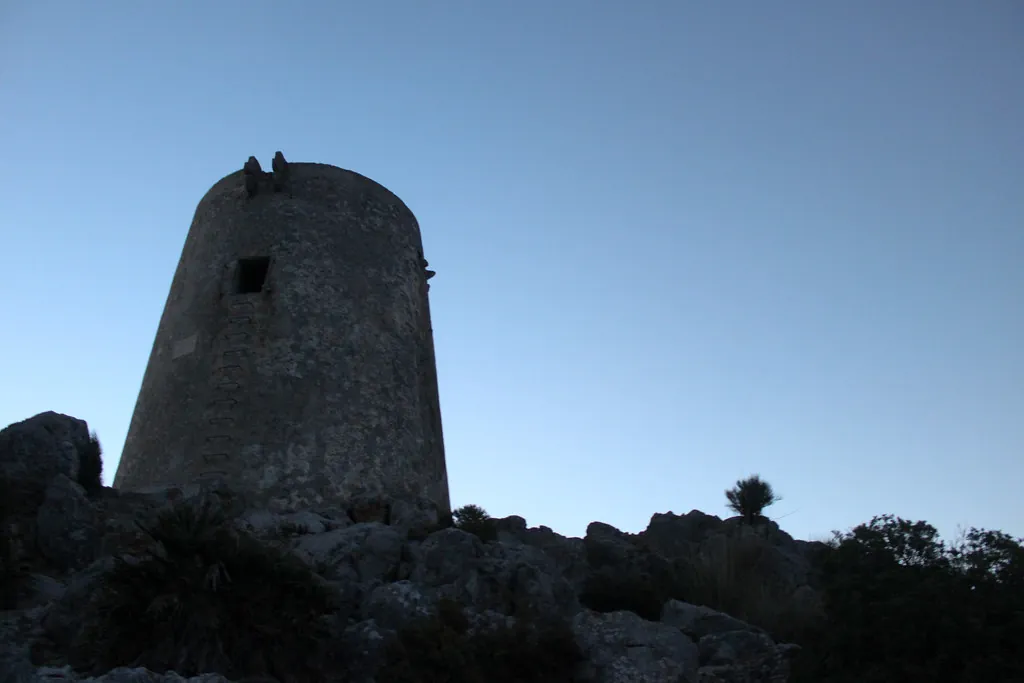
Constructed in 1595 as part of the island’s maritime coastal warning chain against Ottoman and North African corsair raids, Talaia d’Albercutx crowns a commanding limestone ridge at 357 metres above the sea. While Mirador Es Colomer is frequently overwhelmed with coach tour groups, Albercutx offers a raw, tactile immersion into Mallorca’s defensive heritage, with sweeping 360-degree panoramas extending across Badia de Pollença, Badia d’Alcúdia, and the entire undulating backbone of the Formentor peninsula.
The watchtower is accessed via a narrow, single-track asphalt spur road (Camí de la Talaia) branching to the right immediately before the entrance to the Mirador Es Colomer parking lot:
- Driving the Spur: The 2.1-kilometre climb features tight hairpin switchbacks, crumbling tarmac shoulders, and sheer drop-offs with zero safety crash barriers. If you encounter oncoming vehicles, one driver must reverse into an unpaved passing bay (apartadero). Drivers uncomfortable with steep mountain reversing should avoid taking rental vehicles up this track.
- Hiker’s Approach (Recommended): Leave your car in the main Colomer parking lot and walk up the asphalt spur on foot. The ascent covers 2.1 kilometres with a steady 120-metre elevation gain, taking 25 to 35 minutes at a relaxed pace through wild olive, garrigue scrub, and fragrant rosemary bush.
- Exploring the Tower: An iron rung ladder bolted into the weather-beaten exterior wall allows nimble visitors to scramble through the original elevated defensive portal. Inside, spiral stairs lead to the flat roof terrace where sentinels once burned green wood by day and straw by night to alert defensive garrisons at Alcúdia and Pollença.
Complete TIB Bus 334 Shuttle Guide: Timetable, Stops & Contactless Fares
The TIB (Transports de les Illes Balears) Line 334 shuttle represents the official, state-subsidized transit spine of the Formentor peninsula. Outfitted with specialized low-emission, air-conditioned regional coaches, Line 334 bypasses all private car restrictions, providing direct access to the beach, wilderness cala trailheads, and the lighthouse steps.
Route & Key Stops
Line 334 operates on a continuous loop originating in the historic town of Alcúdia and threading through Port de Pollença before climbing into the Tramuntana. Travelers can board at any of the following key waypoints:
- Alcúdia Centre / Estació: The primary regional transport node, convenient if staying in Alcúdia old town or transferring from Palma via regional bus Line 302 (consult our detailed Mallorca public transport guide for regional transfer timetables).
- Port de Pollença Hub (Carrer Cecili Metel & Port): The primary boarding hub. The central stop on Carrer de Cecili Metel sits a short 4-minute walk from the expansive, free public unpaved car park situated near Carrer de la Gola. Park your rental car here for the day and board the shuttle stress-free.
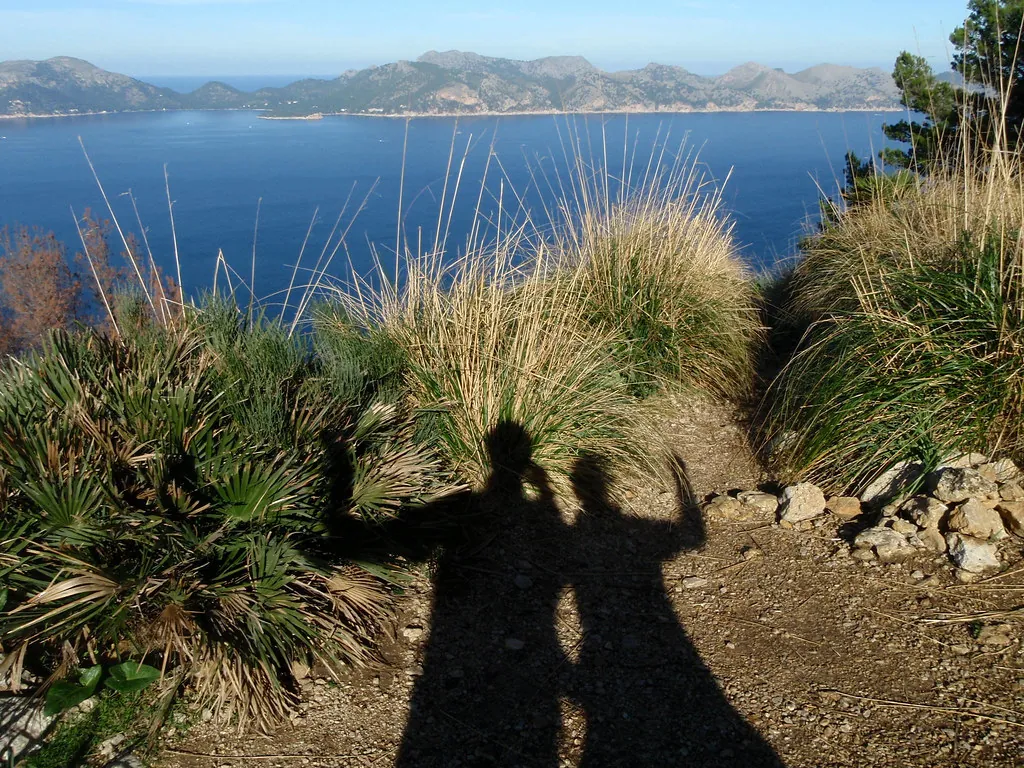
- Mirador Es Colomer (Km 6.6): The coach pauses at the viewing terrace turnout, allowing passengers to disembark for photographs or connect with the hike up to Talaia d’Albercutx.
- Platja de Formentor (Km 8.7): Stops beneath towering maritime pines a mere 50 metres from the white sand beach and the historic Hotel Formentor jetty.
- Cala Figuera / Cala Murta Trailhead (Km 13.5): An essential wilderness request stop. Disembark here to access the unpaved pedestrian tracks dropping down to the wild pebble beach of Cala Murta (left fork, 25-minute walk) or the crystalline snorkeling inlet of Cala Figuera (right fork, 20-minute descent).
- Far de Formentor (Km 19.6 – Terminal): The shuttle maneuvers directly into the exclusive bus-turning circle below the 1863 lighthouse compound, depositing riders steps from the panoramic perimeter wall.
Operating Hours & Frequency (2026 Summer Schedule)
During the June 1 to October 31 restriction window, Line 334 operates seven days a week with dependable regularity:
- Frequency: Departs every 35 minutes throughout peak operating hours.
- First Departure from Port de Pollença: 09:00 AM.
- Peak Service Window: 10:00 AM to 18:30 PM.
- Last Departure Returning from Far de Formentor: 20:15 PM (allowing visitors to enjoy the golden hour, though arriving before sunset twilight requires careful planning).
The “Tap On, Tap Off” Contactless Fare System (How to Save up to 60%)
The Balearic public transit ticketing system has eliminated traditional paper tickets on regional buses in favor of an advanced contactless payment architecture. You do not need to purchase tickets ahead of time or queue at ticket windows; simply present your physical credit or debit card (Visa, Mastercard, or American Express) or mobile wallet (Apple Pay, Google Pay) to the validator upon entering the bus.
Crucially, up to five passengers can travel together on a single bank card, unlocking substantial multi-passenger volume discounts:
| Fare Method | Cost per Person (Approx.) | Total Cost for 2 Passengers | Total Cost for 4 Passengers | Savings vs. Cash Ticket |
|---|---|---|---|---|
| Single Cash Ticket (Paid to driver) | €4.50 | €9.00 | €18.00 | 0% (Standard base rate) |
| 1 Person Contactless Card | €2.70 | — | — | 40% savings |
| 2 People on 1 Card | €2.16 | €4.32 | — | 52% savings |
| 3 People on 1 Card | €1.89 | — | — | 58% savings |
| 4–5 People on 1 Card | €1.62 | — | €6.48 | 64% savings |
Golden Rule: Remember to “Tap Off” Every Single Traveler
When boarding the bus, tap your payment card once for each passenger in your group against the front validator screen. When exiting the bus at your destination, you must tap the exact same card against the exit validator by the rear doors the same number of times. If you fail to tap out, the transit software cannot compute the trip distance and automatically charges a non-refundable penalty fare of €5.00 per person to your account.
Ferry Boat Alternatives from Port de Pollença to Platja de Formentor
If you desire a classic Mediterranean beach excursion without navigating hairpin mountain curves or timing bus schedules, the traditional maritime ferry crossing offers a scenic alternative. Passenger catamarans and vintage wooden motorboats depart daily from the historic Moll Vell pier along Passeig Saralegui in Port de Pollença.
- The Journey: The 25-minute crossing glides across the protected waters of Badia de Pollença, offering panoramic perspectives of the rugged military fortress at La Fortaleza (famously featured in BBC’s The Night Manager) and the pine-studded promontory of Punta de l’Avançada.
- Arrival: Boats dock directly at the rustic wooden jetty of Platja de Formentor. Disembarking passengers step straight into ankle-deep turquoise water or onto the shaded boardwalk running along the tree line.
- Tickets & Pricing: Round-trip fares generally run between €18 and €22 for adults, and €10 to €12 for children. Services run hourly from 10:00 AM through 17:00 PM between May and October.
- The Hybrid Strategy: A popular excursion technique involves taking the morning ferry from Port de Pollença to Platja de Formentor for swimming, having lunch beneath the pines, and then boarding TIB Line 334 at the beach bus stop to ride up to the lighthouse before returning to Port de Pollença by bus.
The Early-Morning vs. Post-19:00 Sunset Strategies (Pros & Pitfalls)
Many independent drivers ask whether they can beat the restrictions by driving before 10:00 AM or after 19:00 PM. While technically legal within those precise hours, each window presents distinct operational challenges that can easily turn a relaxing drive into an ordeal.
1. The Dawn Assault (07:00 to 09:30 AM): Pristine, But Time-Capped
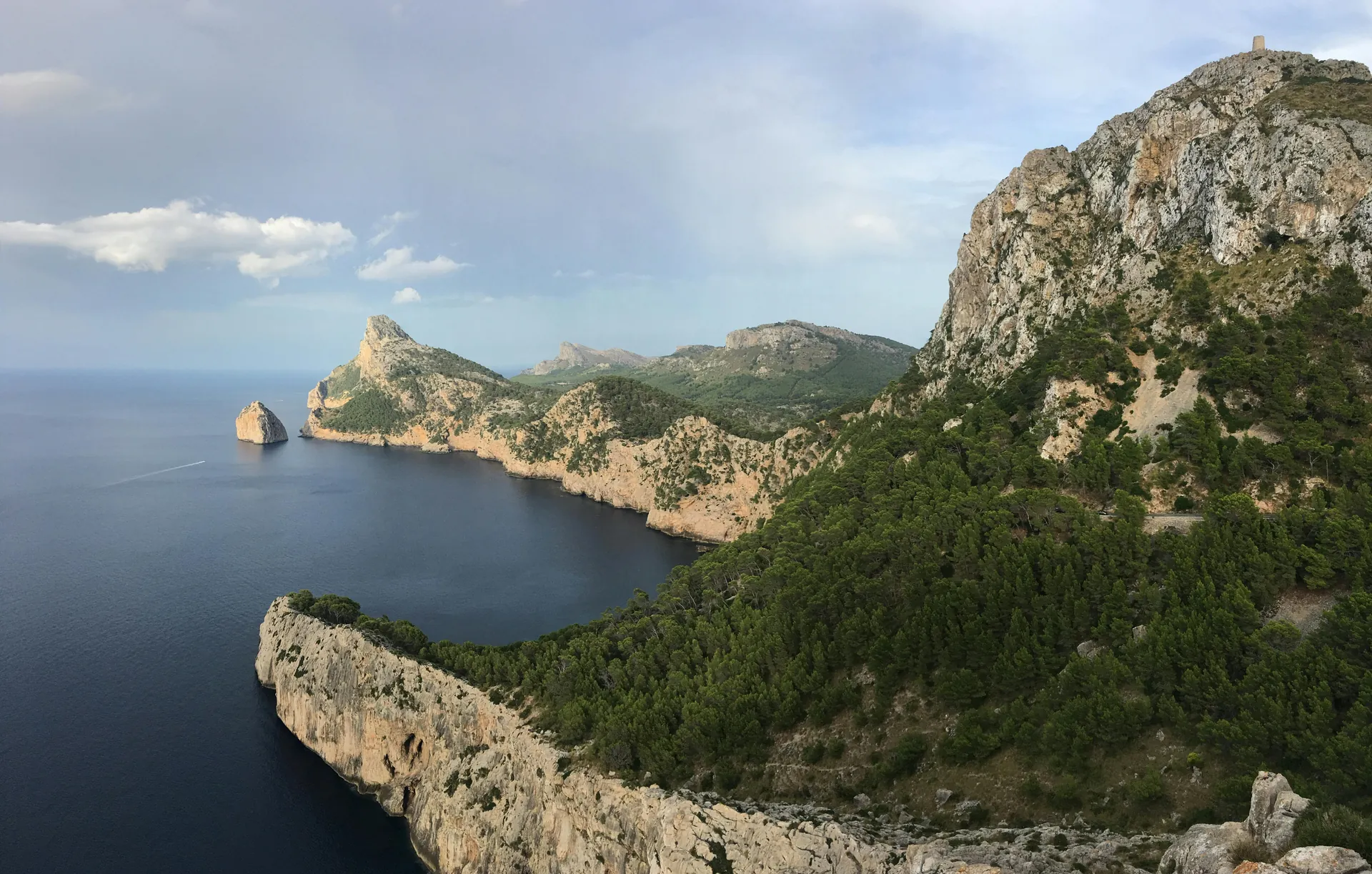
Setting your alarm at dawn to drive the Ma-2210 before the 10:00 AM camera activation offers one of Mallorca’s finest driving experiences. In the early morning silence, the asphalt is cold, the limestone bluffs glow pale rose under the rising sun, and you will share the route with few vehicles aside from wild mountain goats (cabra mallorquina) foraging along the verge.
- The Advantage: You can drive directly to the Far de Formentor parking courtyard, take photographs without crowd interference, and admire the sheer 300-metre drops in complete tranquility.
- The Strict Exit Deadline: You must clear the ANPR camera barrier at Km 8.7 on your outbound journey before 09:59:59 AM. If you linger at the lighthouse cafe and pass Km 8.7 at 10:05 AM, the automated camera records your plate, and a €200 ticket is generated. Ensure you begin your return descent from the lighthouse by 09:20 AM at the latest to accommodate slow-moving cyclists or utility vans on the single-lane curves.
2. The Post-19:00 Sunset Surge: The Island’s Worst Traffic Bottleneck
Between June and August, sunset in northern Mallorca takes place between 21:00 and 21:25. Because the road restrictions lift precisely at 19:00, hundreds of holidaymakers conclude that driving up after 19:00 is the ideal way to catch sunset at the lighthouse. The reality on the ground is starkly different.
By 18:40, a queue of 80 to 120 rental hatchbacks forms along the dirt shoulders of the Ma-2210 immediately prior to Km 8.7, waiting for the clock to strike 19:00. At 19:00:01, the vehicle barrier lifts and a chaotic caravan surges forward into the narrow mountain defile. Here is what transpires at the lighthouse plateau:
- Severe Parking Deficit: The vehicle turning terrace beneath Far de Formentor has fewer than 38 marked parking bays. When 150 to 200 cars attempt to park in this constrained cul-de-sac within a 30-minute span, gridlock quickly follows.
- Hairpin Reversing Nightmares: Cars double-park against sheer rock walls, block the turnaround radius required by departing TIB shuttle buses, and force unpracticed drivers to reverse backwards on narrow cliffside inclines in darkening dusk light.
- The Superior Sunset Alternative: Avoid the lighthouse entirely at sunset. Instead, drive up to Talaia d’Albercutx or watch the golden hour from Mirador Es Colomer (both located at Km 6.6, outside the restriction zone). From Albercutx, you sit at 357 metres altitude—substantially higher than the lighthouse—watching the entire spine of the Tramuntana ignite in amber and purple tones across the horizon, with effortless road egress when the sun slips below the sea.
Integrating Formentor into a Northern Mallorca Itinerary
Visiting Cap de Formentor is most rewarding when paired with the cultural, historical, and geological landmarks anchoring Mallorca’s north coast. Rather than dedicating an entire day solely to transit, structure your itinerary around natural geographic progressions:
- Morning Heritage Walk in Alcúdia: Begin your day early within the 14th-century pedestrian sandstone ramparts of Alcúdia Old Town. Explore the Roman amphitheater of Pollentia and the Gothic parish church of Sant Jaume before the midday sun peaks. Those interested in local urban history can discover similar historic neighborhoods on our curated free walking tours across Mallorca’s cultural centers.
- Wild Coastal Coves: If you seek seclusion before boarding the Formentor shuttle, head to the trailhead of Vall de Bóquer on the outskirts of Port de Pollença for an untamed 45-minute hike through a prehistoric limestone valley ending at the isolated pebble waters of Cala Bóquer. For further inspiration on pristine swimming inlets, browse our field surveys of the hidden beaches of Mallorca and the island’s best calas.
- Pollença Town & El Calvari: In the late afternoon, retreat inland to Pollença town. Climb the 365 cypress-flanked stone steps of El Calvari to the hilltop chapel, then settle into the vibrant Plaça Major for a dinner of authentic tumbet or slow-roasted Tramuntana kid lamb, discovering why these culinary traditions endure in our guide to traditional Mallorcan foods.
- Island-Wide Route Planning: To weave the northern capes into a broader exploration of the Serra de Tramuntana, Sóller, Valldemossa, and the south coast calas, follow our meticulously tested 7-day Mallorca road trip itinerary. When returning to the capital, reserve a dedicated day to tour Palma’s Gothic masterpieces, including the Palma Cathedral (La Seu), the Royal Palace of La Almudaina, and the circular fourteenth-century stronghold of Bellver Castle, referencing our complete guide to things to do in Palma de Mallorca.
Frequently Asked Questions About Cap de Formentor Restrictions
Can I drive my rental car to Far de Formentor between 10:00 and 19:00?
No. Between June 1 and October 31, all private motor vehicles—including rental cars, private passenger cars, and motorized scooters—are strictly prohibited from passing road marker Km 8.7 between 10:00 AM and 19:00 PM daily. Violating this rule triggers an automated €200 DGT traffic penalty logged by overhead ANPR cameras.
Is it legal to drive to Mirador Es Colomer during restriction hours?
Yes. Mirador Es Colomer is situated at Km 6.6 on the Ma-2210, well ahead of the restriction barrier and ANPR camera gate located at Km 8.7. You may drive your car to the Colomer parking lot 24 hours a day without risk of a fine. However, during peak summer, parking spaces frequently fill completely before 10:00 AM.
What happens if I cross Km 8.7 before 10:00 AM and drive back at 11:30 AM?
You will receive a €200 fine. The ANPR camera gantries monitor both travel lanes. Entering the peninsula prior to 10:00 AM does not grant authorization to return past the camera post during restricted hours. If your vehicle exits the restricted zone between 10:00 and 19:00, an automated violation is issued.
How much is the fine, and can I receive a discount?
The standard penalty is €200 under Spanish traffic law. If settled within 20 calendar days of official notification, the DGT applies a 50% prompt-payment reduction, lowering the fine to €100. However, car rental agencies automatically levy an additional, non-waivable administrative processing surcharge of €35 to €55 to identify the driver, billed directly to your credit card.
Are road cyclists, e-bikes, and pedestrians permitted past Km 8.7?
Yes. The restrictions apply strictly to motorized vehicles. Non-motorized road cyclists, gravel bicycles, and hikers on foot have unrestricted, free access to the entire 19.6-kilometre length of the Ma-2210 throughout the day. Pedelec e-bikes adhering to standard European pedal-assist limits are also allowed.
How do travelers with reduced mobility (PRM) apply for a driving permit?
Holders of an official European Blue Badge for disabled parking can obtain authorization to drive to Far de Formentor during restricted hours. You must email the DGT provincial department (formentor@dgt.es) at least three business days prior to your visit, providing your vehicle registration number, driver identity, travel date, and a certified copy of your valid disability parking card.
Can I take a taxi all the way to Far de Formentor?
Yes. Officially licensed public service taxis (carrying Spanish SP emblems and blue rear license plates) hold an exemption and can transport passengers directly to Far de Formentor, Cala Figuera, and Platja de Formentor throughout restricted hours. Taxis can be hailed or pre-booked from Port de Pollença or Alcúdia.
What is the most practical way to reach the lighthouse without driving?
The TIB Shuttle Bus Line 334 is the easiest, most economical transport method. Operating every 35 minutes from Port de Pollença and Alcúdia, the bus drops passengers at the steps of Far de Formentor. Using a single contactless bank card for multiple passengers provides fare discounts of 40% to 64% compared to cash rates.