
Hidden Calas and Secret Beaches in Mallorca
The Soul of the Shoreline: Finding Mallorca’s Quiet Corners
There is a specific kind of silence you only find on this island when the sound of car engines fades into the distance. It is the sound of the Tramuntana wind whistling through dwarf palms and the rhythmic thrum of cicadas in the pines. Most visitors stick to the sunbeds of Palmanova or the easy reaches of Alcúdia, but for those of us who grew up here, the real Mallorca starts where the tarmac ends. My dog, Cala, knows the routine; the moment I lace up my old hiking boots, she is at the door, tail thumping against the wood, ready for a proper trek to teh water’s edge.
People often ask me if Mallorca is the same as Majorca. It is a linguistic relic of the British tourism boom in the sixties, but the island’s soul remains firmly Mallorquín. While celebrities like Brad Pitt or Michael Douglas have homes in the hills near Deià, the true luxury of this place has nothing to do with villas or yachts. It is about finding a cala (a small cove) where the only footprints in the sand are your own. Finding these secret calas Mallorca requires patience, a sturdy pair of shoes, and a willingness to sweat a little before you swim. It is the kind of landscape we are looking for.
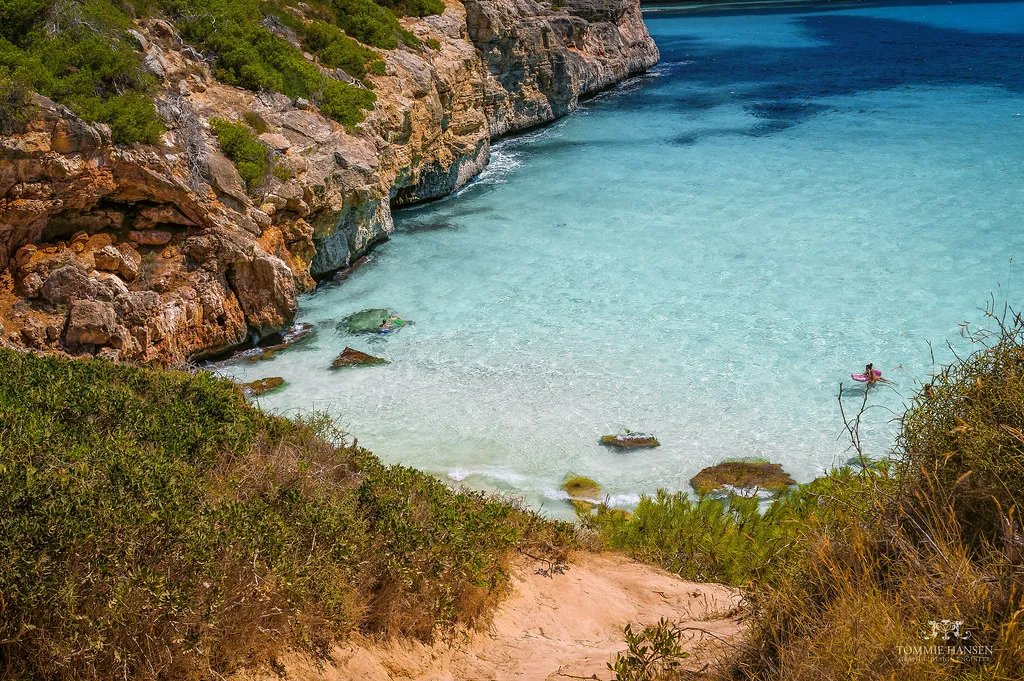
The Mediterranean is not a place you just look at; it is a place you earn through the soles of your feet.
The Southern Frontier: Es Caragol
At the very tip of the south, the Cap de Ses Salines lighthouse marks the end of the road. Most people take a photo of the lantern and leave, which is a mistake. If you follow the rocky path to the west for about twenty minutes, you reach Es Caragol. This beach is a vast, desert-island expanse of white sand and shallow turquoise water that looks more like the Caribbean than Europe. There are no beach bars here, no umbrellas, and certainly no lifeguards. You have to carry every drop of water you need, mind you, as the sun reflects off the pale dunes with surprising intensity.
To get there, park your car along the Ma-6110 road. During the height of summer, the local police are quite strict about parking, so arrive before 10:00 AM to avoid a long walk just to reach the lighthouse. The walk to the beach itself is flat but exposed. Cala usually finds the only patch of shade under a lonely mastic shrub while I take the first dive. This is one of teh best quiet beaches Mallorca has to offer because the 1.5km walk acts as a natural filter for the crowds.
The Marble Cove: Cala Marmols
If Es Caragol is a stroll, Cala Marmols is a pilgrimage. This is perhaps the most remote bay on the island accessible by land. Located at 39.2891° N, 3.0272° E, it is a 5.5km trek from the lighthouse. The path hugs the limestone cliffs, offering views that make you feel tiny against the scale of the sea. The name translates to “Marble Cove,” and once you see the translucent quality of the water against the white cliffs, you will understand why. It takes about ninety minutes to reach, and while the sand stays relatively quiet, the bay is often bobbing with yachts in August.
The terrain is unforgiving. You are walking over jagged limestone and parched earth. It is not posible to do this in flip-flops without risking a twisted ankle. I always suggest checking the [Official Weather Portal] before setting out, as a southern wind can bring in jellyfish or make the water choppy.
Because of the distance, many people choose to arrive by boat. If you are hiking, remember that there is zero shade on the beach until late afternoon when the cliffs cast a shadow. Bring a lightweight UV tent or a sturdy umbrella if you plan to stay for the day.
East Coast Rebellion: Cala Varques
Cala Varques has a different energy. It has long been the haunt of climbers, hippies, and locals who prefer their beaches without a side of commercialism. There was a time when makeshift bars sold mojitos under the trees, but the local government has reclaimed the area to protect its natural state. Access involves parking on the Ma-4014 and walking through a private finca for about 30 minutes. Be careful where you leave your car; the police frequently issue fines to those blocking the farm gates or parking on the narrow shoulder of the main road.
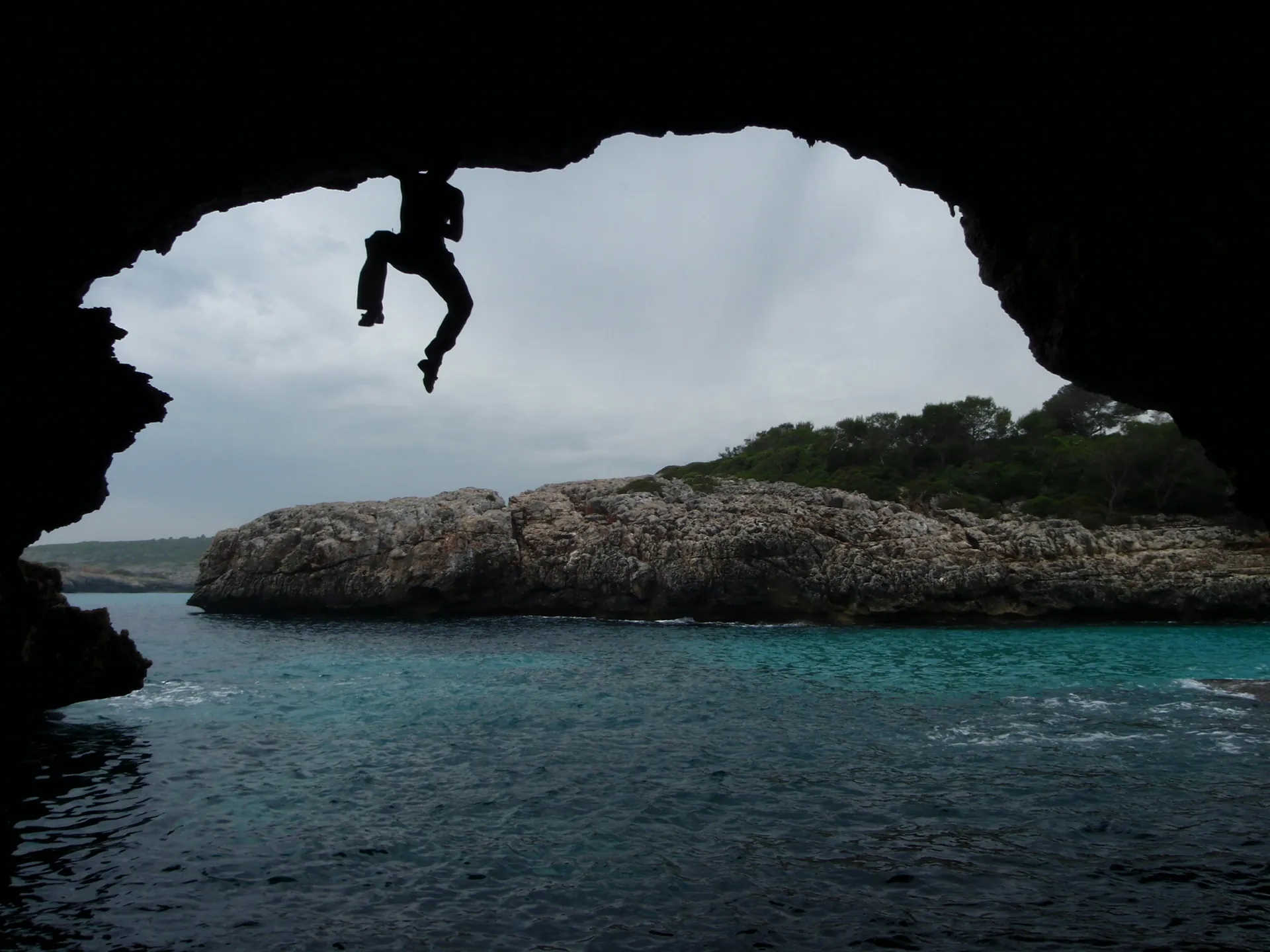
The highlight here is not just the beach but the surrounding geology. If you walk fifteen minutes south along the coast, you will find the Arco de Cala Varques, a massive natural stone bridge spanning the sea. Brave locals often use the deep water underneath for cliff jumping, though I prefer to watch with Cala from the safety of the rocks. The sea caves nearby are also spectacular for those with a mask and snorkel, though you should never enter them if there is any swell.
Northern Sanctuary: Cala Bóquer
In the north, near Port de Pollença, the landscape changes from soft limestone to the dramatic grey peaks of the Serra de Tramuntana. The hike through the Vall de Bóquer is as much about the journey as the destination. The 2.5km trail starts from a small car park and winds between towering limestone cliffs. This is a protected area for birds; keep your eyes peeled for Eleonora’s falcons or the rare Balearic warbler circling the crags above.
The beach at the end is a pebble-strewn inlet with water so clear it looks like glass. It is not a soft sand beach, but the snorkeling is some of the best on the island because the rocks provide a habitat for a vast array of Mediterranean fish. It is a quiet alternative to the nearby Formentor, which gets incredibly busy during the summer months. Arriving early is essential here, as the valley can become a bit of a wind tunnel by mid-afternoon.
Spanish Cooking Experience in Mallorca
Horse Riding in Mallorca on the Beach and Forest
Kayaking and snorkeling in the Mondragó Natural Park in Mallorca
Palma de Mallorca and Valldemossa Excursion from Cruise Port
Deluxe Cruise-Friendly Mallorca and Valldemossa Tour
The Glass Waters of Betlem: Cala Na Clara
Near the quiet village of Betlem, on the far side of the Bay of Alcúdia, lies Cala Na Clara. The name means “The Clear Cove,” and it is no exaggeration. The descent from the village takes about 20 minutes down a steep, dusty path. The beach is a mix of flat rocks and small patches of sand, but the draw here is the water. Looking across the bay toward the Talaia d’Albercutx, you feel a world away from the resorts.
The Dragon’s Watch: Cala en Basset
Sant Elm is a charming fishing village on the west coast, but to find the best secret calas Mallorca, you need to head north of the town. A 2km hike through a pine forest leads you to Cala en Basset. The trail passes the 16th-century Torre de Cala en Basset, a watchtower built to warn of pirate raids. From the shore, you have a perfect, unobstructed view of the Illa de sa Dragonera, the dragon-shaped island that sits just offshore.
Comparing Mallorca’s Remote Escapes
| Cala Name | Access Difficulty | Walking Time | Primary Feature |
|---|---|---|---|
| Es Caragol | Easy | 20-30 mins | White sand dunes |
| Cala Marmols | Hard | 90 mins | Marble cliffs |
| Cala Varques | Moderate | 30 mins | Sea caves & bridge |
| Cala Bóquer | Moderate | 45 mins | Birdwatching & pebbles |
| Cala Tuent | Easy (Road) | 5 mins | Mountain backdrop |
Mountain Majesty: Cala Tuent
While most of the hidden beaches on this list require a long walk, Cala Tuent is a different challenge. It is accessible by car, but the road is a white-knuckle descent through the heart of the Tramuntana mountains. You take the same turn-off as the famous Sa Calobra, but while the crowds head for the Torrent de Pareis, you stay left. Set at the foot of Puig Major, the island’s highest peak, the backdrop is purely cinematic.
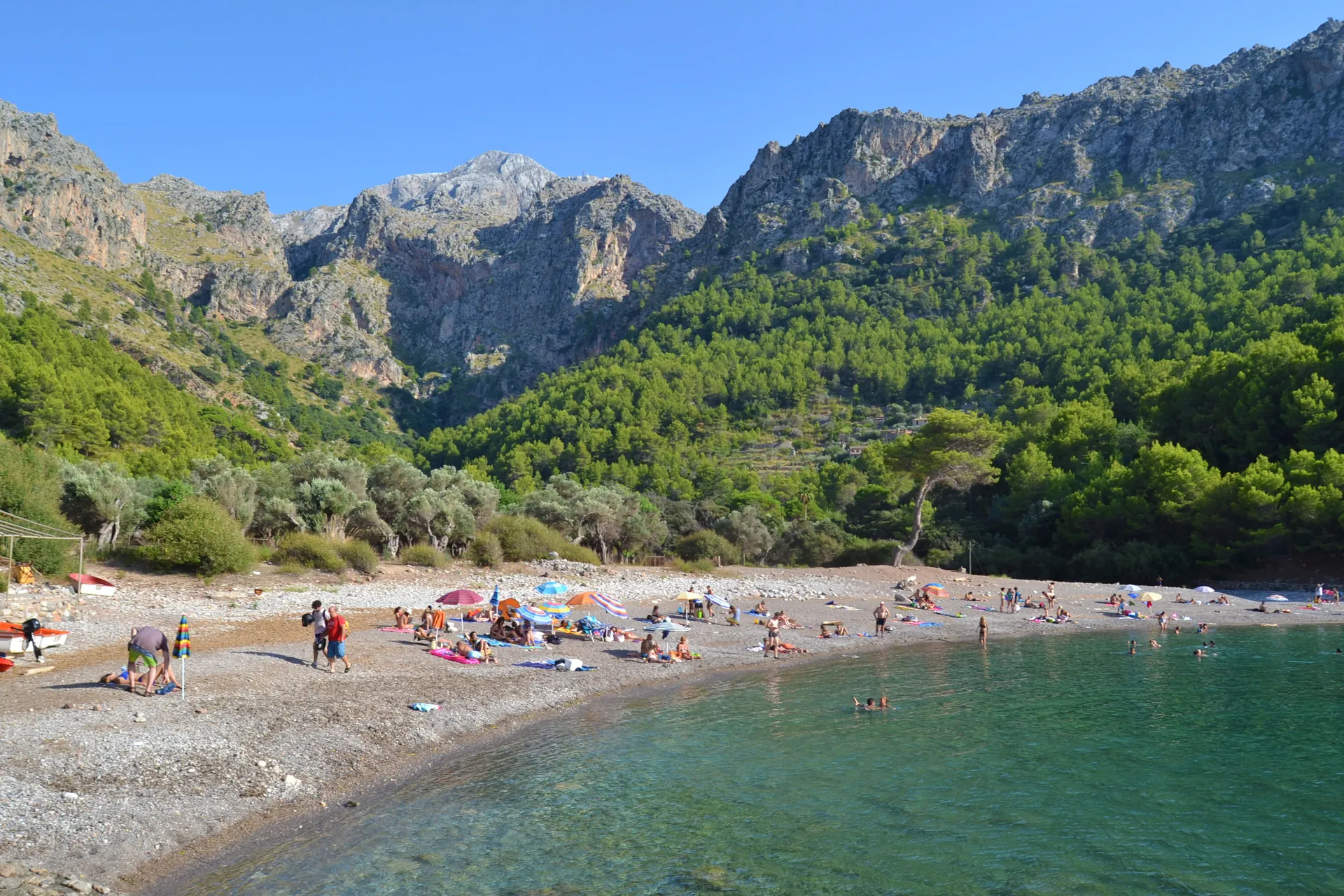
If the drive sounds too daunting, a boat runs from Port de Sóller for around €30 return. For a proper Mallorcan lunch, I always visit Es Vergeret, a restaurant perched on the hillside above the bay. Their paella is excellent, but it is the view of the green mountains meeting the deep blue sea that keeps me coming back. It is a reminder of why Mallorca is so famous; the sheer diversity of the landscape within such a small area is staggering.
A West Coast Challenge: Cala d’Egos
Near Andratx, Cala d’Egos offers absolute solitude for those willing to work for it. The descent is steep and rocky, and the climb back up in the heat of the afternoon is a proper test of stamina. There are no facilities whatsoever, so you are essentially on your own. It is a rocky cove with crystal water that feels entirely disconnected from the luxury villas and boutiques of nearby Port d’Andratx. Cala and I usually have the place to ourselves on weekdays, watching the yachts drift by in the distance.
Essential Gear for the Uncharted
Preparation is the difference between a perfect day and a miserable one. When you are heading to these remote spots, you cannot rely on the usual beach infrastructure. I have seen too many people start the walk to Cala Marmols with a single 500ml bottle of water, which is dangerous in the Balearic heat. To keep these places pristine, we also follow the “leave no trace” ethos strictly.
- Footwear: Lightweight hiking boots or trail running shoes. Flip-flops are for the hotel pool, not the coastal paths.
- Hydration: At least 2 litres of water per person for hikes over 30 minutes.
- Sun Protection: High-SPF sunscreen, a wide-brimmed hat, and a lightweight long-sleeved shirt.
- Snorkeling Gear: A mask and snorkel are essential, as the rock formations in these calas are teeming with life.
- Waste Bags: Take everything back with you. There are no bins on secret beaches.
Timing and Logistics
The best time to visit these hidden beaches is during the shoulder seasons of May, June, or September. The weather is warm enough for swimming but the heat isn’t as oppressive for the hiking. If you must go in July or August, start your hike at sunrise. Not only will you beat the heat, but you will also experience the magic of seeing the sun climb over the Mediterranean in total silence. For those without a rental car, the [TIB Public Transport] network is surprisingly good for reaching the northern trailheads, but for these southern and eastern spots, you will definitely need your own wheels.
Mallorca is a popular island, mind you, and its popularity is well-earned. Whether it is the history of the [Palma Cathedral] or the rugged trails of the Tramuntana, there is something here for everyone. But the true spirit of the island lives in these quiet, hard-to-reach places. They are fragile spaces that rely on us to respect them. As you explore, remember that you are a guest in a landscape that has remained largely unchanged for centuries.
The Fragility of Silence
At the end of the day, as the sun dips behind the mountains and the light turns that peculiar shade of Mallorcan gold, I usually find myself sitting on a rock with Cala, watching the sea. We have a saying here, “poc a poc” (little by little), and that is the only way to truly see this island. Don’t rush to see every beach on the list. Pick one, earn the walk, and stay until the stars come out. The silence you find there is a souvenir that lasts much longer than any trinket from a shop in Palma.