Things to Do in Valldemossa: The Complete Village Guide (2026)
Ascending the Ma-1110 from Es Raiguer into the western Serra de Tramuntana, the air cools abruptly by three to four degrees Celsius. The humid maritime draft of the Palma coast yields to the sharp scent of wet pine needles, wild rosemary, and winter olive wood smoke. At 436 metres above sea level, Valldemossa emerges within a high mountain basin—a stone settlement of two thousand residents where golden calcarenite sandstone (pedra de marés), lime mortar, and emerald-green timber shutters (persianes mallorquines) preserve a fourteenth-century rhythm against modern resort commercialism.
While celebrated globally through Frédéric Chopin and George Sand’s tempestuous winter of 1838–1839, Valldemossa’s identity runs deeper than nineteenth-century exile. It is the birthplace of Santa Catalina Thomàs—Mallorca’s patron saint, venerated with painted ceramic tiles beside every doorway—and the mountain anchor for the hairpin drop to Port de Valldemossa. Experiencing this UNESCO World Heritage landscape demands local precision: dodging morning tour coach surges, navigating municipal blue zones, finding the century-old bakery where authentic coca de patata was born, and exploring the Carthusian cloisters in quiet morning light.
Valldemossa Village Fast Facts: Strategic Overview (2026)
- Altitude & Location: 436 m elevation | Serra de Tramuntana, 17 km north of Palma.
- Transit Time: 25 minutes by car via Ma-1110; 30 minutes direct on TIB Bus Line 203 from Palma Intermodal Station.
- Primary Landmark: Real Cartuja de Valldemossa (€12.00; includes Cell No. 4, Chopin’s Pleyel piano, Monastic Pharmacy, King Sancho’s Palace, and live piano recital).
- Spiritual Landmark: Casa Natal de Santa Catalina Thomàs (Carrer de la Rectoria 11) and village-wide rajoles de la Beateta ceramic tiles.
- Gastronomic Icon: Freshly baked coca de patata at Pastisseria Ca’n Molinas (Via Blanquerna 15, founded 1920).
- Weekly Market: Every Sunday, 09:00 to 15:00 along Avinguda de Palma and Plaça de Bartomeu Estaràs.
- Crowd Strategy: Coach tours arrive between 10:30 and 15:30. Arrive before 09:15 AM or after 16:00 to explore quiet lanes.
The Royal Charterhouse: Royal Retreat, Monastic Sanctuary, and Chopin’s Winter
The monumental anchor of Valldemossa is the Real Cartuja de Valldemossa (Royal Charterhouse). Dominating the northern bluff of the village, its glazed emerald roof tiles and sturdy limestone walls reflect over seven centuries of history.
The complex originated in 1309 under King Jaume II of Mallorca as an alpine retreat for his asthmatic son, King Sancho (Rei Sanç). In 1399, King Martin of Aragon ceded the palace to the Carthusian Order of Saint Bruno. The silent monks expanded the cloisters into the Cartoixa de Jesús de Nazaret, maintaining their vows until the Ecclesiastical Confiscations of Mendizábal in 1835 secularized church property, forcing the monks to depart and opening the cells to private tenants.
Frédéric Chopin and George Sand: The Winter of 1838–1839
In December 1838, French author George Sand arrived with her children, Maurice and Solange, and her lover, Polish composer Frédéric Chopin. Seeking a warm refuge for Chopin’s failing lungs, they met instead a harsh winter of mountain rains, howling winds, and stone cells heated only by charcoal braziers (brasers). Villagers viewed them with suspicion: Sand wore trousers and smoked cigars, while doctors diagnosed Chopin with tuberculosis (“phthisis”). Townspeople shunned them, charged inflated food prices, and burned Chopin’s mattress after his departure.
“My cell has the shape of a tall coffin… The wind howls across the gorge; the sky is magnificent, the sea is wild, but the people are thieving and pious to the point of barbarism.”
— Frédéric Chopin, letter to Julian Fontana from Cell No. 4, December 1838
Yet amidst physical illness and weeks waiting for his French Pleyel pianino at Palma customs, Chopin achieved an astonishing burst of genius in Cell No. 4 (Cel·la Núm. 4). Here he completed his masterwork Op. 28: 24 Preludes, including the famous Prelude No. 15 in D-flat major (“Raindrop Prelude”), whose repeating A-flat note mirrors mountain rain dripping on roof tiles. He also composed sections of the Ballade No. 2 in F major (Op. 38) and Polonaise in C minor (Op. 40 No. 2). George Sand documented their stay in her 1842 memoir Un hiver à Majorque (A Winter in Mallorca), praising the Tramuntana’s sublime peaks.
Inside the Charterhouse: Cell No. 4, Monastic Pharmacy & King Sancho’s Palace
The self-guided tour encompasses four key sectors:
Cell No. 4 (Chopin & Sand Museum)
Contains the original upright Pleyel pianino (serial number 6668) shipped from Paris via Marseille, sold to the Canut family upon departure. Displays include original scores, letters, Sand’s notes, and Chopin’s plaster death mask by Auguste Clésinger, beside a private terrace garden.
The 17th-Century Monastic Pharmacy
Preserved untouched since 1835, the Antiga Farmàcia features dark walnut cabinetry holding over 130 painted Majolica and Talavera ceramic drug jars (pots de farmàcia) with archaic remedies: Pulvis Viperarum (dried viper flesh), Mandragora, Cornu Cervi Ustum, crude opium, and theriac.
Palace of King Sancho (Palau del Rei Sanç)
The fourteenth-century royal residence preserves its defensive stone tower, tapestries, and antique furniture, leading to the acoustic salon where 15-minute live Chopin piano recitals are performed throughout the day.
The Neoclassical Church
Built between 1751 and 1812, the church features ceiling frescoes by Fray Manuel Bayeu (brother-in-law of Francisco de Goya) and carved walnut choir stalls facing marble altars quarried from local mountain stone.
Real Cartuja Entry & Recital Schedule (2026):
• Admission: €12.00 adults; €10.00 seniors (65+) and students; free for children under 10. Covers cloisters, pharmacy, King Sancho’s Palace, Cell No. 4, and the live piano recital.
• Hours: Monday–Saturday 10:00 to 18:30 (summer) / 10:00 to 17:00 (winter); Sundays 10:00 to 16:00.
• Piano Recitals: 15-minute recitals inside King Sancho’s Palace start at 10:30, 11:30, 12:30, 13:15, 14:15, 15:15, and 16:15.
Strolling the Lower Alleys: Saint Catalina Thomàs & Tramuntana Vernacular Architecture
Stepping away from Plaça de la Cartoixa into the lower quarter (el barri baix), coach crowds vanish. Pedestrian lanes paved in river pebbles laid on edge (empedrat) are framed by limestone cottages with deep stone lintels and iron knockers (aldabons).
The Ceramic Tile Tradition of Santa Catalina Thomàs (“La Beateta”)
Valldemossa’s spiritual heart belongs to Santa Catalina Thomàs (fondly called La Beateta). Born here on May 1, 1531, into a peasant household, she was orphaned young, worked as a mountain shepherdess on Son Gallard, and entered the Augustinian convent of Santa Magdalena in Palma, where she died in 1574. Canonized by Pope Pius XI in 1930, she remains Mallorca’s sole native saint.
As you wander Carrer de la Rectoria, Carrer del Calvari, and Carrer de Baix, notice the glazed polychrome ceramic tile (rajola de la Beateta) mounted beside every doorway. Each tile illustrates an episode from her life beneath the Catalan prayer: “Santa Catalina Thomàs, pregau per nosaltres” (Saint Catalina Thomàs, pray for us)—an active household blessing against mountain storms and illness.
Carrer de la Rectoria & Casa Natal
Carrer de la Rectoria is the architectural highlight of the village—a cobblestone alley lined with terracotta pots overflowing with climbing ivy, pink geraniums, and ferns. At Number 11 stands the Casa Natal de Santa Catalina Thomàs. The humble sixteenth-century peasant cottage has been converted into an intimate oratory where locals leave fresh wildflowers and prayer petitions.
Church of Sant Bartomeu & Miranda des Lladoners
Downhill stands the Església de Sant Bartomeu, founded in the late thirteenth century. Inside its Gothic nave sits the Romanesque stone baptismal font where Santa Catalina was baptized in 1531. Her statue stands outside in the adjoining square.
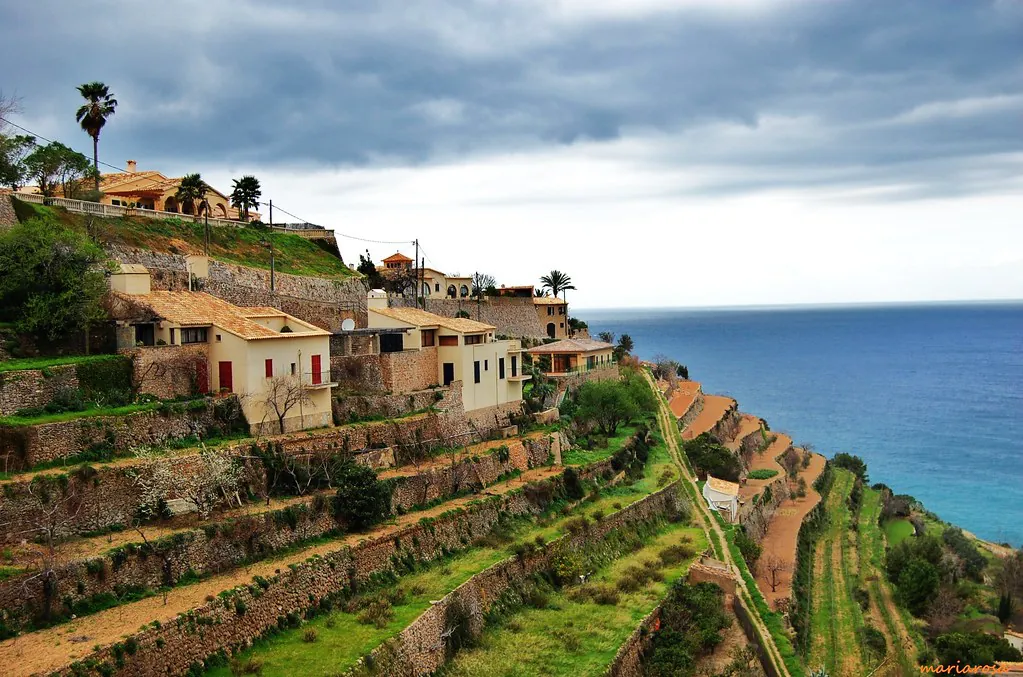
From the church, follow Carrer de Jovellanos to the Miranda des Lladoners viewpoint. This stone parapet overlooks the entire Valldemossa valley. Below, centuries of agricultural dry-stone terracing (marjades) step down the mountain slopes. In February, almond trees carpet the basin in pink-white blossoms; through summer and autumn, olive trees shimmer silver-green beneath Puig des Teix (1,064 m). Afterward, stroll through the boxwood labyrinths of the neighboring Jardins Rei Joan Carles, viewing bronze portrait busts of Chopin, Sand, and Austrian Archduke Ludwig Salvator.
The Art of Coca de Patata: Ca’n Molinas & Traditional Mountain Gastronomy
Valldemossa’s culinary signature is the coca de patata—a sweet, cloud-light brioche bun dusted in fine powdered sugar, unlike savory Balearic flatbreads.
The Baking Science Behind the Potato Brioche
The secret of the bun lies in combining boiled mountain potato starch (roughly 25% to 30% of the dough) with flour, sugar, fresh eggs, and artisanal pork lard (saïm—the defining Balearic baking fat that provides tender moisture without grease). Potato starch absorbs water readily and limits gluten formation. Slow yeast fermentation yields an exceptionally tender, pillowy crumb that melts on the tongue when warm.
Pastisseria Ca’n Molinas: The Original Bakery (Founded 1920)
The original creator is Pastisseria Ca’n Molinas, opened on Via Blanquerna in 1920 by Antoni Molinas and Maria Salom. Now run by third- and fourth-generation descendants, Ca’n Molinas operates two sites. The flagship shop at Via Blanquerna 15 conceals a tranquil stone courtyard patio shaded by lemon trees and grapevines—the finest spot in town to escape street traffic. Their secondary shop on Plaça de la Cartoixa offers outdoor umbrella seating facing the monastery.
Seasonal Drink Rituals & Village Bakeries
Enjoying a coca de patata follows an unbending local calendar:
- Winter Ritual (November–March): Xocolata Desfeta. Pair your warm bun with a cup of thick Spanish hot drinking chocolate (xocolata desfeta), spiced with cinnamon and dense enough for dipping.
- Summer Ritual (June–September): Granissat d’Ametlla. Order the pastry alongside an icy almond granita (granissat d’ametlla) made from local sweet almonds (IGP Ametlla de Mallorca), stone-ground into rich almond milk and slow-churned with crushed ice.
For savory mountain specialties, visit Pastisseria Ca’n Jordi on Plaça de Bartomeu Estaràs or order at Ca’n Molinas for traditional baked goods featured in our guide to traditional Mallorcan foods: empanades mallorquines (savory pastries crimped with lamb, pork, peas, and spicy sobrassada) and cocarrois (crescent pastries filled with seasoned Swiss chard, pine nuts, and raisins).
Coastal Escapes and Tramuntana Day Trips: Port de Valldemossa, Son Marroig, and Deià
Valldemossa serves as a prime base for exploring the northern Tramuntana coastline and clifftop estates.
Port de Valldemossa (Sa Marina): The Vertigo Descent
Six kilometres northwest of the village lies Port de Valldemossa (known locally as Sa Marina). Reaching this tiny coastal outpost requires descending the steep Ma-1131, which drops over 400 vertical metres in six kilometres across twenty tight hairpin switchbacks. Sections narrow to a single lane between dry-stone walls and vertical cliffs. Drivers should shift to low gear, sound their horns before blind corners, and yield at passing bays (apartadors).

At the bottom lies a tranquil fishing settlement free of hotel resorts. Traditional dry-dock ramps (escars) shelter wooden fishing boats (llauts). A gravel cove provides clear turquoise water for swimming, earning a place among the best secluded calas in Mallorca. Beside the slipway, Restaurant Es Port serves grilled squid (calamars a la plancha) and seafood paella right over the water.
Son Marroig & Sa Foradada: The Archduke’s Clifftop Kingdom
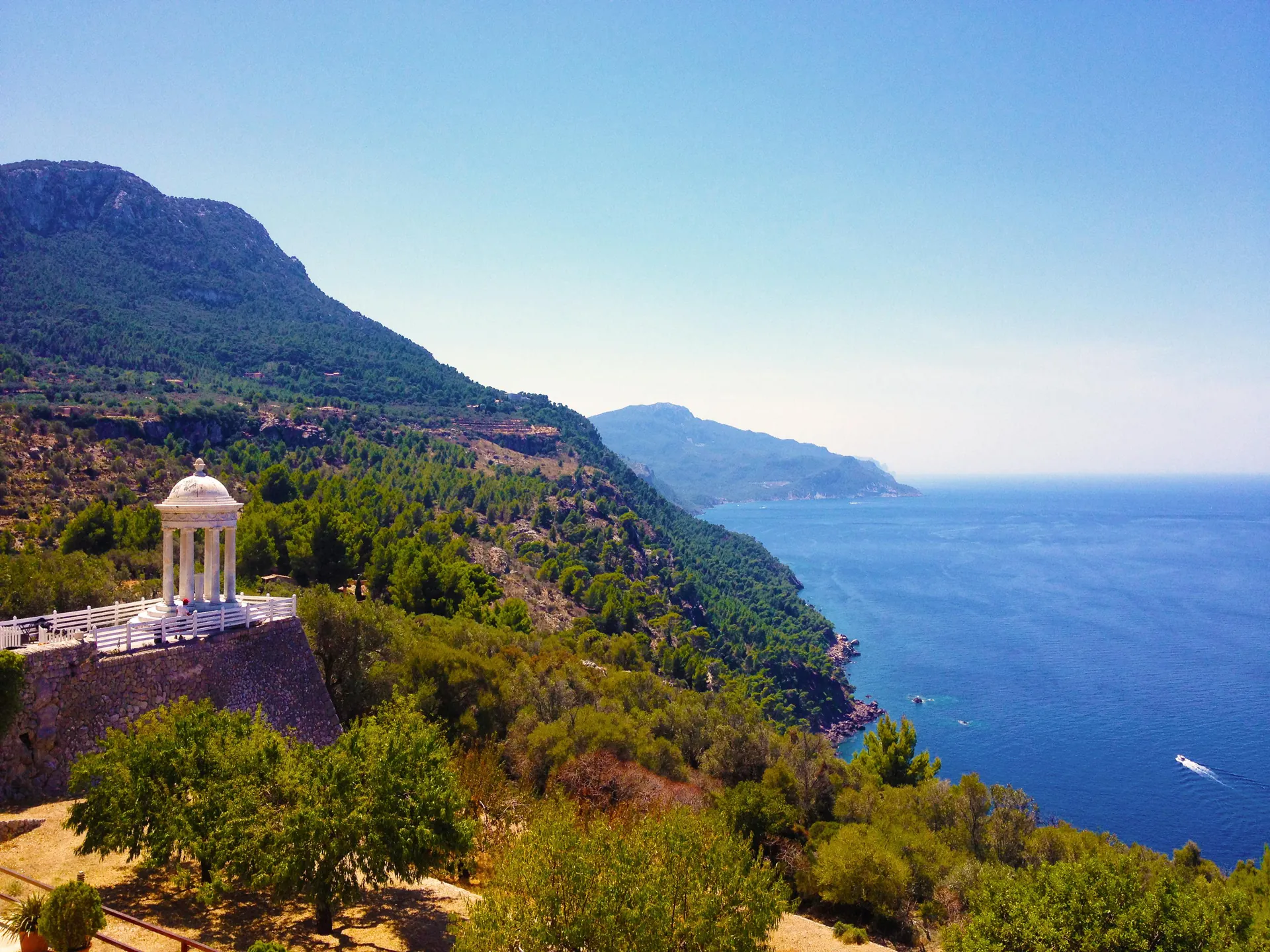
Seven kilometres northeast along the Ma-10 toward Deià stands Son Marroig, the estate of Austrian Archduke Ludwig Salvator (1847–1915). Arriving in 1867, the Habsburg archduke purchased sixteen kilometres of coastline to protect its ancient olive groves. The clifftop garden features a white Carrara marble neoclassical rotunda framing the dramatic sea promontory of Sa Foradada, perforated by an 18-metre natural maritime arch. A 3.5 km trail descends to the sea inlet, where Mirador de Sa Foradada cooks wood-fired paellas over open fires.
Deià & Cala Deià
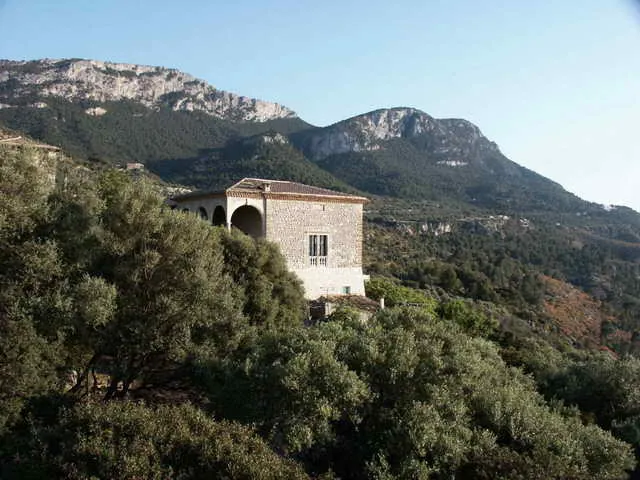
Ten kilometres north on the Ma-10 lies the bohemian village of Deià, celebrated for its literary heritage. English poet Robert Graves lived at his stone home, Ca n’Alluny (now an intimate museum), from 1929 until his death in 1985. Below lies Cala Deià, a shingle inlet framed by cliffs and the waterside fish terrace of Ca’s Patró March.
Field-Tested 1-Day Itinerary: The Definitive Valldemossa Day Trip
To experience the spiritual, architectural, and culinary highlights of Valldemossa while bypassing tour coach surges, follow this field-tested day schedule:
| Time Window | Location & Activity | Key Experience Details | Tactical Ground Tip |
|---|---|---|---|
| 08:30 – 09:15 | Arrival & Breakfast at Ca’n Molinas (Via Blanquerna 15) | Warm coca de patata dusted with powdered sugar, café con leche or almond granita in the courtyard. | Arrive before 09:00 to park in Aparcament de la Cartoixa before coaches arrive. |
| 09:30 – 11:30 | Real Cartuja de Valldemossa & Cell No. 4 | Explore cloisters, 17th-century pharmacy, Chopin’s Pleyel piano, and King Sancho’s Palace. Attend 10:30 recital. | Enter right at 09:30 to view Cell No. 4 and terrace gardens before tour groups gather. |
| 11:30 – 12:45 | Architectural Walk: Carrer de la Rectoria | Walk Carrer de la Rectoria, view doorway rajoles, visit Casa Natal (No. 11), climb Carrer del Calvari. | Maintain quiet near the oratory; prime morning light for street photography. |
| 12:45 – 13:30 | Miranda des Lladoners & Royal Gardens | Admire the southern valley overlook; wander through the shaded paths of Jardins Rei Joan Carles. | Free access; excellent angle for photographing Mount Teix and valley terraces. |
| 13:30 – 15:00 | Traditional Tramuntana Lunch | Charcuterie, local cheeses, and sobrassada at QuitaPenas, or Mediterranean dining at Es Taller. | Book ahead in summer; choose shaded outdoor patio tables. |
| 15:15 – 17:15 | Coastal Excursion: Port de Valldemossa | Drive the 20 hairpins of Ma-1131 to the fishing cove. Swim off the beach and view the escars. | Use low gear to save brakes; wear swim shoes for the pebble shoreline. |
| 17:30 – 19:30 | Son Marroig Rotunda & Sa Foradada Sunset | Drive 7 km north on Ma-10. Walk to the marble pavilion and watch sunset over Sa Foradada. | Parking fills quickly before dusk; arrive 45 minutes ahead of sunset. |
Practical Transportation & Parking Guide 2026: Getting to Valldemossa
Located 17 kilometres north of Palma, Valldemossa is easily reached by bus or car, though vehicle access in the historic core is strictly regulated.
By Public Bus: TIB Line 203
Public transit is direct via TIB Bus Line 203, linking Palma with Valldemossa, Deià, and Sóller:
- Palma Departure: Estació Intermodal (Plaça d’Espanya underground terminal, bays 10–14).
- Frequency & Travel Time: Every 30 to 40 minutes in summer; every 50 to 60 minutes in winter. Trip duration is exactly 30 minutes to the Valldemossa stop on Avinguda de Palma.
- Contactless “Tap On, Tap Off”: Tap your physical credit/debit card (or phone with Apple/Google Pay) at the front door reader upon boarding, and tap the same card at the rear reader upon exit. Fares cost €1.80 to €2.70 (over 40% cheaper than cash tickets). Up to 5 passengers can share a card for added group discounts. See our full Mallorca public transport guide for complete details.
Driving and Parking Regulations (Zona ORA)
The drive from Palma follows the Ma-1110 (Carretera de Valldemossa), taking roughly 25 minutes along a well-graded road. Motor vehicles cannot enter the pedestrian historic core; visitor parking is directed into blue zone (Zona ORA) lots:
1. Aparcament de la Cartoixa (Carrer Uetam)
Primary municipal lot of 180 spaces next to the monastery. Blue zone rate: €1.50 per hour (max 4 hours). Pay at meters (coins/card) or via Telpark/EasyPark apps. Note: Fills completely by 10:15 AM between May and October.
2. Aparcament Avinguda de Palma
Southern entrance lot accommodating 220 vehicles with pay-and-display meters (€1.50/hr). Involves a 5-minute uphill walk to Via Blanquerna but avoids congestion in the upper lot.
Parking Warning: Green Resident Bays
Never park in bays marked with green paint. These are reserved exclusively for registered local residents. Municipal police regularly issue €90 fines and tow unauthorized vehicles during summer months.
The Valldemossa Sunday Market (09:00–15:00)
Every Sunday from 09:00 to 15:00, the weekly market sets up on Plaça de Bartomeu Estaràs and Avinguda de Palma. Stalls offer cured cheeses (Formatge de Maó), mountain honey, sobrassada, marinated olives, seasonal Tramuntana fruits, woven palm baskets (senalles), and ceramics.
Experiencing Valldemossa & the Tramuntana: Guided Cultural Tours & Walking Excursions
Because Valldemossa’s heritage combines royal palaces, monastic life, literary history, and UNESCO-protected terraced landscapes, guided walks and mountain excursions provide rich historical context:
Tramuntana Mountain Villages & Vintage Railway Day Tours
For visitors staying in Palma who prefer to avoid mountain driving and parking hassles, small-group day excursions combine Valldemossa and the Real Cartuja with Deià and Sóller. Many tours include travel on the 1912 wooden railway from Palma and the 1913 tram down to Port de Sóller.
- Departures: Central Palma pick-ups along Passeig Marítim and Estació Intermodal. See our full guide to things to do in Palma de Mallorca.
- Duration: Full-day (7 to 8 hours); includes transport, licensed guide, monastery entry, and vintage train fares.
- Itinerary Planning: Pair this excursion with our recommended Mallorca 7-day road trip itinerary.
Heritage & Chopin Walking Tours
Small-group walks with local historians explore the monastery cloisters, explain Latin inscriptions in the 17th-century pharmacy, and decode the religious imagery on the ceramic tiles of Santa Catalina Thomàs.
Camí de s’Arxiduc Ridge Hike
For active hikers, the Camí de s’Arxiduc climbs from Valldemossa through holm oak woods onto the limestone ridge of Puig des Teix (1,064 m), offering dramatic views of sea cliffs dropping into the Mediterranean.
Mountain Olive Oil & Wine Tastings
Guided gastronomic excursions visit ancient mountain fincas, explaining historic stone olive presses (tafones) and offering tastings of Oli de Mallorca (DOP) and local wines from Mantonegro and Callet grapes.
Private Coastal Chauffeur Drives
Bespoke executive minivan tours manage the switchbacks to Port de Valldemossa and the cliffside roads of Son Marroig, concluding with clifftop sunset drinks overlooking Sa Foradada.
Frequently Asked Questions About Visiting Valldemossa
Field-tested answers to the most common questions travelers ask when planning a visit to Valldemossa in 2026:
Is Valldemossa worth visiting on a trip to Mallorca?
Yes. Located 17 km from Palma within a UNESCO World Heritage landscape, Valldemossa combines the 14th-century Real Cartuja monastery (Chopin and George Sand’s 1838–1839 winter home), stone alleys with Santa Catalina Thomàs tiles, and authentic coca de patata bakeries.
How much time should you spend in Valldemossa?
Allow 3 to 4 hours to tour the Real Cartuja (Cell No. 4, pharmacy, recital), stroll Carrer de la Rectoria, and visit Ca’n Molinas. Add Port de Valldemossa or Son Marroig for a full 6- to 7-hour day trip.
Can you visit Valldemossa easily without a rental car?
Yes. TIB Bus Line 203 runs directly from Palma’s Estació Intermodal to Valldemossa in 30 minutes. Contactless payment (Tap On, Tap Off) costs €1.80 to €2.70 each way—over 40% cheaper than cash tickets. Buses depart every 30 to 40 minutes in summer.
What is the best day of the week to visit Valldemossa?
Tuesday through Thursday mornings before 10:00 AM offer the quietest streets and easy parking. Sunday is ideal for the traditional morning market (09:00 to 15:00) along Avinguda de Palma, though you should arrive before 08:45 AM to secure parking.
What is coca de patata, and where is the best place to try it?
Coca de patata is an airy sweet brioche bun made from boiled potato starch, flour, sugar, eggs, and pork lard (saïm), dusted with powdered sugar. Created in 1920 at Pastisseria Ca’n Molinas (Via Blanquerna 15), it is traditionally paired with thick hot chocolate (xocolata desfeta) in winter or almond granita (granissat d’ametlla) in summer.
How difficult is the drive down to Port de Valldemossa?
The Ma-1131 drops 400 vertical metres in six kilometres across twenty tight hairpin bends. Portions narrow to a single lane between stone walls and sheer cliffs. Drivers must use low gear, drive cautiously, honk before blind corners, and yield at turnouts to uphill traffic.
What did Frédéric Chopin compose while living in Valldemossa?
In Cell No. 4 between December 1838 and February 1839, Chopin completed his Op. 28: 24 Preludes (including the ‘Raindrop Prelude’ in D-flat major), and worked on his Ballade No. 2 in F major (Op. 38) and Polonaise in C minor (Op. 40 No. 2) on his imported Pleyel pianino.
How much is admission to the Real Cartuja, and what does it include?
General admission is €12.00 adults, €10.00 seniors and students, and free under 10. Tickets cover cloisters, 17th-century pharmacy, King Sancho’s Palace, Cell No. 4 Chopin museum, and a 15-minute live piano recital.