
The Pull of Mallorcan Light
Cala Major has changed entirely since 1956. Back then, Joan Miró chose this quiet stretch of coastline to build his permanent refuge. Today, the area is heavily developed, yet the light remains exactly the same. It is that specific, sharp illumination that explains why Mallorca is so famous among painters and architects. People often ask which celebrity lives in Mallorca these days. Yes, Brad Pitt bought a villa over in Port d’Andratx a few years ago, and Michael Douglas has his long-standing estate up in the Tramuntana mountains. The island’s true creative weight, though, belongs to figures like Miró who embedded themselves deeply in the local soil.
Visitors sometimes wonder if Mallorca is the same as Majorca. It is. The latter is simply an old anglicised spelling that stuck around in British holiday brochures. The local language here is Catalan, specifically the Mallorquín dialect, and Miró understood its rhythms perfectly. He did not come here for a holiday. He came here to work.
Joan Miró’s Island Roots
Miró was born in Barcelona, but his ties to this island were always present. His mother was Mallorcan. He spent his childhood summers visiting his grandparents in Sóller. In 1929, he married Pilar Juncosa, a local woman who became his lifelong anchor. They moved to the island permanently in 1956 to escape the noise and pressure of the mainland art scenes.
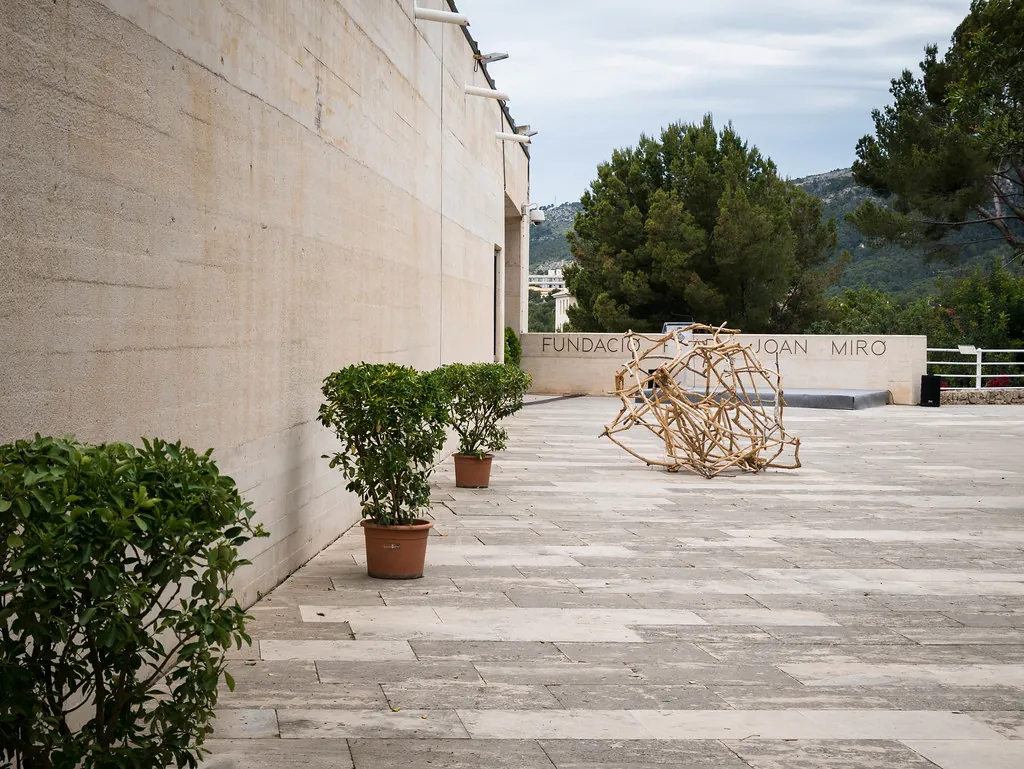
When you walk through the official Fundació Pilar i Joan Miró, you are not just looking at a museum. You are walking through the private sanctuary they built together. Pilar was the driving force behind turning the estate into a public foundation before her husband’s death, ensuring the studios would remain intact for future generations.
The Moneo Building: Architecture Meets Canvas
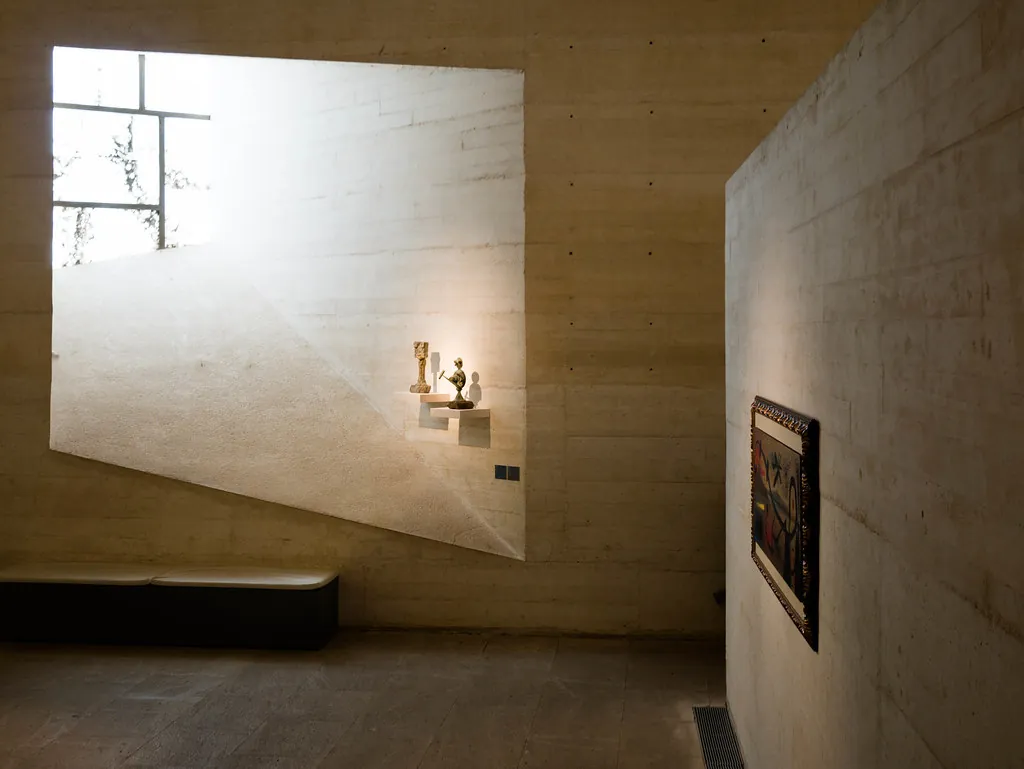
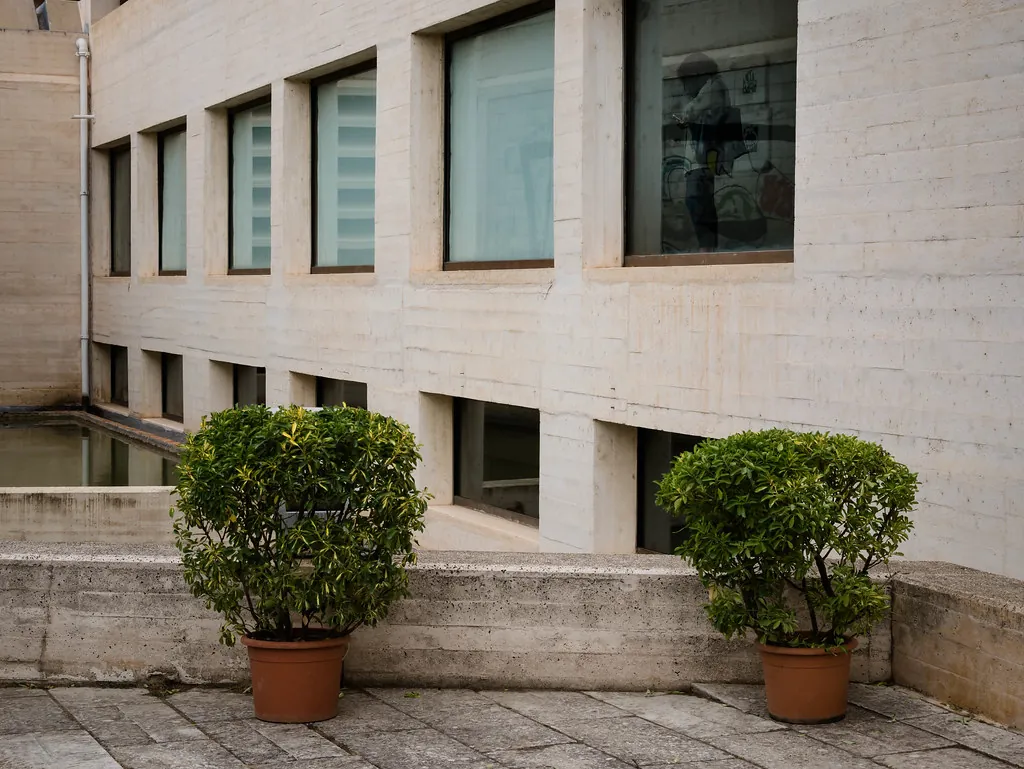
Rafael Moneo designed the main headquarters in 1992. The building is a sharp, angular structure of concrete and alabaster. Moneo used water channels outside to bounce reflections onto the walls. The translucent alabaster windows filter teh Mediterranean sun, casting a milky, diffused glow over the primary colours of the canvases inside. It houses the rotating exhibitions, a comprehensive library, and a quiet cafe where you can sit and process the artwork.
Taller Sert: Where Time Stands Still
Miró asked his close friend Josep Lluís Sert to design his dream studio. It is a masterpiece of rationalist architecture with a distinctive vaulted ceiling. The space remains entirely untouched since Miró died in 1983. You see his open paint tins, his unfinished canvases leaning against the walls, and the exact brushes he painted with. It feels as though he just stepped out for a coffee and will return at any moment.
Son Boter: Charcoal Graffiti and 18th-Century Walls
Miró bought Son Boter in 1959. This is a traditional 18th-century Mallorcan rural estate located just behind the Sert studio. He needed more room for his massive sculptures and ambitious printmaking projects. The house is a stark contrast to the modernist buildings on the property. Inside, the walls are covered in his original charcoal graffiti. He sketched out ideas directly on the old plaster, testing shapes before moving to bronze or canvas. Mind you, if you plan to visit in 2026, Son Boter is temporarily closed for essential heritage preservation and structural rehabilitation works. You can still admire the historic stone exterior from the paths.
The Sculpture Garden: Art in the Open Air
The outdoor spaces blend wild Mediterranean scrub with monumental bronze sculptures. Pine, olive, and carob trees frame the heavy, surrealist shapes. It is a peaceful routing of paths and terraced gardens. This is a place I often wish I could bring my dog, Cala, to wander around, though animals are strictly kept out to protect the grounds. The sculptures look different depending on the time of day, as the shifting shadows alter their expressions.
The Printmaking Studios: A Living Workshop
The foundation is not a static mausoleum. It is an active, breathing workspace. Contemporary artists still use Miró’s original lithography and engraving presses in the printmaking studios. The Consell de Mallorca supports various grants and residencies that bring young creators to the island. Hearing the clack and press of the heavy machinery adds a layer of life to the estate.
You stop seeing him as just a name in an art history book. You see the man who arranged pebbles on his desk and wiped his brushes on scraps of paper.
The Permanent Collection: 6,000 Works of Genius
The permanent collection holds roughly 6,000 works. These include large-scale paintings, delicate drawings, rough sketches, and bizarre objects he collected on the local beaches. It reveals his obsessive, deeply intuitive process. He drew inspiration from the simplest things—a rusted nail, a strange rock, a piece of broken glass. If you want to see how his work fits into the broader local modern art scene, a follow-up visit to Es Baluard Museu d’Art Contemporani in the city centre makes for a perfect afternoon.
While you are planning your itinerary, combining a morning at the foundation with a guided activity in the city is a smart move. You might book a Palma de Mallorca Bike Tour to explore the historic centre, or hop on a Tuk Tuk Tour in Palma to cover the hilly terrain up to Bellver Castle without breaking a sweat.
Practical Logistics: Getting to Cala Major
The museum sits on Carrer de Saridakis, about 15 minutes west of central Palma. Driving is straightforward, and there is a small car park on-site for visitors. The public bus is often the easier option. Lines 4 and 46 drop you very close to the entrance. You can check the current schedules on the EMT Palma public transport network. Read our public transport guide for details on using your contactless bank card to tap on and off the buses.
Many people ask where they should stay in Mallorca for the first time. If art and history are your main priorities, staying in the Palma city centre gives you direct bus access to the Miró Foundation and easy walking routes to the Palma Cathedral.
Opening Hours & Seasonal Shifts
The foundation operates on a strict seasonal schedule. Mondays are always closed, so plan your week accordingly.
| Season | Days | Hours |
|---|---|---|
| Summer (Mid-May to Mid-Sept) | Tuesday to Saturday | 10:00 – 19:00 |
| Summer | Sundays & Holidays | 10:00 – 15:00 |
| Winter (Mid-Sept to Mid-May) | Tuesday to Saturday | 10:00 – 18:00 |
| Winter | Sundays & Holidays | 10:00 – 15:00 |
Tickets, Concessions, and Free Entry Days
Is Mallorca cheap or expensive? That depends entirely on how you structure your days. Cultural sites like this are very reasonably priced compared to major European capitals.
- General Admission: €9.00
- Concessions (Pensioners, Youth 16-18): €5.50
- Palma Residents: €4.00
If you are travelling on a budget, entry is completely free on Saturdays after 3:00 PM and on the first Sunday of every month. Children under 15 always enter for free. After your visit, head down the hill to the Cala Major beachfront. If you are wondering what food Palma is famous for, grab a shaded table by the water and order a traditional llonguet sandwich or a sweet ensaimada with your afternoon coffee.
Mateo’s Final Thoughts: Understanding the Master
Standing in Taller Sert changes your understanding of Joan Miró. The sheer scale of the canvases and the chaotic arrangement of everyday objects bring his thought process into sharp focus. It is definitly worth taking the time to sit quietly in the sculpture gardens before you leave. The Fundació Pilar i Joan Miró is a rare space that holds the complete, uninterrupted focus of the artist who built it.