
Mallorca’s Quiet Underworld
Stepping away from the sun-baked coastlines brings a sudden shift in temperature and mood. The southern slopes of the Puig de Sant Miquel in the Serra de Tramuntana hold a quiet, amber-lit underworld. Most visitors flock straight to the massive coastal caverns, but Coves de Campanet is a different experience entirely. It is an intimate, unspoiled space where the rhythmic sound of dripping water replaces the echo of large crowds and amplified tour guides.
The Accidental Discovery of 1945
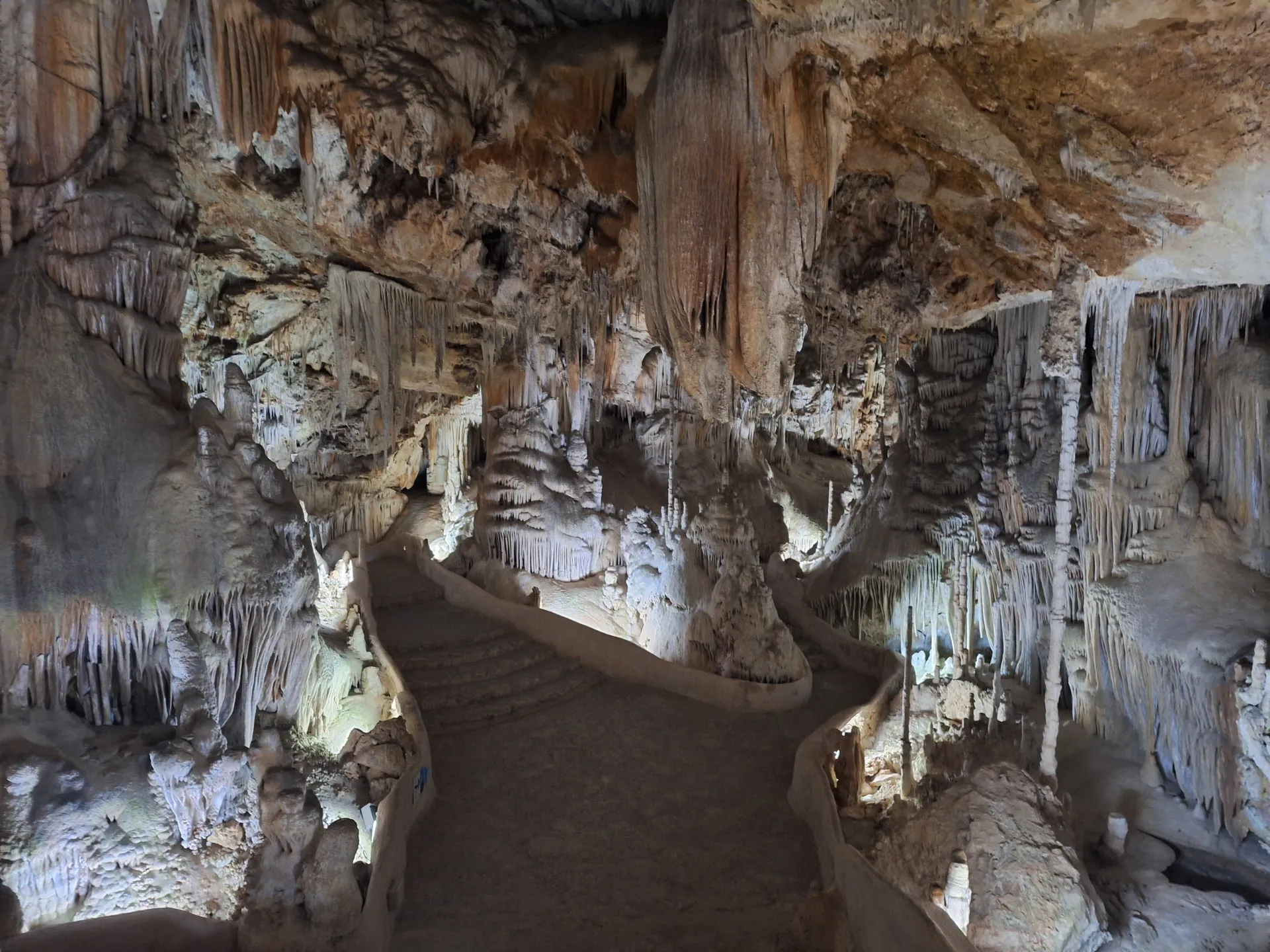
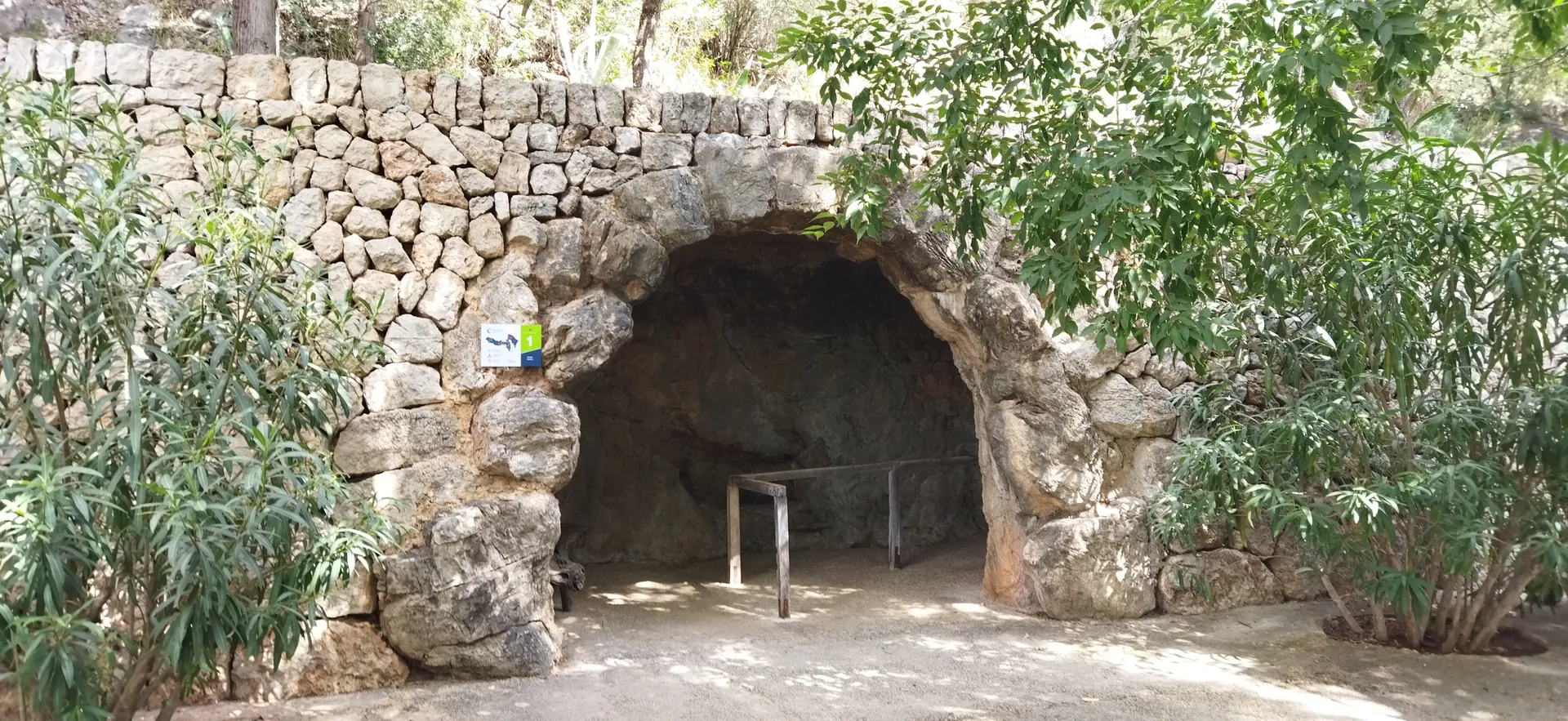
The existence of these caves was unknown until relatively recently. Local farm workers were simply digging a well in 1945. They kept feeling a strange breeze blowing up from the soil. Following teh mysterious draft of air, they broke through the rock and found a massive subterranean void. Architect Josep Ferragut helped map and develop the site, securing pathways and installing minimal lighting before opening it to the public in 1948. It remains largely unchanged since those early days. There are no laser shows or coloured spotlights here. The lighting is warm and subtle, preserving the raw, natural edge of the rock formations.
What to Expect: The Descent and the Atmosphere
The self-guided route covers about 500 metres and takes roughly 40 minutes to walk. You are walking an average of 50 metres below ground level. The air stays at a constant 21°C year-round. It smells faintly of wet earth and ancient limestone. Many foreign visitors reading older guidebooks often ask if there is a difference between Mallorca and Majorca. They are exactly the same place, just different spellings adapted for English speakers, but the island’s geological identity remains completely singular. Down here, you feel that deep, prehistoric identity away from the resort towns.
Take your time on the descent. Stop walking, close your eyes for ten seconds, and just listen to the absolute silence punctuated by the slow, steady drip of calcium-rich water.
Mateo Valero
A Journey Through the Chambers
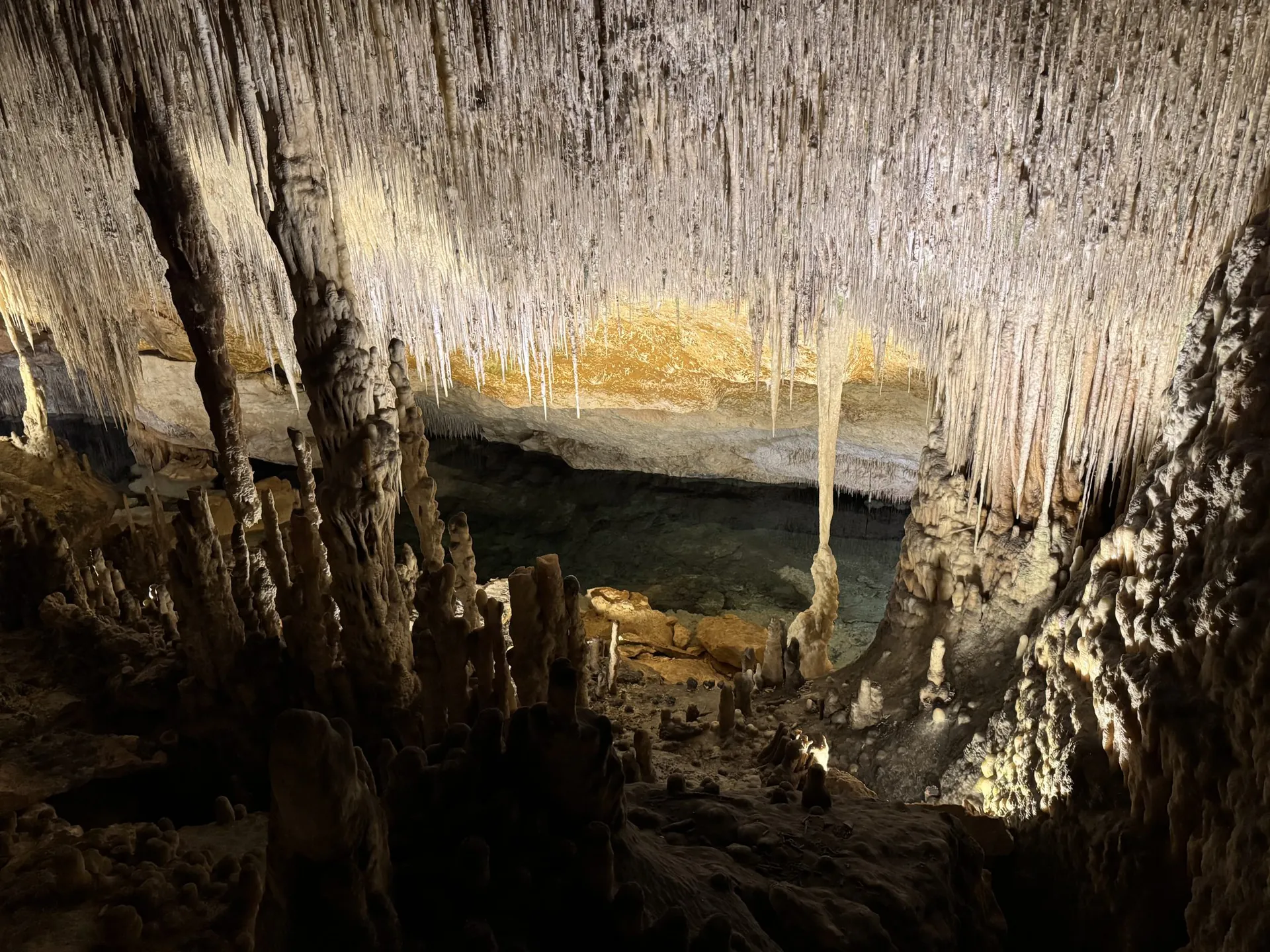
The chambers have distinct personalities. You pass through the Sala de la Palmera (Palm Tree Chamber) and the Sala Romàntica before reaching the Castillo Encantado (Enchanted Castle). Delicate, hollow stalactites known locally as “macaroni” hang from the ceiling. Heavy stalagmite columns rise from the floor, taking thousands of years to meet in the middle. The Sala del Llac holds still, mirror-like underground pools that perfectly reflect the Mesozoic rock formations above.
Prehistoric Goats and Endemic Scorpions
This site is a significant scientific time capsule. Paleontologists uncovered the fossilised remains of the Myotragus balearicus here. This was an extinct, endemic goat that roamed the island long before human arrival. The cave also houses the Chthonius campaneti, a tiny, blind pseudoscorpion found nowhere else on earth. These discoveries put Campanet on the map for European biologists. You can explore more about these unique island ecosystems through the Balearic Government’s environmental archives.
Coves de Campanet vs. Caves of Drach
People always ask me for advice when deciding which cave to go to. It comes down to what you want from your afternoon. The Caves of Drach on the east coast are massive. They feature underground classical music concerts and highly orchestrated light shows over Lake Martel. They are spectacular, mind you, but they are also packed with thousands of tourists daily. You will be herded along a specific path with a massive crowd. Campanet is self-paced. You walk quietly. You hear the water falling. It is a proper natural encounter rather than a theatrical production.
If you want spectacle and classical music, go to Drach. If you want geology, peace, and the feeling of true discovery, go to Campanet.
The Ses Coves Terrace & Restaurant
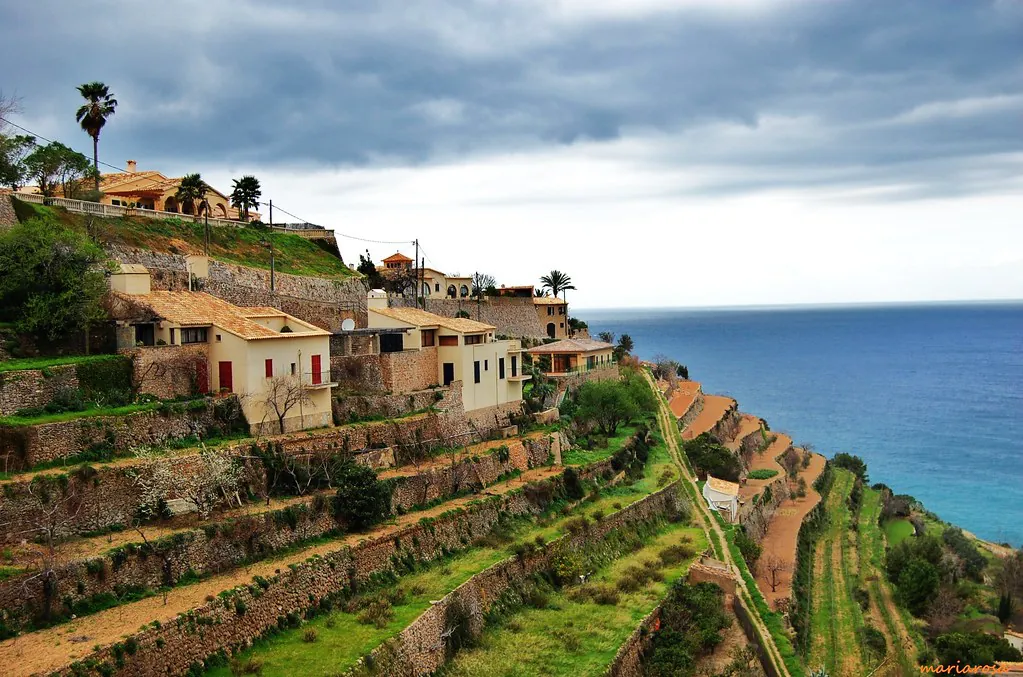
Emerging back into the daylight, you find the Ses Coves terrace. It is a beautiful spot with sweeping views over the Sant Miquel valley. They run an organic garden and raise local livestock on the adjoining land. The café serves excellent wood-fired meats and traditional Mallorcan dishes. I always leave my dog, Cala, resting under a carob tree here with a bowl of water while I show visiting friends the cave. Sitting on this terrace with a strong cortado is the perfect way to let your eyes adjust back to the bright Mediterranean sun. You can check their seasonal menu and current events on the official Coves de Campanet website.
Nearby Wonders: Sant Miquel and Fonts Ufanes
You should pair your cave visit with a short walk down the road. The 13th-century Gothic church of Sant Miquel is one of the oldest on the island, built shortly after the Catalan conquest. Right next to it is the Finca Gabellí Petit, home to the Fonts Ufanes. This is a rare hydrological phenomenon where, after heavy rains in the Tramuntana, water aggressively bubbles up from the forest floor, flooding the woods in a matter of hours. It is a protected natural monument and completely free to walk through.
Practical Information & Logistics
You do not need to worry about booking weeks in advance for Campanet. The entry process is straightforward and the pricing reflects the uncommercialised nature of the site.
| Visitor Category | Price (2026) |
|---|---|
| Adults | €17.00 |
| Children (Aged 4 to 12) | €9.00 |
| Infants (Aged 0 to 3) | Free |
The caves are open daily from 10:00 AM to 5:00 PM between April and October. They close an hour earlier at 4:00 PM during the winter months from November to March. The site is only closed on December 25th and January 1st.
Getting There Without Stress
You drive up the MA-13 motorway from Palma and take Exit 37. The route is clearly signposted. Parking is free, shaded by olive trees, and plentiful right at the entrance. If you prefer public transport, take the train from Palma to Sa Pobla. From the station, it is a very short, inexpensive taxi ride to the caves. See our public transport guide for detailed fare structures and train schedules.
Safety and Seasonal Advice
You must know what to be careful of inside the cavern. The stone steps get quite slippery from the continuous high humidity. Leave the flip-flops in your rental car and wear proper trainers with a good rubber grip. As for timing your trip, the best month to visit this specific region is usually May or September. The outside weather is warm enough for the beaches, but the cool subterranean walk provides an incredibly refreshing break in the middle of the day. If you want to dive deeper into the island’s history after your tour, head back into the city and spend an hour at the Museo de Mallorca to see artifacts from the same era as the cave’s prehistoric discoveries.
For those looking to combine this peaceful walk with an active day out, you can check out local snorkeling and kayaking tours along the northern coast. The quiet valleys of Campanet offer the perfect slow morning before hitting the water in the afternoon.