
The Crown Jewel of the Tramuntana
People often ask me how many days in Mallorca is enough; I always say you need at least a week, just so you have a spare day for this specific mountain. At 822 metres above sea level, Castell d’Alaró is a proper workout and a direct link to the island’s turbulent medieval past. It sits high up in the Serra de Tramuntana, commanding the surrounding valleys with steep, unyielding cliffs. My dog, Cala, knows the scent of the ancient olive groves at the base of this trail by heart. It is exactly the sort of rugged terrain you want to bring your dog to.
This hike is the definition of a “work hard, play hard” day out. You earn the sweeping views across the plains, and you definitely earn the slow-roasted lamb waiting at the rustic restaurant halfway down. The ruins themselves are entirely free to explore and remain open to the public around the clock.
A Fortress Forged in Blood and Legends
The stones of Castell d’Alaró carry a heavy history. The site first appeared in Arab chronicles around 902 AD. During the Moorish invasion, local Mallorcan Christians held out inside the fortress walls for eight years and six months. They surrendered only when their food supplies ran entirely dry. Centuries later, in 1231, the roles reversed when Islamic populations sought refuge here during the Christian conquest by King James I of Aragon. You can read more about the island’s protected cultural sites on the official Consell de Mallorca portal.
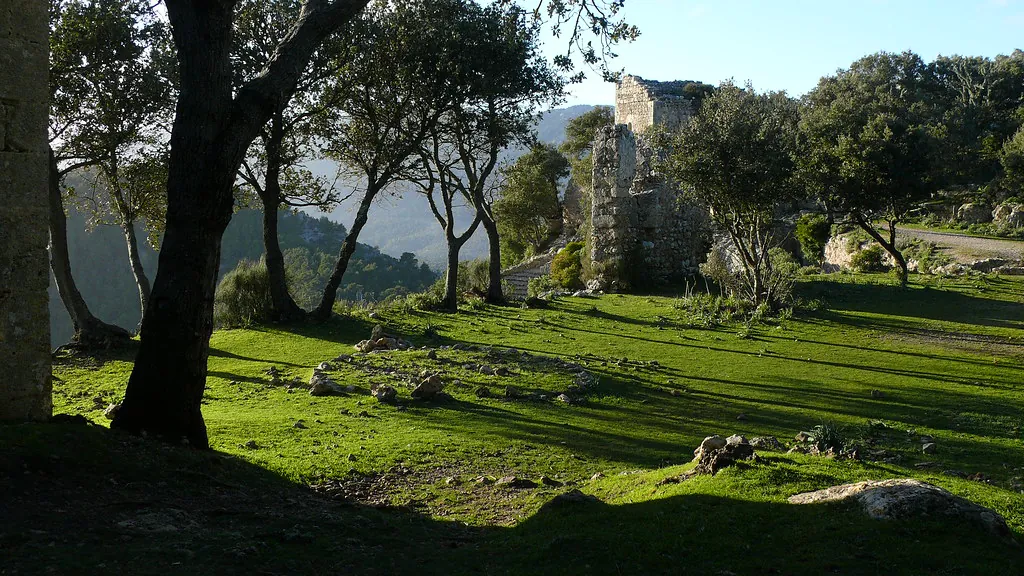
The most famous, and frankly grim, chapter occurred in 1285. Two local commanders, Guillem Cabrit and Guillem Bassa, defended the castle for King James II of Mallorca against the invading forces of Alfonso III of Aragon. Alfonso’s troops eventually breached the walls. In a dark play on the name “Cabrit”—which means little goat in Catalan—the invading king ordered the two commanders to be roasted alive. They became local martyrs, and their story still echoes when we walk up teh stone path toward the summit.
Choosing Your Trail: An Overview of Hiking Routes
You have three main ways to conquer the mountain, depending on your fitness level and how much time you want to spend on the trail.
Route 1: The Full Ascent
This is the traditional path. You start right in the centre of Alaró village. The trail leads you out of town, past sprawling rural fincas, and up through terraced olive groves. It is a long, steady climb that requires a good level of stamina. Expect the round trip to take about four hours. The terrain shifts from paved lanes to loose rocks as you gain elevation.
Route 2: The Shortcut via Es Verger
Many locals opt for this approach. You drive up the narrow, heavily potholed mountain road to the Es Verger restaurant car park. Mind you, the drive is a white-knuckle experience requiring absolute confidence at the wheel. From the restaurant, the hike to the summit takes a steep 40 to 45 minutes. It cuts out the long valley approach but keeps the most demanding section of the climb.
A third option is the scenic lollipop loop starting from the Orient Valley, near the L’Hermitage Hotel. This route covers roughly 8 kilometres. It winds through dense oak forests and offers a completely different perspective of the Tramuntana range before joining the main stone path to the castle gates. If you prefer guided exploration in the mountains, you might consider booking a Mallorca Full-Day VIP Tour to Valldemossa, Deià & Sóller to see more of the surrounding peaks.
Exploring the Summit: Ruins, Towers, and Vistas
Once you pass through the imposing stone entrance gate, the plateau opens up. Parts of the original fortress walls and five defensive towers remain intact. The most prominent is the l’Homenatge tower, locally called the constipador because of the fierce winds that whip through its arches. Further along, you will find the Prison of the Moors, officially known as the Tower of the Cave, suspended directly over the Cave of Saint Anthony.
Standing at the edge of the l’Homenatge tower gives you an unbroken 360-degree view of the island. On a clear day, you can see all the way to the bay of Palma.
The Moors engineered five massive water cisterns near the top. These deep stone reservoirs caught rainwater and kept the inhabitants alive during long sieges. You can still see the distinct cuts in the rock where channels directed the water downward.
The 17th-Century Sanctuary and Mountain Refuge
By 1622, the military significance of the site had faded. The local church built an oratory on the ruins, named Mare de Déu del Refugi. This turned the blood-soaked fortress into a place of quiet religious pilgrimage. Today, the sanctuary shares the summit with S’Hostatgeria del Castell d’Alaró. This mountain refuge is part of the famous GR-221 dry stone route. It has 30 beds spread across dormitories and provides a simple bar for hikers seeking a cold drink or a coffee above the clouds. You can check availability and book a bunk through the official Ruta de Pedra en Sec website.
The Legendary Reward: Lunch at Es Verger
For many, the hike is merely an excuse to eat at Es Verger. This rustic mountain farm restaurant gained international fame when British chef Rick Stein featured it on his BBC television series. Visitors often ask what food is Mallorca known for; while the coast offers incredible seafood, the mountains are all about hearty, slow-cooked meat. Es Verger serves a signature beer-basted slow-roasted lamb shoulder. They cook it in a massive wood-fired oven until the meat falls off the bone.
Get there early if you want a table on a Sunday. The smell of woodsmoke and roasting lamb hits you long before you see the restaurant.
Mateo Valero
The setting is incredibly basic. You sit on wooden benches under corrugated roofs, sharing space with roaming sheep and farm dogs. They pour local wine from unlabeled glass jugs. It is unpretentious and entirely authentic. If you want to dive deeper into the island’s culinary habits, including what constitutes a traditional Mallorca breakfast, exploring these rural cellers is mandatory.
Getting There in 2026: Public Transport vs. Driving
Reaching the starting point in Alaró is straightforward with the updated TIB transport network. You catch the T1 or T2 train from Palma’s Intermodal Station and get off at Consell-Alaró. From there, the L342 shuttle bus times perfectly with the train arrivals to drop you right in the centre of Alaró village. Using your bank card to tap in and out makes the fare incredibly cheap. Find the full timetables on the TIB official transport network site.
If you decide to rent a car, you can park in the village and walk the full route. Attempting the drive up to Es Verger is a different story. The road is a single lane of broken tarmac with steep drops and blind corners. When two cars meet, someone has to reverse uphill. I usually recommend leaving the car in the village and relying on your own two feet. You can find more advice on navigating the island in our Mallorca Public Transport Guide.
Essential Tips for the Hike
- Footwear: The final ascent from Es Verger to the castle is paved with uneven, polished stones. They get incredibly slick, especially if it rains. Proper hiking boots or trail shoes with strong grip are non-negotiable.
- Water: Bring plenty. The bar at the summit refuge sells bottled water, but they close during the off-season and on certain weekdays. You do not want to be caught out on a hot afternoon.
- Timing: Check our guide on the Best Time to Visit Mallorca. The peak summer months of July and August turn this exposed trail into an oven. Late spring or early autumn provides crisp air and clear skies.