
Understanding the Island
People often ask me if Mallorca is the same as Majorca. The short answer is yes. The longer version is that the latter is just an old British anglicisation of the name. We call it Mallorca here, and it is a place of serious contrasts. You can find yourself standing in front of a gothic cathedral in the morning and walking through a dark, dripping limestone cave by the afternoon. Visitors frequently wonder how many days are enough to see the island. A week gives you a decent introduction, mind you, but you could spend a month here and still leave vast tracts of the mountains entirely unexplored. This guide is my attempt to organise the island for you. I have lived here long enough to know that the best time to visit dictates what you will actually enjoy doing. High summer is for the water, while the cooler months are for the ruins and the trails.The Crown Jewels of Palma
The capital holds the heaviest concentration of historical architecture on the island. You do not need a car to see these sites, and they are usually the first stop for anyone arriving by plane or ferry. If you want a quick lay of the land, you can even book a Tuk Tuk Tour in Palma de Mallorca to get your bearings before walking the old town.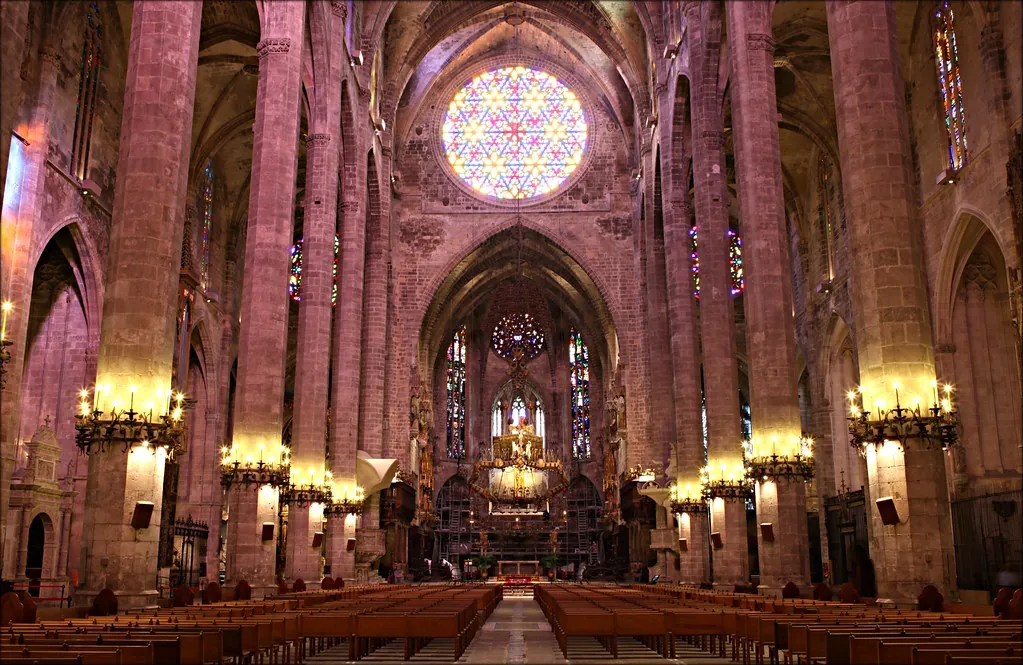
Palma Cathedral, known locally as La Seu, sits right on the waterfront. It has an immense rose window that casts coloured light across the stone interior on sunny mornings.
Right next door is the Royal Palace of La Almudaina. The Spanish royal family still uses it for official summer receptions. Across town, watching over the harbour, is Bellver Castle. It has a rare circular design, making it entirely unique among European fortresses.
| Site | Standard Admission | Key Hours |
|---|---|---|
| Palma Cathedral | €10 (Upper terraces extra) | Mon-Fri 10:00-17:15, Sat 10:00-14:15. Closed Sun. [Official Website] |
| Bellver Castle | Check local site | Closed Mondays |
| La Almudaina | Check local site | Varies by season |
The Mountain Backbone: Serra de Tramuntana
The Serra de Tramuntana runs down the entire western side of Mallorca. It is a UNESCO World Heritage site, recognised for the way humans have shaped the steep landscape with dry stone walls and ancient olive terraces over centuries. For many, this is the prettiest part of the island.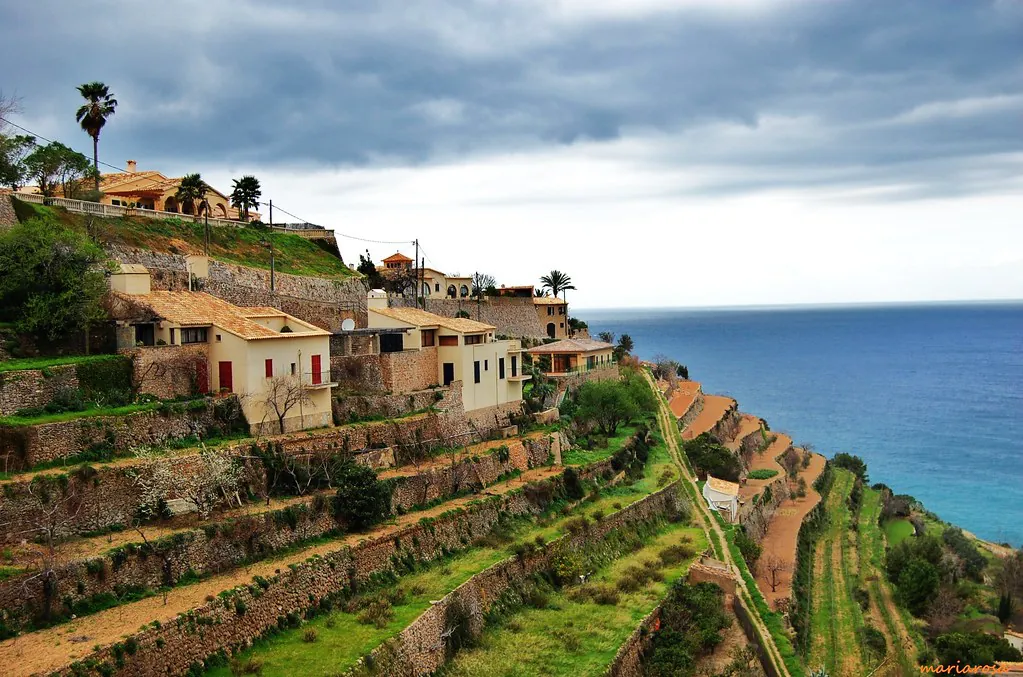
Mountain Sanctuaries and High Castles
Mallorca is dotted with high-altitude religious sanctuaries and ruined fortresses. They were built for defence and isolation. Today, they give you the best views of the surrounding plains and the sea.
Santuari de Sant Salvador and Santuari de Cura are both excellent examples. Cura sits on top of Puig de Randa, offering a clear 360-degree view of the island on a good day. Monestir de Miramar, established by Ramon Llull in the 13th century, provides a quieter, shaded retreat looking out over the northern coast.
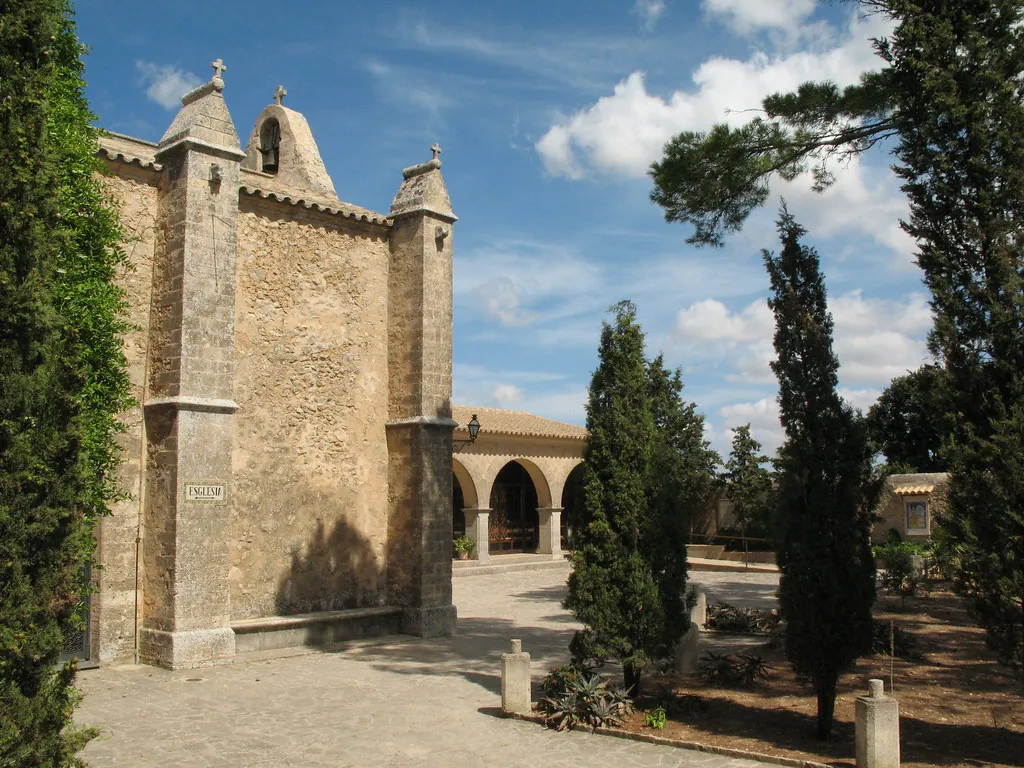
Do not attempt the drive up to Es Verger in a wide rental car. The road is narrow, heavily rutted, and requires a steady nerve.
Subterranean Networks
Beneath the dry surface, Mallorca is completely hollow in places. The limestone bedrock has dissolved over millennia to form massive cave systems. The Caves of Drach in Porto Cristo are the most famous.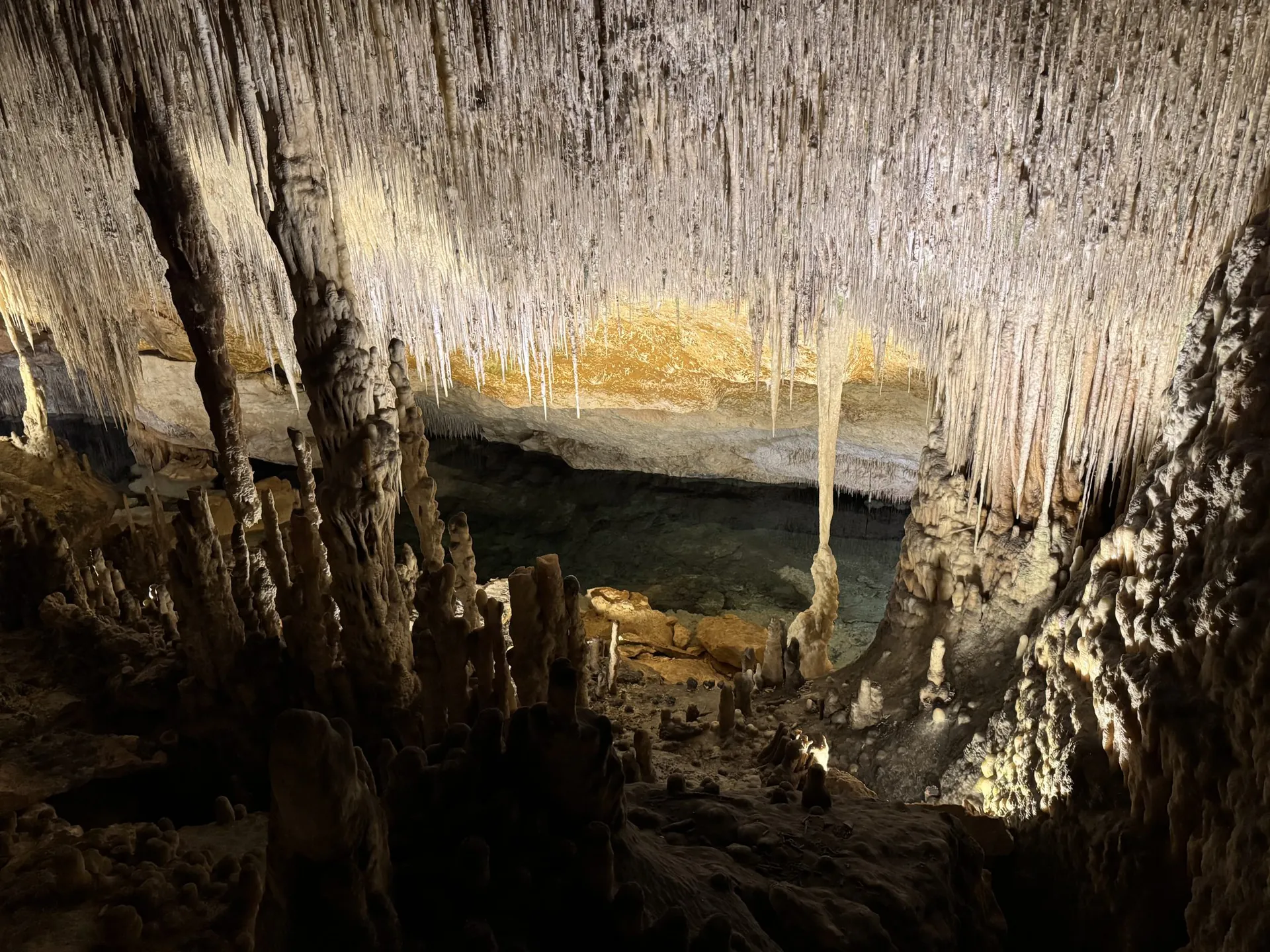
- Tickets: €18 for adults, €11 for children (2 to 12) if bought online [Official Tickets]. Box office prices are higher.
- Alternatives: Coves de Campanet are much quieter and feel far less commercial. Cuevas de Génova are small and located very close to Palma.
Coves and Remote Beaches
The island has hundreds of beaches, but the real appeal lies in the small, rocky coves called *calas*. In the south and east, the water is a bright, clear turquoise. Up north, the beaches are wilder and backed by dramatic cliffs.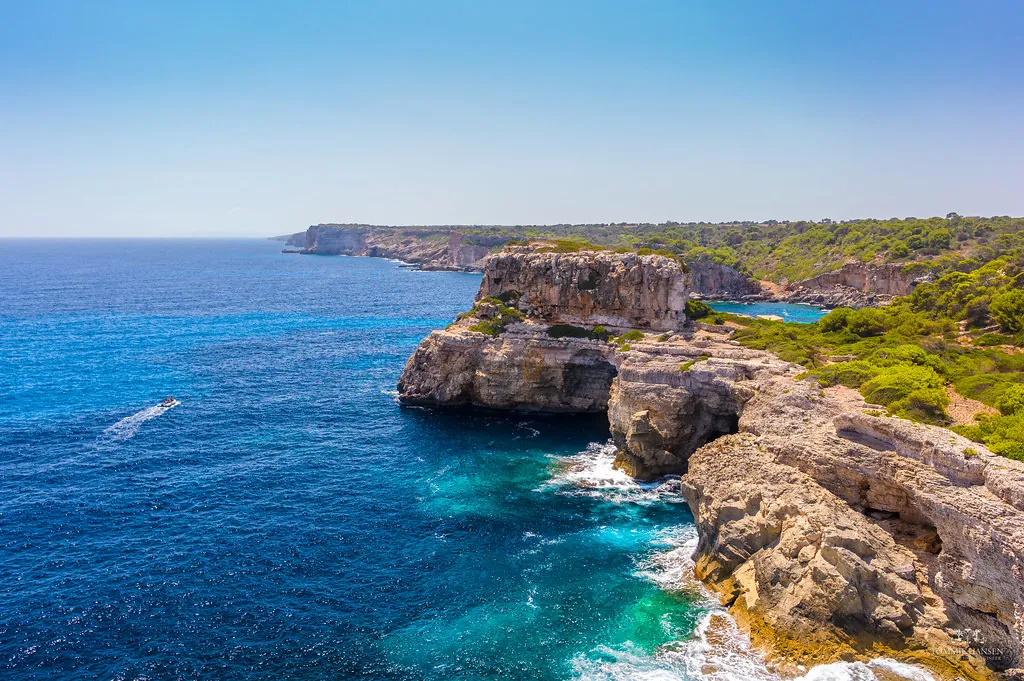
Cala s’Almunia and Cala Pi are incredibly popular in summer. You need to arrive very early to find space for a towel. For a real adventure, hike down to Platja de Coll Baix near Alcúdia. The trail is rough, but you are rewarded with a wide arc of grey pebbles and pristine water. It’s the sort of beach you just want to spend the whole day at.
Ancient Echoes: Talayotic Sites
Long before the Romans arrived, the Talayotic culture dominated the Balearic Islands. They left behind massive stone towers and settlements that still stand today. These sites are generally very cheap to visit, usually costing between €2 and €5. The Necròpolis de Son Real sits right on the coast near Can Picafort. It is an ancient cemetery looking out to sea. Talayot de Ses Païsses in Artà is surrounded by a massive defensive wall hidden within a dense oak forest, while Capocorb Vell in the south gives a clear footprint of an entire ancient village.Art, Botanical Gardens, and Nature
Mallorca has a strong artistic heritage. Joan Miró spent his later years here, and the Fundació Pilar i Joan Miró preserves his original studios exactly as he left them. General admission is €10. From Tuesday to Saturday, it opens at 10:00 and closes at 18:00 in winter, extending to 19:00 in the summer [Official Museum Site]. The museum is closed on Mondays. Other major cultural stops include Es Baluard for contemporary art and the Museo de Mallorca for historical artefacts.
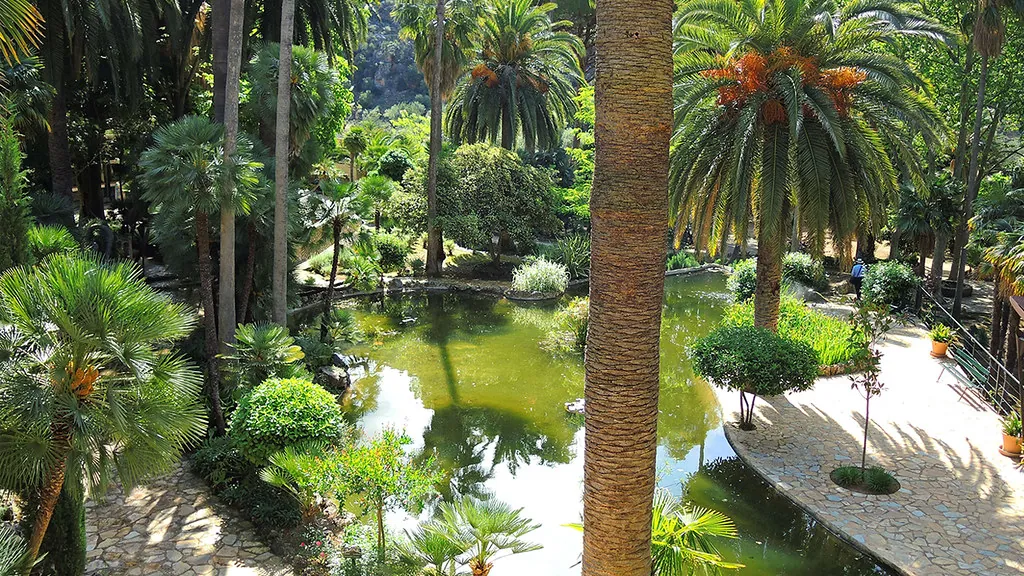
If you prefer plants to paintings, the Jardines de Alfabia in Bunyola are exceptional. The grounds mix English-style landscaping with traditional Mallorcan courtyards. Entry is €10, and it is open daily from 9:30 to 18:30 between February 14 and October 31. The Jardí Botànic de Sóller focuses specifically on native Balearic flora.
Curious Landmarks
The island has several natural monuments that defy easy categorization. Es Pontàs is a massive natural rock arch rising out of the sea near Santanyí. Climbers occasionally attempt to scale it, but mostly it is just a beautiful subject for photographers. Sa Foradada, near Deià, is a large peninsula with a distinct hole punched right through the rock. It is one of the most popular places on the west coast to watch the sunset.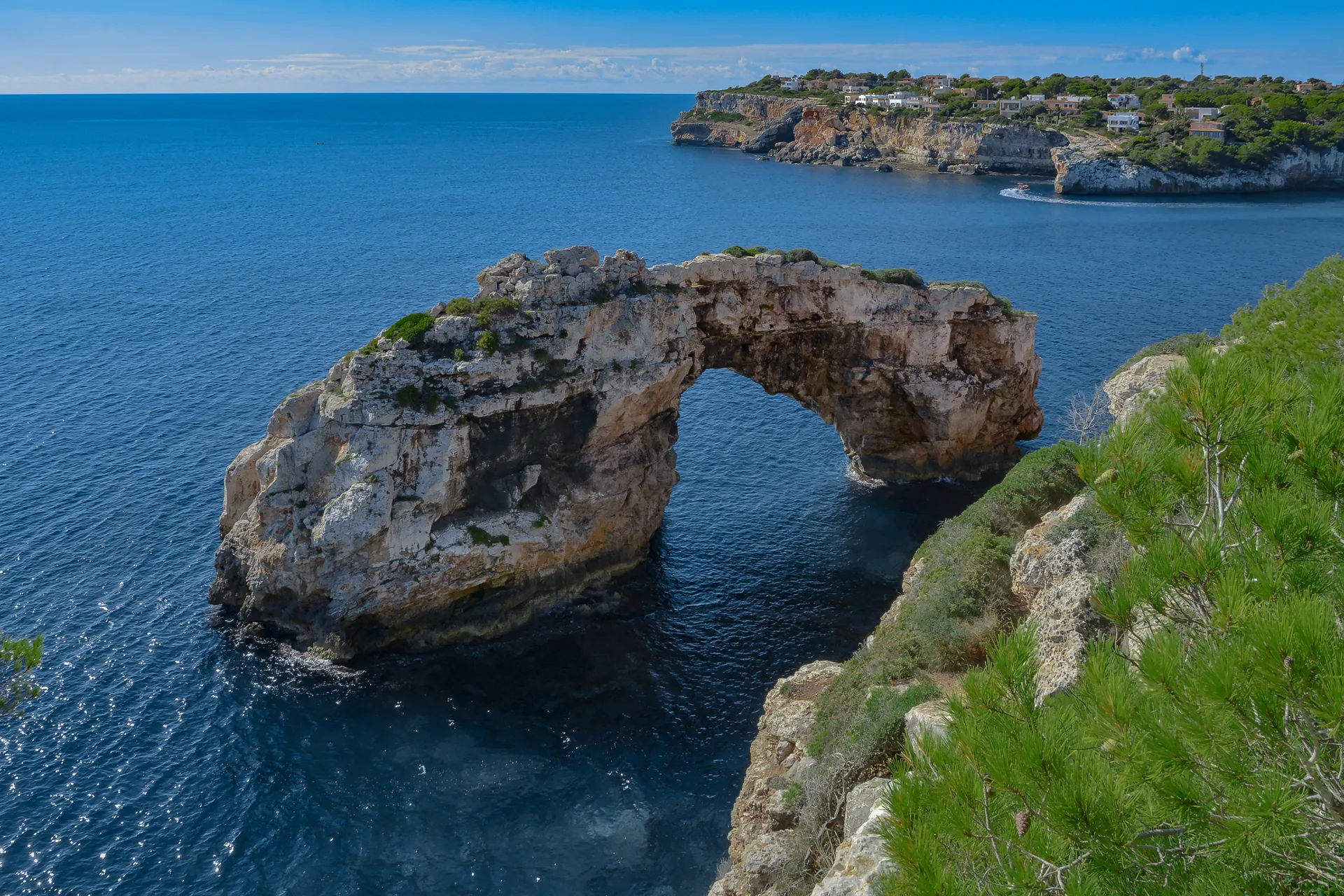
Practical Insights for Your Visit
Visitors usually have a lot of questions about the day-to-day realities of being here. I am often asked if Mallorca is cheap or expensive. It really depends on where you go. High-end restaurants in Palma and the beach clubs in the southwest are very expensive. If you head inland to a local *celler* restaurant to try some traditional Mallorcan foods like *tumbet* or *arròs brut*, you will find it incredibly reasonable. Language is another common query. The official languages are Spanish and Catalan, though locals speak a specific dialect called *Mallorquín*. In Palma and the resorts, almost everyone speaks English. If you want to be polite, a simple *’gràcies’* (thank you in Catalan/Mallorquín) goes a very long way. As for tipping, it is not considered rude if you do not tip, but leaving about 10% for good service is standard practice.If you are worried about getting around without a rental car, our Mallorca public transport guide covers the TIB bus network in detail. The red and yellow buses are highly efficient and allow you to tap on and off with a standard bank card.You might hear rumours about celebrities living here. Michael Douglas famously owns an estate near Valldemossa, and confirming the persistent local gossip over the years, Brad Pitt does indeed have a villa in Port d’Andratx.