
The Soul of Cala Pi: A Pine-Scented Introduction
The air in this corner of Llucmajor has a weight to it that you do not find in Palma. It is a thick scent of *Pino Carrasco* (Aleppo pine) mixed with the sharp tang of salt that has dried on limestone. Cala Pi is not merely a beach; it is a deep, geological incision into the southern coast of Mallorca. This narrow inlet reaches inland for nearly half a kilometre, protected by cliffs that rise thirty metres on either side. It is a fjord in all but name, created by the ancient patience of the *Torrent de Cala Pi* as it fought its way to the Mediterranean. I have come here since I was a boy, and the feeling of the place has remained remarkably consistent despite the rise of social media. The water remains that particular shade of turquoise that looks as if someone has spilled a bottle of ink into a pool of glass. My dog, Cala, knows the scent of the pine needles here better than she knows her own bed. She is named after these coves, mind you, and she always senses when we are close to the edge of the plateau. It is a proper Mallorcan landscape, rugged and uncompromising, where the trees lean at impossible angles to catch the breeze.| Feature | Details |
|---|---|
| Access | 147 stone steps (Steep) |
| Parking | Free street parking in the village |
| Lifeguard | Seasonal (May to October) |
| Surface | Fine white sand |
| Nearby History | Capocorb Vell (4km away) |
Arrival and the Great Descent: Navigating the 147 Steps
Reaching the sand is an exercise in calf strength. There are exactly 147 stone steps that wind down the cliff face from the main road. These stairs are steep and can be slippery if you have just come out of the water, so a bit of caution is necessary. If you are travelling with young children and a pram, I must tell you plainly: leave the pram in the car. There is no ramp and no lift. You will see parents struggling with gear, but a proper backpack is teh only way to manage the descent without losing your temper. The view from the top of these stairs is one of the most photographed spots on the island. People often queue for a photo on the stone ledge that juts out over the water. It is a beautiful perspective, certainly, but the real magic is further down. As you descend, the temperature drops a few degrees and the sound of the wind on the plateau is replaced by the gentle lap of water against the old fishing shacks, known locally as *escars*. These stone structures were built to house the traditional *llaut* boats, and they still stand as a reminder of the island before the hotels arrived.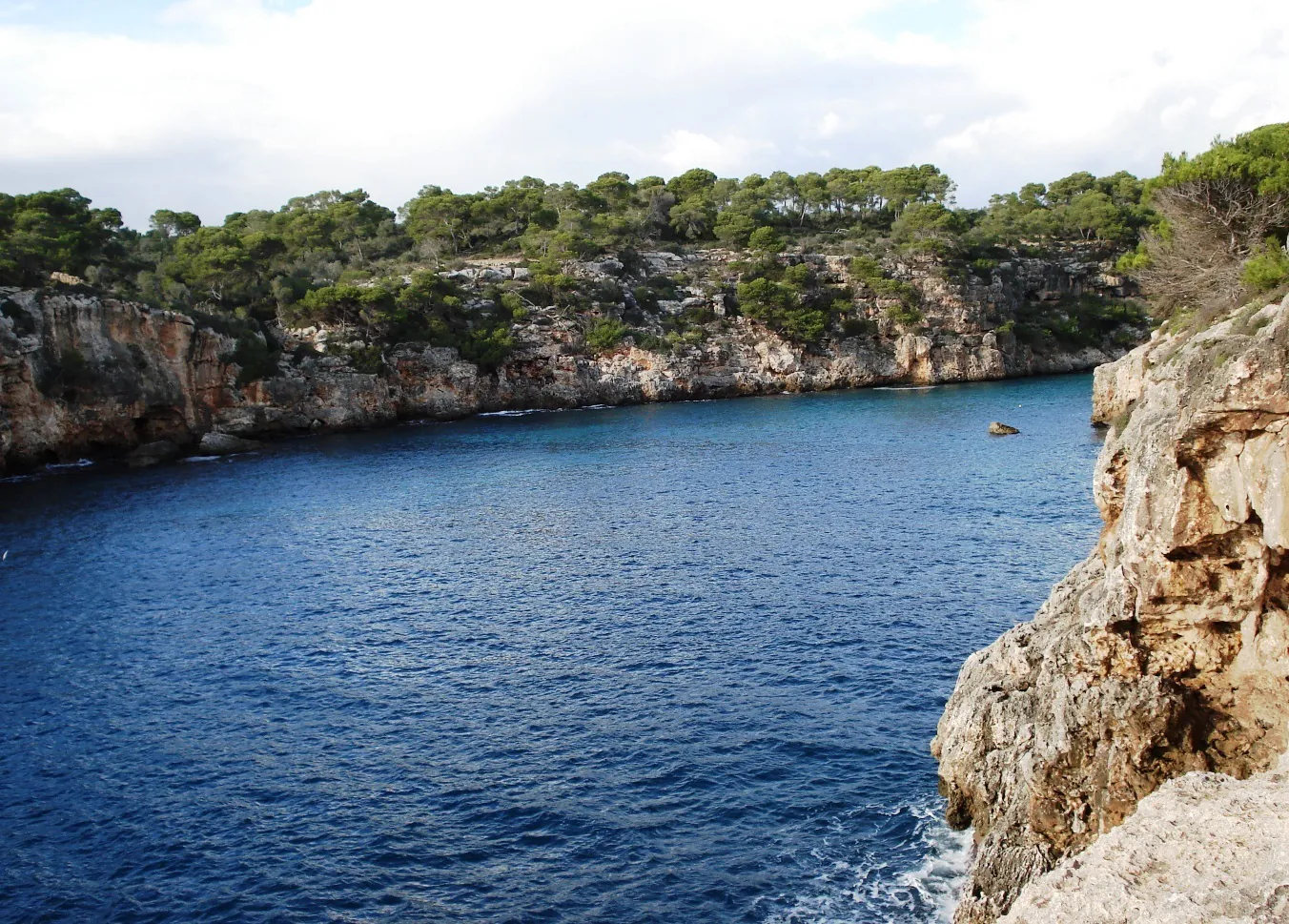
The Silent Guardian: Torre de Cala Pi
On the western headland stands the *Torre de Cala Pi*. This watchtower dates back to 1579 and was a vital part of the island’s coastal defence system. In those days, the threat from Barbary pirates was constant and terrifying. The tower is built of local sandstone and has stood for centuries against the salt air. It is not open for internal tours, but you can walk around its base to see how it commands the entrance to teh bay. From here, you can look out across the water toward the island of Cabrera on a clear day.The Torrent and the Fjord
The geography here is unique because of the *torrent*. Most of the year, it is a dry, rocky bed behind the beach, but it is responsible for the deep gorge that gives the beach its protection. Because of this natural shape, the water is almost always calm. It is a safe place for swimming even when the open sea is rough. The limestone walls reflect the light in a way that makes the water feel warmer than at the open beaches of the south, though the water feel cold when you first dive in during the month of May.Hiking with Cala: The Secret Path to Cala Beltran
If the main beach becomes too crowded, which it often does in July and August, there is an escape route. Behind the *escars* on the right side of the bay, a rocky path climbs up the cliff and leads toward Cala Beltran. This is where my dog Cala truly comes alive. It is a rough trail that requires sturdy shoes; do not attempt this in flimsy flip-flops. The path follows the coastline for about twenty minutes through scrubland and low pines.The trail offers views that are far more rewarding than the standard tourist shots. You will pass through areas where the rock has been weathered into strange, honeycomb shapes. Cala usually finds a lizard or two to chase among the lentisk bushes. It is important to bring plenty of water on this hike, as there is no shade once you leave the taller pines. If you enjoy this kind of coastal trekking, you might also consider visiting Platja de Coll Baix in the north, which has a similarly rugged soul.Local Tip: Cala Beltran is a tiny, serpentine inlet with no sand. It is perfect for those who prefer jumping off rocks into deep, clear water rather than lounging on a towel. It is often much quieter than its famous neighbour.
Bronze Age Echoes: Capocorb Vell
Just four kilometres inland from the coast lies one of the most significant archaeological sites in the Western Mediterranean. The *Poblado Talayótico de Capocorb Vell* is a prehistoric village that dates back to approximately 1300 BC. It has five *talayots* (our local Bronze Age towers), with both circular and square structures, and a series of rectangular dwellings. Walking through these stone ruins gives you a proper sense of the island’s deep history, long before the first tourists ever set foot on the sand. The site is open to the public for a small fee, usually around four Euros. It is a quiet place, often overlooked by those rushing to the beach. The [Official Tourism Portal of Spain] provides excellent historical context for those interested in the Talayotic culture. It is a stark contrast to the modern urbanization of Cala Pi, and it reminds us that this part of the island was a hub of activity thousands of years ago. The stone construction is incredible, considering the tools available at the time.Beneath the Turquoise: Snorkeling and Swimming
The rocky edges of the inlet are a haven for marine life. Because the bay is so narrow, boat traffic is limited to a few small vessels that anchor near the mouth. This keeps the water clear and the fish plenty. If you bring a mask and snorkel, you can follow the cliff walls out toward the sea. You will likely see schools of *obladas* (saddled seabream) and perhaps the occasional octopus hiding in the crevices of the limestone. For those who want to explore further, there are many snorkeling and kayaking tours that depart from nearby ports and visit the sea caves along this stretch of coast. The cliffs between Cala Pi and Faro de Cap Blanc are riddled with small openings that are only accessible from the water. It is a different world down there, silent and shimmering in the filtered sunlight.The water in Cala Pi is exceptionally calm, making it one of the best spots on the island for hesitant swimmers or those looking for a peaceful float away from the waves.
The Local Table: Where to Eat in the Village
After climbing those 147 steps back up, you will have earned a proper lunch. The village of Cala Pi is small, but it has a few restaurants that are worth your time. *Restaurante Sa Terrassa* is a local favourite for seafood. Their *paella* is consistent and they use local ingredients whenever possible. It is not the cheapest meal on the island, but the quality justifies the price. You can find their details and booking info on their [Official Website]. Another excellent option is *Restaurante Mirador de Cabrera*. As the name suggests, the views are the main draw here. It sits right on the edge of the cliff, and you can look out over the entrance of the cove. If you are looking for something more casual, *Taverna La Paleta* serves good tapas and is a nice spot for a cold beer in the afternoon. Mallorca can be expensive if you eat in the most touristy zones, but Cala Pi remains somewhat reasonable for the quality you receive.The Logistics of Paradise: Parking and Facilities
Parking in Mallorca is often a nightmare, particularly at famous coves like Cala s’Almunia. However, Cala Pi is a bit more forgiving. The beach is surrounded by a residential urbanization, and parking is free on the streets. You might have to walk five or ten minutes from your car to the stairs during the peak of summer, but you will find a spot eventually. There is no dedicated car park, so please be mindful not to block the driveways of the local residents. Facilities on the sand are minimal. There is a small beach bar, a *chiringuito*, that sells cold drinks and basic snacks during the summer months. There are also public toilets and a lifeguard station. Mind you, there are no sun loungers for rent here. This is a “bring your own umbrella” kind of beach. If you prefer a more serviced experience with rows of parasols, you might find the larger resorts more to your liking, but you would miss out on the wild character of this place.Public Transport: The 505 and 501 Routes
It is possible to reach Cala Pi without a car, though it requires a bit of planning. The *Transport de les Illes Balears* (TIB) bus network operates the 505 line during the summer season. This route connects Cala Pi with Llucmajor. If you are coming from Palma, you will likely need to take the 501 bus to Llucmajor first and then transfer. The [TIB Official Website] has a journey planner that is quite reliable. For more detailed advice on navigating our island, our Mallorca Public Transport Guide covers everything from the contactless payment system to the best routes for reaching remote beaches. If the bus schedule doesn’t suit your timing, a taxi from Llucmajor will cost roughly thirty Euros. It is a short journey, but the convenience is often worth the expense if you are carrying beach gear.
Family Friendly
🇺🇸
Spanish Cooking Experience in Mallorca
Couple's Choice
🇺🇸
Horse Riding in Mallorca on the Beach and Forest
Bestseller
🇺🇸
Kayaking and snorkeling in the Mondragó Natural Park in Mallorca
Local Favorite
Adventure Seekers
🇺🇸
Palma de Mallorca and Valldemossa Excursion from Cruise Port
Adventure Seekers
🇺🇸