
The Shadow of the Tramuntana
The air changes the moment you step off the road and into the shade of the plane trees at Jardines de Alfabia. It is a cooler, heavier sort of air that carries the scent of damp stone and citrus blossom, a sharp contrast to the dry heat that often bakes the rest of the island. This *possessió*—a traditional Mallorcan country estate—sits at the very feet of the Serra de Tramuntana, and it has been there in some form or another since the Moors first mastered the art of directing mountain water through the valley of Bunyola. I often bring my dog, Cala, here on the drive back from the mountains, though mind you, she has to stay on a lead and behave herself around the peacocks. There is a stillness in these gardens that you won’t find in the coastal resorts. It is the sort of place you could lose yourself in. Many people ask why Mallorca is so famous, and while the beaches get the headlines, Alfabia explains the true soul of the island: a history of survival, sophisticated irrigation, and a deep respect for the landscape.The Legacy of Ben-Abet
The story of Alfabia is inseparable from the Moorish Wali, Ben-Abet. During the Christian conquest of 1229 led by King Jaume I, Ben-Abet made a strategic choice to assist the Catalan forces. In return for his loyalty, he was allowed to keep his lands. This preservation is why Alfabia is so unique; it is one of the few places where the bones of Islamic agricultural genius remain visible, even under layers of Gothic and Baroque refinement.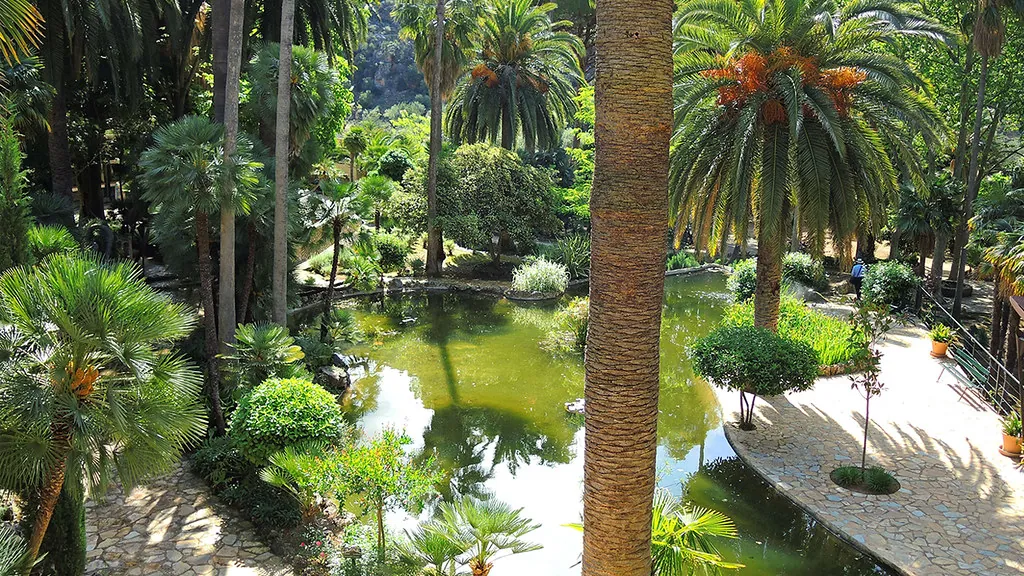
The Clastra and the Almohad Ceiling
After walking up the grand avenue of plane trees, you pass through the *portal forà*—the main gateway—and immediately find yourself beneath one of the most significant treasures on the island: the Almohad coffered ceiling. This 12th-century woodwork is made from pine and holm oak, featuring detailed Arabic inscriptions that praise Allah and the owner of the house. It is a striking bit of craftsmanship to see before you even step into the *clastra*, the main courtyard, where a massive plane tree seems to hold the entire space together. It is remarkable that this ceiling has survived centuries of reformations. You can see the evolution of Mallorca’s architectural tastes as you move from this Moorish entrance into the manor house. The rooms are a mix of styles where Gothic window frames sit next to Renaissance tapestries. If you have visited the Museo de Mallorca in Palma, you will recognise the same aristocratic grandeur here, but Alfabia feels lived-in, as if the Zaforteza family just stepped out for a moment.A House Fit for a Queen
The interior of the manor house has several rooms that reflect the high society of the 19th century. The Queen’s Room is perhaps the most famous, prepared specifically for the visit of Isabella II in 1860. The furniture is ornate, the fabrics are heavy, and the views out over the gardens are proper impressive. There is also a library that contains the *Llibre de les Franqueses*, an important historical document for the island.The house is a bridge between worlds, where the Islamic art of the past meets the European luxury of the Enlightenment.
The Water Games of the Pergola
The real magic of Alfabia is outside. The 18th-century pergola is a long, stone-pillared walkway covered in climbing plants and vines. It has a secret, though. Along the columns, there are hidden water jets. If you find teh right button—or if a mischievous gardener is nearby—the walkway turns into a tunnel of crossing water arches. It was designed to surprise and cool guests during the summer months, a bit of Baroque playfulness that still works perfectly today. Beyond the pergola, the garden splits into two distinct personalities. There is the “English Garden,” which is more romantic and overgrown, with large palms and a small lily pond. Then there is the functional orchard. Alfabia has always been a working farm, and the citrus groves are as much a part of its beauty as the fountains. You might see the Mallorcan black pigs roaming the lower enclosures, which is a sight Cala always finds fascinating.Practical Information for Your Visit
Getting to Alfabia is part of the experience. While most people drive, you can take the historic Sóller Train, which has a dedicated stop right at the gates. If you are coming from Palma, the 204 bus is a reliable alternative, as detailed in our Mallorca Public Transport Guide.| Category | Details |
|---|---|
| Opening Hours | Daily 09:30 – 18:30 (Feb 15 – Oct 31) |
| General Admission | €10.00 |
| Resident Price | €5.00 (with DNI/NIE) |
| Accessibility | Limited (many stairs and uneven paths) |
| Pet Policy | Leashed dogs permitted |
Exploring the Surrounding Area
Once you have finished your tour of the gardens, I highly recommend stopping at the small kiosk bar on the estate. They press the oranges right there, and the juice is as fresh as it gets. It is a good moment to plan your next stop. You are very close to the village of Bunyola, which remains one of the more authentic corners of the island. If you are looking for more water-based history, the Banys Àrabs in Palma offer a smaller, more urban glimpse into the same Moorish era.
Bestseller
🇺🇸
Spanish Cooking Experience in Mallorca
Family Friendly
🇺🇸
Horse Riding in Mallorca on the Beach and Forest
Family Friendly
🇺🇸
Kayaking and snorkeling in the Mondragó Natural Park in Mallorca
Local Favorite
Adventure Seekers
🇺🇸
Palma de Mallorca and Valldemossa Excursion from Cruise Port
Adventure Seekers
🇺🇸
Deluxe Cruise-Friendly Mallorca and Valldemossa Tour
Mateo’s Tip: If you are visiting in the height of summer, arrive exactly at 09:30. The garden has its own microclimate, but by midday, even the fountains can’t hide the heat. Plus, you get the best light for photos of the Almohad ceiling before the crowds arrive.
For further historical context, you can consult the Official Alfabia Website or explore the UNESCO Tramuntana Site to understand how these estates fit into the wider protected landscape. The Balearic Government also maintains a portal for the Cultural Heritage of the Islands which has more on the Ben-Abet lineage.