
The Geological Anomaly of the Serra de Tramuntana
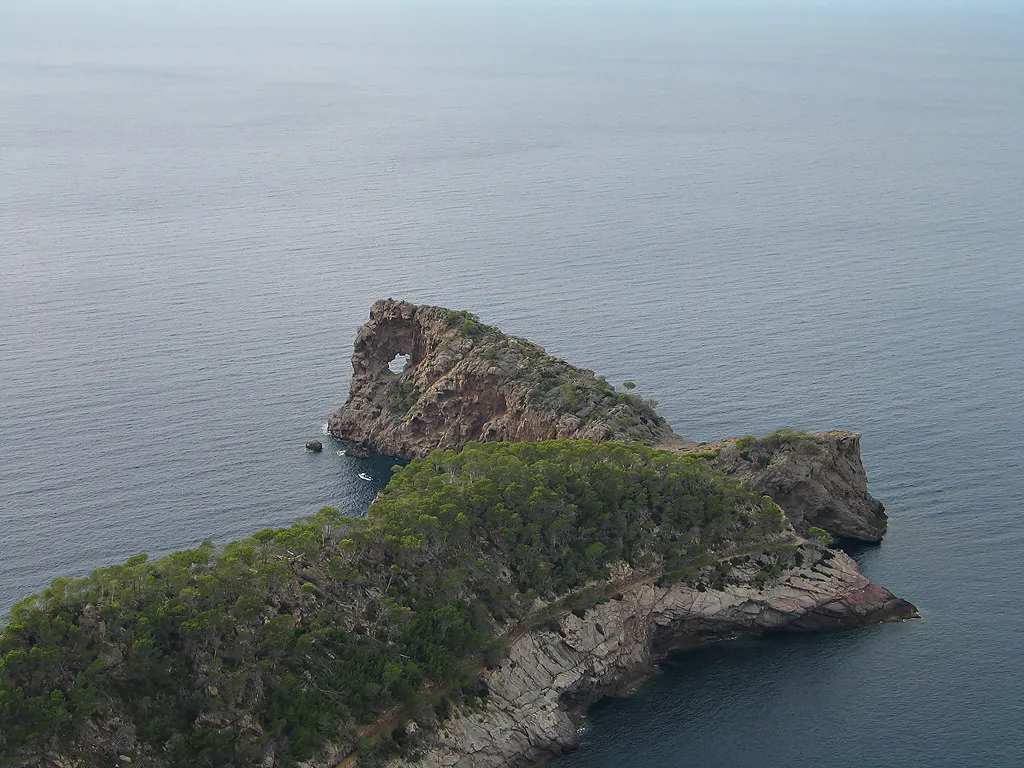
There is a specific quality to the light on the northwest coast of Mallorca just before dusk. It turns the limestone cliffs a deep, bruised orange. Sa Foradada is a massive peninsula of rock jutting into the Mediterranean, defined by the gaping hole right through its centre. In Mallorquín, teh name simply means “the pierced one.” It is a striking geological anomaly, and the small concrete jetty at the bottom is the exact spot we are walking to. This is the rocky landscape I grew up in.
My dog, Cala, knows the route by heart. As soon as we pull into the dusty car park at Son Marroig, she starts pulling at her lead. The path down to the water is one of the island’s most rewarding descents. You will not find a sandy beach here. It is a rocky shoreline where the sea drops off into deep, clear navy. This ruggedness is exactly what makes the Serra de Tramuntana so special to those who live here. It is a place of hard edges and intense salt spray.
The Legacy of Archduke Lluís Salvador
The trail begins just past the iron gates of the Son Marroig estate. Archduke Lluís Salvador bought this land in the late nineteenth century. He was an eccentric Austrian royal who fell deeply in love with the island, and he spent his life documenting its wildlife. He built the wide, sweeping paths that we use today. He wanted to ensure he could reach the sea with ease, even if the terrain was unforgiving. His presence is felt everywhere in this corner of the island, from the marble temple at the viewpoint to the very stones under your boots.
The Archduke was a pioneer of what we now call conservation. He didn’t just own the land; he studied it. He wrote massive volumes about the Balearics that remain the gold standard for local history. His relationship with the island was one of genuine respect. Mind you, he was also a man of great influence, often hosting European royalty at his nearby residence, the Monestir de Miramar.
The Descent: Trail Conditions and Duration
The hike down takes about 45 to 50 minutes. It is a series of long, gentle switchbacks that cut through ancient olive terraces. These trees have twisted trunks that look like frozen dancers. Cala always finds a bit of shade under teh gnarled branches when the sun is high. The path is wide and made of loose gravel, so while it isn’t technically difficult, you need proper shoes. Don’t be the person attempting this in flip-flops; the uphill return will make you regret it.
| Phase | Estimated Time | Difficulty |
|---|---|---|
| Descent to the Sea | 45-50 Minutes | Easy (Downhill) |
| Uphill Ascent | 60-70 Minutes | Moderate |
| Swimming/Resting | 2+ Hours | Perfect |
Halfway down, there are several caves built into the hillside. These were once used by shepherds and, if local legends are true, by smugglers hiding tobacco from the authorities. The air inside these limestone pockets is always ten degrees cooler than the trail. It is a necessary respite during the summer months. The vegetation changes as you get lower, shifting from the silver-green of olives to the dark, resinous scent of coastal pines.
The walk back up is twice as hard as the walk down. Save some water for the final twenty minutes of the climb; it is the steepest part.
Arriving at the Pierced Rock
When the path finally levels out, you are at the base of the peninsula. Sa Foradada is even more imposing from this angle. The hole in the rock is 18 metres in diameter. It looks like a giant eye watching the horizon. The shoreline here is a mix of flat rock plates and a small concrete jetty. This is where Empress Sissi of Austria used to dock her boat when she came to visit the Archduke. There is something quite grand about swimming in the same deep waters where an Empress once stepped ashore.
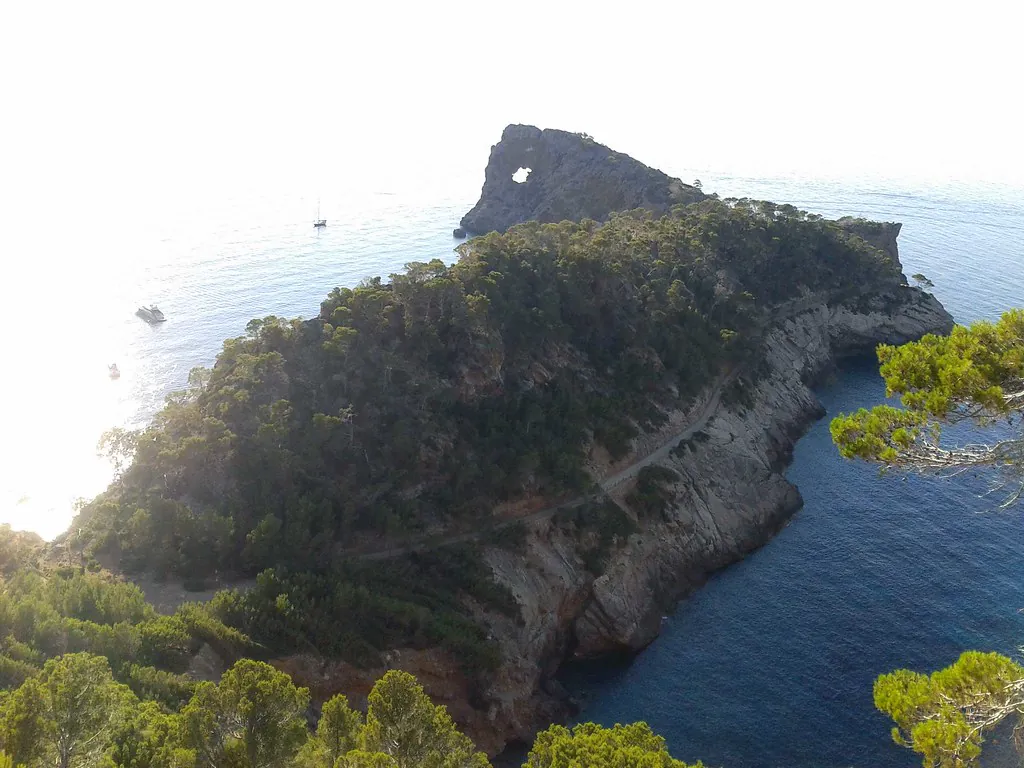
The water here is exceptionally deep right from the edge. It has a clarity that makes you feel like you are hovering over a blue abyss. Snorkeling is a must. You will see sea bream and the occasional octopus hiding in the crevices of the submerged limestone. It is not a place for children who cannot swim well, as there are no shallow entries. It is a place for those who love the raw power of the Mediterranean.
Restaurante Sa Foradada: A Culinary Reward
Perched just above the jetty is the Restaurante Sa Foradada. For many, this is the primary reason for the hike. The restaurant is famous for its traditional paellas, which are cooked over an open wood fire. The scent of burning pine and saffron hangs in the air, mixing with the saltiness of the sea. After being closed for the last couple of seasons, the news that they are reopening for the 2026 season has made the locals very happy indeed. You can check the latest updates on their official website.
You MUST book a table in advance. During the summer, people arrive by boat from all over the island just for this paella. Call them at +34 669 745 438 before you even start your drive.
If you don’t feel like hiking, there is another way to get here. Local operators like Barcos Azules offer boat trips from Port de Sóller that stop at the jetty. It is a magnificent way to see the coastline without the sweat of the uphill climb. However, there is a sense of accomplishment in earning your meal through physical effort that a boat ride simply cannot provide.
The Mirador and the Sunset Ritual
Even if you don’t do the full hike, the Mirador de Sa Foradada is a destination in itself. Located right on the Ma-10 road between Valldemossa and Deià, it is arguably the most famous sunset spot on the island. There is a chill-out bar here where you can grab a drink and watch the sun dip directly behind the pierced rock. The parking lot fills up quickly in the late afternoon, so arrive early if you want a proper spot.
People often ask why Mallorca is so famous, and standing at this viewpoint at 8:00 PM provides the answer. The scale of the mountains meeting the sea is humbling. It is a landscape that has attracted everyone from Michael Douglas to the Spanish Royal Family. Mind you, the sunset here is a communal experience; you will be sharing it with a few dozen other people and their cameras. If you want silence, do the hike earlier in the day.
Practical Tips for Your Visit
- Parking: The car park at Son Marroig is free but small. If it is full, do not park on the main road as the police frequently issue fines.
- Hydration: Bring at least 1.5 litres of water per person. The climb back up is entirely exposed to the sun.
- Footwear: Trainers with good grip are the minimum. Hiking sandals are fine, but boots are better for ankle support on the loose stones.
- Timing: Start the hike before 10:00 AM or after 4:00 PM to avoid the worst of the heat.
Mallorca is not a cheap island, but many of its best experiences, like this hike, cost nothing but your time and effort. While the restaurant is a splurge, the swim and the views are free. It is a reminder that the true value of the island lies in its natural form, not its luxury resorts. This is the Mallorca I want you to see.
Spanish Cooking Experience in Mallorca
Horse Riding in Mallorca on the Beach and Forest
Kayaking and snorkeling in the Mondragó Natural Park in Mallorca
Palma de Mallorca and Valldemossa Excursion from Cruise Port
Deluxe Cruise-Friendly Mallorca and Valldemossa Tour
Before you leave, make sure to take a moment at the top near the house of Son Marroig. The white marble pavilion, brought over from Italy by the Archduke, is one of the most photographed structures on the island. It sits on the edge of the cliff, looking out over the path you just conquered. It is a proper spot for a final photo before heading back toward Valldemossa for a late dinner. This is the kind of day that stays with you long after you have left the island.
Frequently Asked Questions about Sa Foradada
Many visitors wonder if Mallorca is the same as Majorca. They are indeed the same island; “Mallorca” is the local and Spanish spelling, while “Majorca” is the version traditionally used by the British. Both refer to this stunning Balearic gem.
Regarding the best time to visit, late spring and early autumn are ideal. During these months, the weather is warm enough for swimming at Sa Foradada but cool enough that the hike back up to Son Marroig doesn’t feel like a punishment. You can find more details in our guide on the best time to visit Mallorca.
If you are worried about the language, they speak both Spanish and Mallorquín (a dialect of Catalan) here. However, English is widely understood in most tourist spots and restaurants, so you will have no trouble making a reservation for that wood-fired paella. For more logistical help, see our public transport guide if you aren’t planning to rent a car.
Finally, if you are looking for a souvenir, a jar of local sea salt or a bottle of olive oil from the Tramuntana is a great choice. These products carry the essence of the rocky soil you just walked across. It is a much better memory than a cheap trinket from a beach shop.