
The Silent Stones by the Sea
There is a specific stretch of the northern coast where teh wind whips off the Bay of Alcudia, carrying the sharp scent of dried posidonia and salt. This is Punta des Fenicis. I often walk this shoreline with my dog, Cala, watching the waves crash against the low, jagged rocks. Just back from the water’s edge sits the Necròpolis de Son Real. It is a prehistoric burial ground entirely exposed to the elements, lacking the protective gates and manicured pathways you usually find at major historical sites. You approach on foot, and suddenly the ancient stones are simply there, sharing the beach with you.
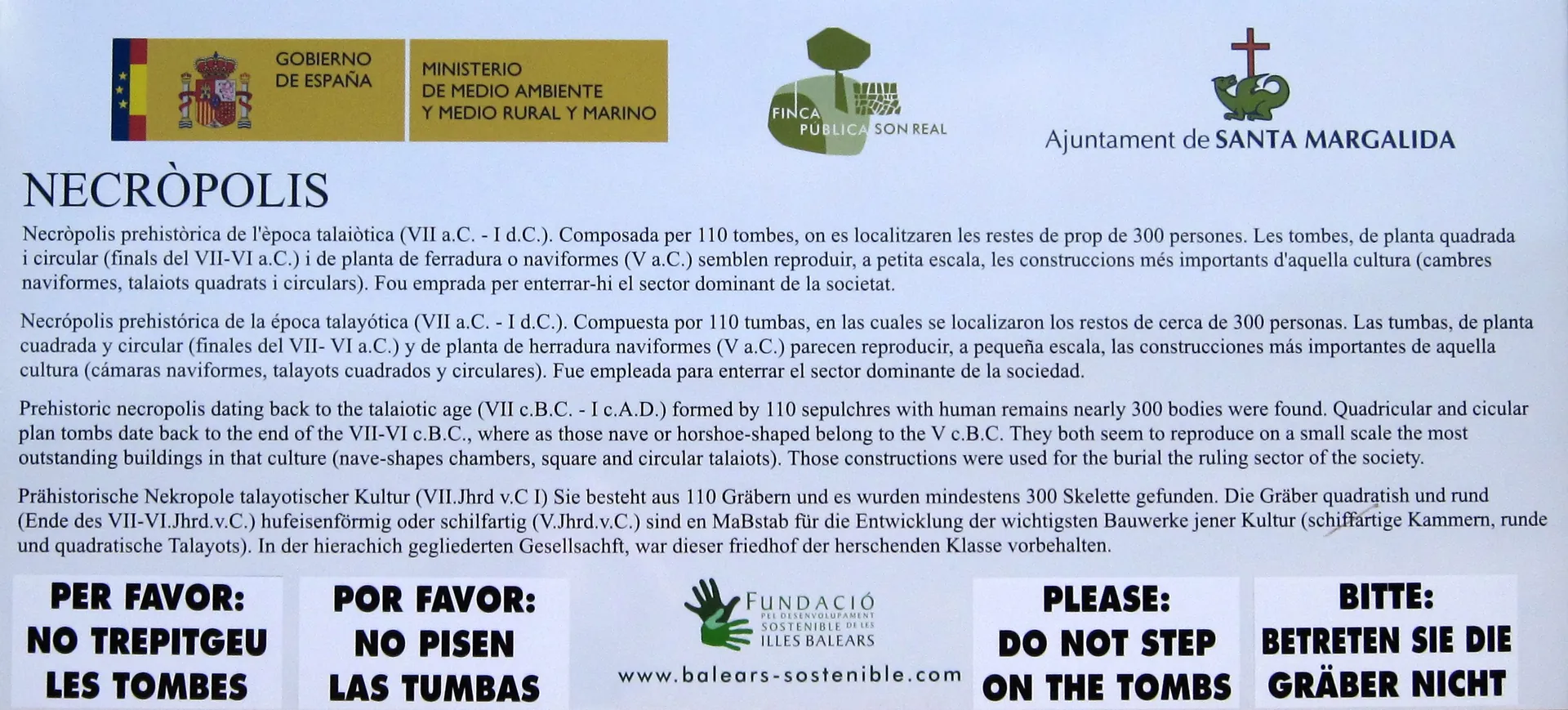
Understanding the Necròpolis de Son Real
The site is a sprawling cemetery dating back to the Balearic Iron Age, spanning from the 7th century BC right through to the Roman occupation around the 1st century BC. When archaeologists excavated the area in the 1950s, they uncovered over 110 individual tombs containing the remains of roughly 300 people. Weapons, pottery, and small metal ornaments were found alongside the skeletons. These artefacts are now preserved off-site, but the architectural shells of the graves remain anchored to the headland. According to the official Illes Balears tourism board, it is the largest prehistoric coastal cemetery in the Balearic Islands.
You stand among the graves and realise this barren stretch of coast has been sacred ground for nearly three millennia.
Architectural Miniatures of the Talayotic World
The graves here are not simple holes in the earth. They are stone structures built to mimic the dwellings and monuments of the living. You will spot miniature navetas, which are shaped like upside-down boat hulls, alongside circular and square towers. These shapes reflect the grander defensive structures seen at inland settlements like the Talayot de Ses Païsses.
The precision of the stonework is proper impressive. The builders fitted heavy limestone blocks together without mortar, relying entirely on gravity and careful angles to withstand centuries of winter storms. The sea level has risen since the 7th century BC, meaning the water now laps much closer to the tombs than the original architects intended.

The Coastal Walk from Son Bauló
Getting to the necropolis requires a bit of effort, which naturally filters out the heavy resort crowds. The most popular approach is the coastal path from Platja de Son Bauló in Can Picafort. It is a flat, twenty-minute walk southeast along the rocky shoreline. You leave the sunbeds behind, step onto the rugged limestone, and follow the red painted markers. The terrain is uneven. Proper trainers are a much better idea than flip-flops. We normally bring a thermos of coffee, sitting on the rocks halfway along the route to watch the cormorants dive.
The Inland Route: Finca Pública de Son Real
The alternative route cuts through the Finca Pública de Son Real, a 395-hectare protected estate managed by the Balearic government. You access the main gate off the Ma-12 road. This path takes you through dense pine forests, ancient olive groves, and agricultural land that has remained largely unchanged for centuries. It is the exact kind of historical landscape where the ancient farmers used to herd their sheep to.
Walking through the estate gives you a profound sense of the island’s rural heritage. If you want to experience this pristine environment from a different vantage point, exploring the wider Bay of Alcudia on horseback is a brilliant choice. You can easily book a 3-Hour Beach Horse Riding Experience that takes you through similar untouched coastal pines and sandy tracks near the estate.
The Interpretation Centre and Trail Etiquette
Before hitting the trails within the Finca, spend ten minutes inside the Interpretation Centre near the estate car park. The small museum details the excavation process and displays replicas of the artefacts found in the graves. The Consell de Mallorca maintains these exhibits to provide context you simply will not get by just looking at the empty stone tombs on the beach.
If you are walking with a dog, keep them on a lead while passing through the estate and near the necropolis. The area is a protected habitat for Hermann’s tortoises and various ground-nesting birds. Cala knows the drill by now. We stick to the marked paths, taking care not to disturb the wildlife or climb on the fragile archaeological structures.
Nearby Sights and Practical Tips
Once you reach the main necropolis, look out to sea. Just a short distance offshore sits S’Illot des Porros, a small rocky islet holding a sister burial site. The tombs there are younger and less structurally intact, having taken the full force of the Mediterranean swells for thousands of years. You cannot access the island on foot, but it is clearly visible from the shoreline.
Timing your visit is crucial. The coast is entirely devoid of shade. Midday in August is punishingly hot, making the walk deeply uncomfortable. Early morning or late afternoon provides the best experience, casting long, dramatic shadows across the ancient stones. If you are planning your itinerary, review our guide on the Best Time to Visit Mallorca to align your trip with the cooler hiking months. Always pack plenty of water, and consider linking this trip with an afternoon birdwatching at the nearby S’Albufera Nature Reserve.
| Logistics | Details |
|---|---|
| Entrance Fee | Free of charge. The site and the Finca paths are open to the public. |
| Parking | Free parking is available at the Finca Pública de Son Real entrance (Ma-12) or along the streets near Platja de Son Bauló. |
| Accessibility | The coastal path is rocky and uneven. The inland estate paths are wider and flatter but still unpaved. Neither route is suitable for wheelchairs. |
| Facilities | Toilets and the Interpretation Centre are located at the inland estate entrance. There are no facilities at the necropolis itself. |