
Snorkeling in the Natural Park of Mallorca by boat
Mallorca: Alcudia Sunrise Dolphin-Watching Boat Trip
Luxury Catamaran sailing with welcome Drinks Tapas Max10-12Person
Mallorca in One Day Sightseeing Tour with Boat Ride and Vintage Train
Mallorca Catamaran Small Group Cruise with Tapas 4-hours
Mallorca Midday or Sunset Sailing with Light Snacks and Open Bar
Palma de Mallorca Private Boat Trip with Water Toys and 25 Coves
Private sailing yacht by the Bay of Palma and nearby coves
Palma 2-Hour Sunset Catamaran Cruise with Appetizer and Canapés
Caves of Drach Half-Day Tour with Boat Trip and Music Concert
Half day on a private sailboat in Mallorca (port d'andratx)
Private All-Inclusive Half-Day Sailing Tour in Palma de Mallorca
Top rated boat in Mallorca Barca Samba
Boat Trip from Cala Figuera to Calo de Moro, S'almonia, Cala Màrmols. Mallorca.
Private Boat Tour from Palma with Snorkeling and Paddle Surfing
Choosing Your Voyage: The Smarter Way to Book
When you are planning a day on the Mediterranean, the logistics can sometimes feel as choppy as the sea itself. Most of us locals have seen the long queues at the kiosks in Palma or Port de Sóller, where frustrated travellers stand in the heat only to find the 11:00 sailing is full. This is why I usually suggest booking through a reliable platform like Viator or GetYourGuide before you even pack your sun cream. It isn’t just about skipping the queue, mind you; it is about the peace of mind that comes with free cancellation. If the weather turns or your plans shift, you aren’t out of pocket.
These platforms also provide English-speaking customer support 24/7, which is a godsend if you need to change a pickup location at the last minute. Many of the curated tours include hotel transfers—saving you the headache of navigating island traffic or finding a parking spot near the marina. You also get the benefit of professional English-speaking guides who know the history of the coastline better than teh back of their hand. Often, you can find package deals that bundle a boat trip with a visit to a local vineyard or a guided hike, offering much better value than buying individual tickets on the day.
If you prefer the direct route, you can certainly visit the official websites of operators like Barcos Azules or Marcabrera. Buying on-site is a valid choice if you enjoy the spontaneity of the harbour-side, but keep in mind the practical realities. Direct bookings often lack a flexible refund policy, and you might encounter language barriers at the smaller ticket booths. During the peak months of July and August, the risk of a “Sold Out” sign is very real. I always say: book ahead so your only worry is whether you brought enough salt-crusted bread for the journey.
The Soul of the Sea: A Mallorcan Perspective
Mallorca is an island that only truly reveals its character when you look back at it from the water. To us, the sea is not just a backdrop for a holiday; it is the *Mare Nostrum*, a lifeblood that has shaped our history from the Romans to the pirates who once raided our shores. When I take my dog, Cala, down to the docks in the early morning, the air is thick with the scent of salt and diesel—a nostalgic perfume for any islander. People often ask me why Mallorca is so famous, and I tell them it is because of this specific clarity of light on the water, something you cannot find in Ibiza or the mainland.
Whether you are on a sleek catamaran or a sturdy old ferry, the perspective shifts. The limestone cliffs of the Serra de Tramuntana look far more imposing when you are bobbing at their feet. You see the ancient watchtowers, like the Torre del Verger, perched on heights that seem impossible to reach by land. It is a proper way to see the island, far from the “party island” reputation that some areas like Magaluf have garnered. In reality, Mallorca is a place of deep silence and rugged beauty, especially once you leave the harbour behind.
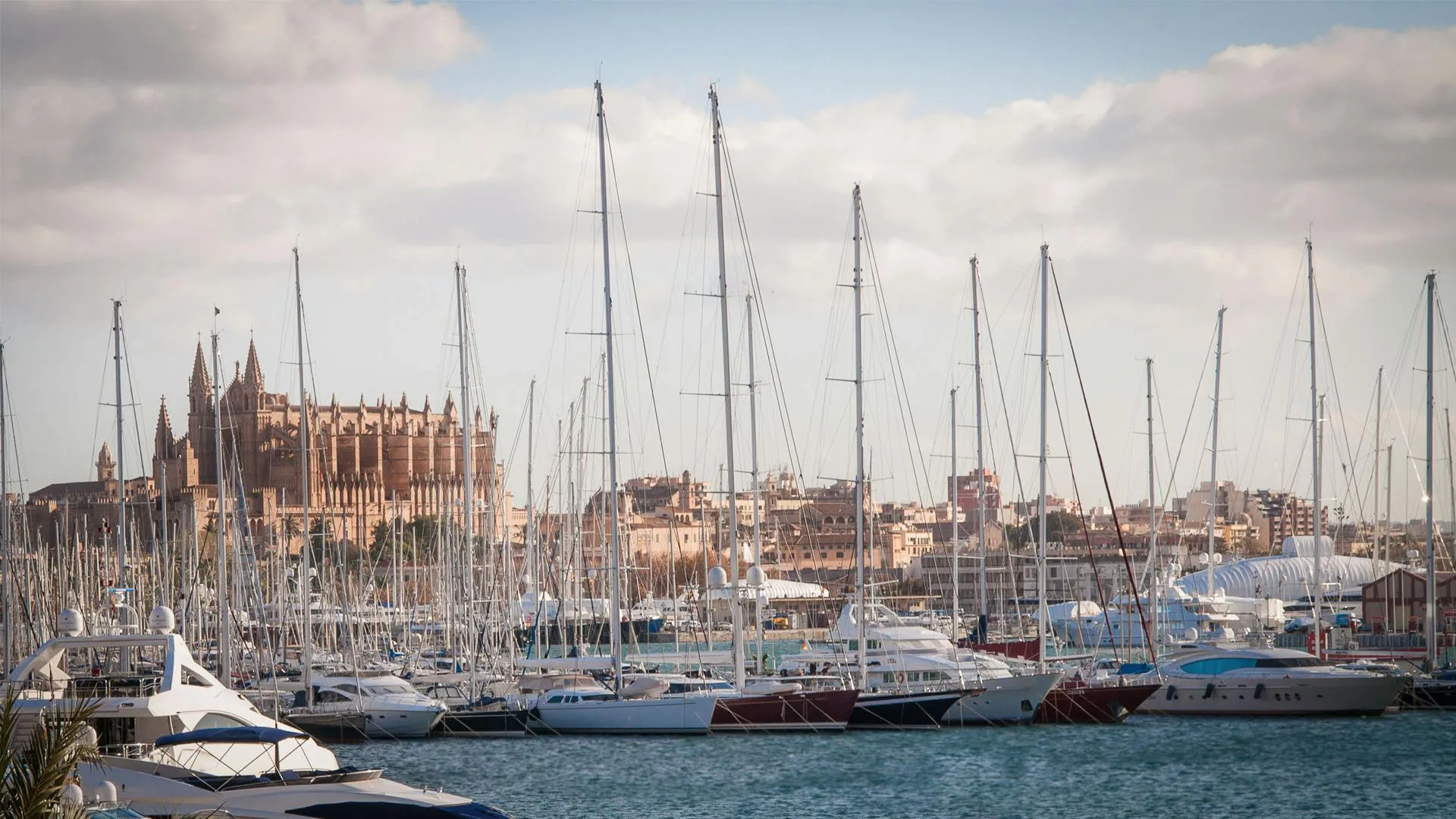
The Traditional Llaüt: Heritage on the Waves
If you want to feel like a true Mallorcan, you must spend a day on a *llaüt*. These are our traditional wooden fishing boats, originally designed for stability while hauling in nets. They have a distinctive pointed prow and a low profile that hugs the water. Today, many have been beautifully restored with comfortable sundecks and even electric motors to keep the experience quiet. Chartering one of these is the most authentic way to explore the coast, though it is a bit more of an investment than a standard ferry.
- Private Sunset Charter: Approximately €390 for 2 hours, perfect for up to 7 people.
- Half-Day Experience: €560 – €665, usually including some local *tapas*.
- Full-Day Freedom: €840 – €975, which often includes a skipper who knows the most secluded coves.
I recommend looking for charters in Portocolom or Port de Sóller. There is something deeply satisfying about the slow pace of a *llaüt*. It isn’t about getting somewhere fast; it is about the rhythmic slap of the water against wood and the chance to jump into a turquoise bay where no one else is anchored. Just remember to ask your skipper about the *Posidonia*—the protected seagrass that keeps our waters so clear. We are very protective of it, and dropping anchor in a seagrass meadow is a sure way to lose your deposit and the respect of the locals.
The Rugged North: Port de Sóller to Sa Calobra
The boat trip from Port de Sóller to Sa Calobra is, in my opinion, the most dramatic journey you can take in the Balearics. You depart from the circular harbour, passing the Far de Muleta, and suddenly you are flanked by cliffs that rise hundreds of metres straight out of the sea. This is the heart of the Tramuntana. Me and Cala often take the morning boat because it is pet-friendly, provided the dog is on a lead (and a muzzle for the bigger ones, mind you). The journey takes about 50 minutes and costs around €30 for a round trip.
When you arrive at Sa Calobra, you aren’t just visiting a beach; you are entering the mouth of the Torrent de Pareis, a massive canyon that feels like something out of an adventure novel. It is one of those places that has been filmed in numerous movies because of its scale. If you are wondering what to be careful of, keep an eye on the sea conditions before you go. If the *Tramuntana* wind is blowing from the north, the water gets very rough very quickly, and the boats will stop running. It is always better to check the forecast on a reliable site like the AEMET (State Meteorological Agency) before setting off.
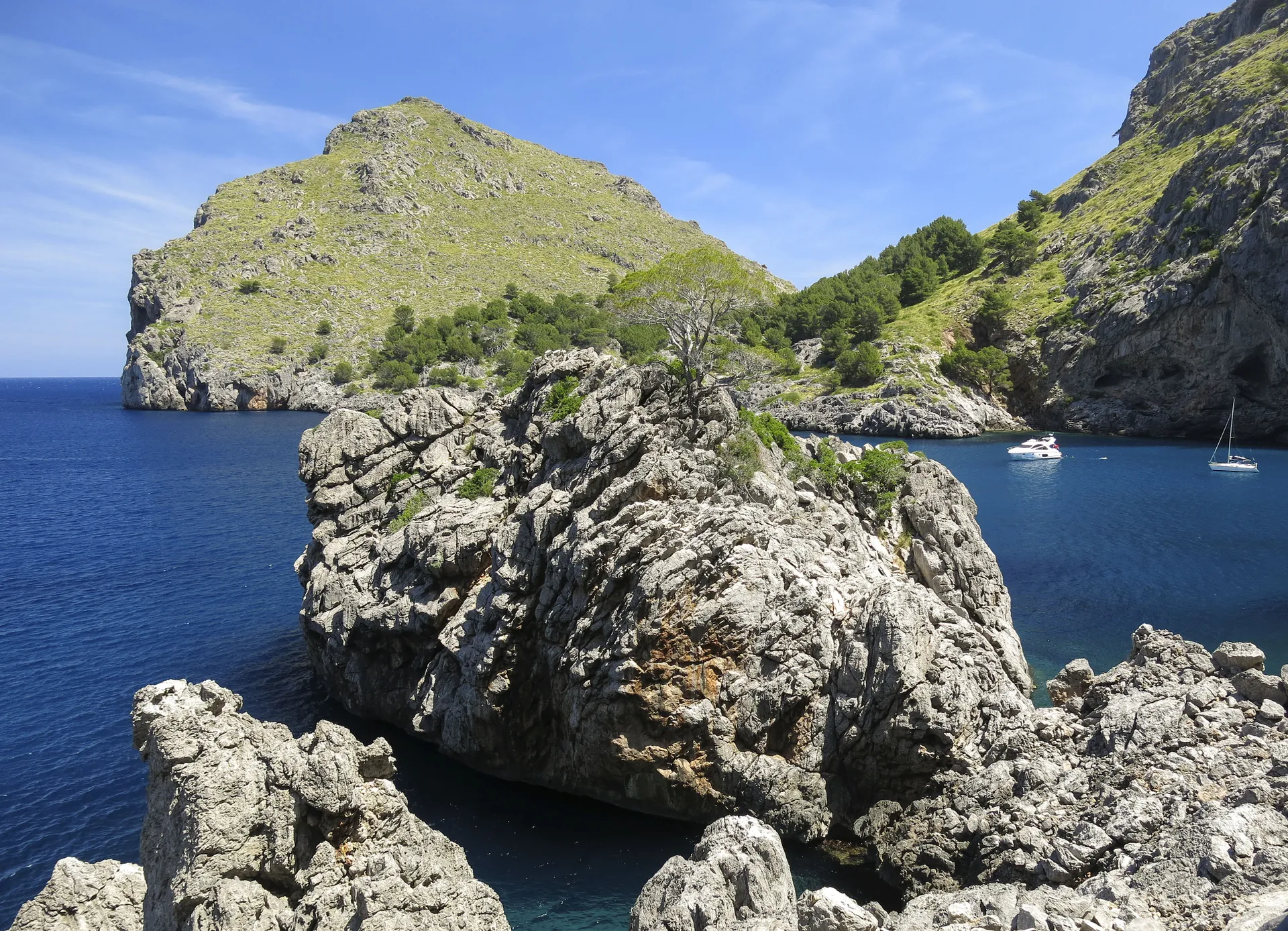
The boat allows you to avoid the infamous “tie-knot” road to Sa Calobra, which has over 200 curves and can be a nightmare in high season. By sea, you simply glide past the rock formations and sea caves, arriving refreshed and ready to swim in the crystal waters at the end of the canyon.
Cabrera Archipelago: The Forbidden Frontier
South of Mallorca lies the Cabrera Archipelago, a National Park that remains one of the last truly wild places in the Mediterranean. Access is strictly controlled, which is why the water there is perhaps the clearest in Spain. You depart from Colònia de Sant Jordi, and the crossing takes about 40 minutes. Because it is a protected area, you cannot just turn up in your own boat without a navigation permit and a mooring buoy reservation—the latter of which is limited to 50 a day. The easiest way to visit is to book a day trip with an operator like Marcabrera.
| Tour Type | Adult Price (2026) | Child Price (2026) | Duration |
|---|---|---|---|
| Classic Day Tour | €58 | €31 | 6 Hours |
| Cabrera 360 (Full Circuit) | €71 | €38 | 7 Hours |
| Sunset & Blue Cave | €45 | €25 | 3 Hours |
The highlight of any Cabrera trip is the *Cova Blava* (Blue Cave). As the afternoon sun hits the entrance, the water inside turns a neon, electric blue that looks almost artificial. Most tour boats will stop here for 20 minutes to let you swim inside. It is a spiritual experience, truly. Just bear in mind that there are no shops on Cabrera, so I’d suggest bringing your own water and food, though there is a tiny *cantina* near the harbour if you get desperate. The island is also famous for its lizards, the *sargantanes*, which are quite bold and might try to share your lunch if you aren’t careful.
Sa Dragonera: The Dragon Island
On the western tip of Mallorca, near the village of Sant Elm, lies Sa Dragonera. From a distance, the island looks like a sleeping dragon sinking into the sea. It was almost turned into a luxury resort in the 1970s, but thankfully, environmentalists fought to save it. Now it is a Natural Park. The ferry from Sant Elm is a short, 15-minute hop that costs around €20. It is a great spot for hiking, though me and Cala have to sit this one out as dogs aren’t allowed on the island to protect the endemic lizard population.
Local Tip: There are no rubbish bins on Sa Dragonera. Whatever you take with you, you must bring back to the mainland. It is part of our commitment to keeping the island “proper” and wild.
If you prefer a more relaxed day, you can take a larger excursion from Port d’Andratx. These usually include a paella lunch on board and plenty of stops for snorkeling. The waters around the “Dragon” are deep and full of life; it isn’t uncommon to see flying fish or even the occasional dolphin pod if the sea is calm. It is a stark contrast to the nearby glitz of Andratx, where celebrities like Michael Douglas have long-standing homes. On Dragonera, the only residents are the lighthouse keepers and the lizards.
Cap de Formentor: Sailing to the Edge of the World
The northernmost point of the island, Cap de Formentor, is often congested with rental cars and shuttle buses. The proper way to see it is from the deck of a boat departing from Port de Pollença. The ferry to Formentor beach is affordable and frequent, but if you can, take the tour that goes all the way to the lighthouse. Standing on a boat and looking up at the 200-metre vertical cliffs is a humbling experience. The lighthouse itself perched on the very edge of the precipice looks like a tiny white toy from the water.
The water here is a deep, bruised purple because of the depth, but as you approach the beach, it turns to a pale turquoise. This area is often cited as the prettiest part of the island. If you are staying in the north, this is the one excurion you shouldn’t miss. Many visitors ask if Mallorca is the same as Majorca—it is, Majorca is simply the British spelling—but regardless of what you call it, the beauty of Formentor is universal. Just be sure to bring a windbreaker, as the wind at the Cape can be fierce even on a sunny day.
East Coast Glass-Bottom Adventures
For families, the east coast is the place to be. The shoreline here is a series of small, sandy coves called *calas*, like Cala Mondragó or the famous Cala Romàntica. Larger glass-bottom catamarans run “hop-on, hop-off” services between the resorts of Cala d’Or, Porto Cristo, and Cala Millor. Kids love these because you can see the posidonia and the fish through the underwater windows. It is a very affordable way to spend a day, with tickets usually ranging from €25 to €35.
If you are in Porto Cristo, you might combine a boat trip with a visit to the Caves of Drach. These caves contain one of the largest underground lakes in the world, and the tour actually includes a short boat ride across the lake while musicians play classical music from a rowing boat. It is a bit touristy, mind you, but the acoustics are incredible and it is something every first-time visitor should see. Just watch out for the crowds in mid-summer; it gets very busy, and the humidity inside the caves is quite high.
Practicalities and Local Wisdom
Before you book your boat, there are a few things you should know about the Mallorcan climate. We have two main winds that dictate sea life: the *Tramuntana* from the north and the *Xaloc* from the southeast. If the *Tramuntana* is blowing, the north coast is a no-go, but the south will be as flat as a pancake. Conversely, if the south is choppy, head to the bays of Pollença or Alcúdia. Understanding this will save you from a very sea-sick afternoon.
As for the cost, Mallorca can be as cheap or as expensive as you want it to be. A simple ferry across a bay is the price of a couple of drinks, while a private yacht charter can run into the thousands. If you are on a budget, look for the “Starfish” or “Sea Riders” catamarans in the main resorts. They offer great value and usually have slides that go directly into the sea from the top deck. For food, try a *Mallorca breakfast* of *ensaimada* (a sweet, spiral pastry) before you board—just don’t eat too many if you expect a bumpy ride.
“The sea is the only place where you can truly escape the heat of the Mallorcan sun. When the mercury hits 35 degrees in Palma, the only sensible place to be is five miles offshore with a cold drink in your hand.”
Finally, a word on safety and respect. Our waters are generally very safe, but we do get occasional blooms of jellyfish (*medusas*). Most boat captains will know where they are and avoid those bays. If you do get stung, a bit of vinegar or even seawater usually does teh trick—don’t believe the old wives’ tales about other remedies! Respect the sea, keep your rubbish on board, and you will find that Mallorca’s coastline is one of the most welcoming places on earth. Whether you are looking for dolphins at sunrise or a quiet sunset with a glass of local wine, the Mediterranean always provides.
If you are planning to spend more than a few days here, me and Cala recommend exploring different coasts. The east is for families and snorkeling, the north is for drama and hiking, and the south is for those long, white sandy stretches. You could spend a lifetime sailing these waters and still find a new cave or a hidden cove to call your own. That is the magic of this island; it always has something more to give if you are willing to leave the shore behind.