
There is a specific kind of silence found only on the western edge of Mallorca, where the limestone cliffs of the Serra de Tramuntana finaly surrender to the Mediterranean. It is not the silence of a library, but teh heavy, resonant quiet of sun-baked earth and salt-crusted pine needles. This is where you find Cala d’Egos. Mind you, do not confuse this with the manicured resort beach of the same name over in the south-east; that is a world of sun loungers and cocktails. The Cala d’Egos I know, tucked away in the municipality of Andratx, is a wild, uncompromising inlet that demands a bit of sweat and a sturdy pair of boots to reach.
The Two Faces of a Name: Why the West is Proper
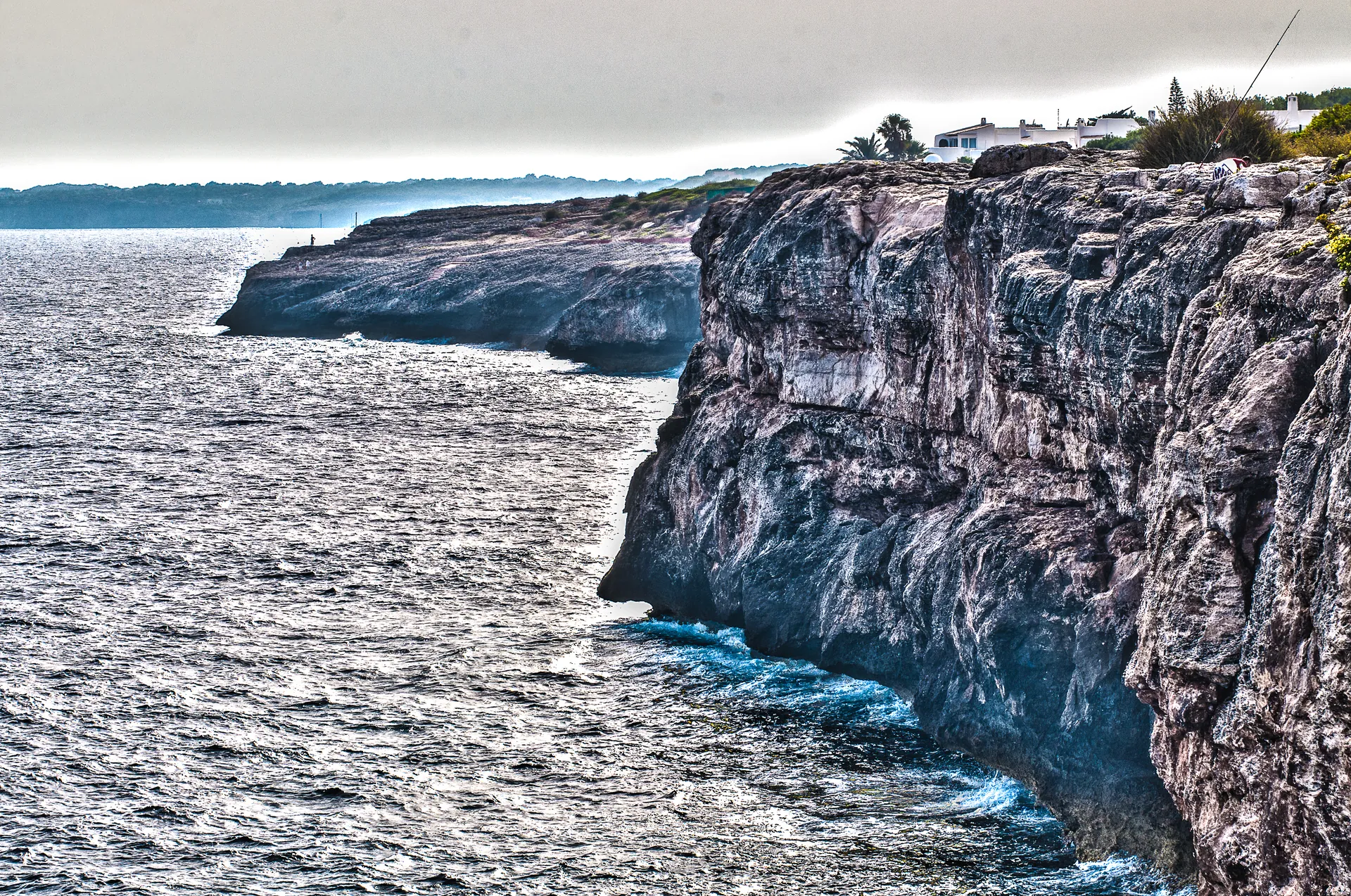
In Mallorca, names often repeat themselves, leading many a bewildered traveller to the wrong side of the island. While the Cala d’Egos near Cala d’Or is a fine spot for a family holiday, it lacks the soul of the western cove. The western Cala d’Egos is a “virgin” beach, a term we use for any coastal spot untouched by concrete or kiosks. It remains one of the few places where the landscape looks exactly as it did centuries ago. The water is a deep, bruised purple in the shadows and a piercing turquoise in the light, framed by a steep V-shaped valley that funnels the scent of wild rosemary down to the shore.
People often ask why Mallorca is so famous, and while the Palma Cathedral or the celebrity villas in Deià get the press, the true answer lies in places like this. It is the contrast between the sophisticated life in the ports and the raw, prehistoric beauty of the coastline. To visit Cala d’Egos is to understand the island’s bones. It is not about being “cheap” or “expensive”—though the hike costs nothing but effort—it is about a sense of isolation that feels increasingly rare in the Balearics.
The Journey In: Choosing Your Path
There are two primary ways to reach the cove on foot, and neither should be attempted in flip-flops. My dog, Cala—named after these very inlets—knows the trails better than I do. She usually leads the way, her paws skipping over the *grava* (loose gravel) that sends most humans sliding. If you are coming from Port d’Andratx, you start at the end of *Carrer de Cala d’Egos*. This route is direct but steep, a relentless descent that tests your knees on the way down and your lungs on the way back up.
The Port d’Andratx Trail
This is the “short” route, roughly 1.5 kilometres of winding mountain track. You will pass through a landscape of charred pines—remnants of past fires—and silver-green shrubs. There is a fork in the path that often confuses people; you must keep left to hit the beach. It is a rugged introduction to the island’s geology, and the view of the blue horizon appearing through the valley is something I never tire of.
The S’Arracó High Road
For a more scenic, albeit longer, trek, start at the *Cementeri de S’Arracó*. This path is gentler on the legs and offers spectacular vistas of the coastline. Cala prefers this route as there is more shade from the ancient stone walls and olive trees. It feels like a proper pilgrimage through the Andratx countryside, far removed from the yachts of the harbour. It is the route I recommend if you want to make a full morning of it.
In Mallorca, we say that the best things are kept behind a hill. Cala d’Egos is the proof; if it were easy to reach, it wouldn’t be paradise.
Pebbles, Pine, and Peace: The Beach Experience
Do not come here expecting soft, white sand. Cala d’Egos is a beach of *còdols*—smooth, grey pebbles and larger boulders that have been tumbled by the sea for millennia. It is not the most comfortable for sunbathing without a thick mat, but the lack of sand is exactly what keeps the water so incredibly clear. On a calm day, you can see the shadows of fish on the seabed from twenty metres up the cliff side.
The cove is also a traditional spot for *naturisme* (nudism). Because it is so secluded, locals have long come here to enjoy the sea without the constraints of swimwear. There is a mutual respect among those who make the trek; everyone is here for the same thing: a return to nature. If you are sensitive about such things, perhaps stick to the more commercial beaches, but for most, it is just part of the island’s liberal, sun-drenched culture.
Into the Blue: Snorkelling and Marine Life
The underwater topography here is a mirror of the cliffs above. Giant boulders create canyons and caves that are home to octopus, sea bream, and the occasional moray eel. If you are a strong swimmer, the rocky shelves on the edges of the cove are perfect for exploring. The water temperature in late May is around 19°C, which is refreshing rather than freezing, especialy after the hot hike down.
While you won’t find organized snorkeling or kayaking tours directly at the cove, many people rent boats from Port d’Andratx to drop anchor here. It is one of the best ways to experience the area if you aren’t up for the walk. Just be mindful of the seagrass meadows—the *Posidonia oceanica*—which are protected and vital to our ecosystem. Dropping anchor in them is a serious offence and something the local authorities monitor closely.
| Feature | Detail |
|---|---|
| Beach Surface | Pebbles and Rocks (*Còdols*) |
| Facilities | None (No water, no shade, no toilets) |
| Accessibility | Difficult (Foot or Boat only) |
| Hiking Time | 45 – 60 minutes (one way) |
| Dog Friendly? | Seasonal (Officially Nov–Apr only) |
Hiking with Dogs: Cala’s Survival Guide
Mallorca can be brutal for animals in the summer heat. If you are bringing a dog to Cala d’Egos, you must be prepared. The trail is mostly exposed, and the grey stones absorb heat like a furnace. I always carry an extra two litres of water just for Cala, and we usually head out before 9:00 AM. In May 2026, the UV index is already hitting high levels by midday, so timing is everything. Watching her dive into the clear water after a dusty trek is one of life’s simple pleasures, mind you, she does tend to shake herself dry right next to my camera gear.
According to the [Andratx Town Hall], dogs are officialy allowed on the trails, though practicaly speaking, they are welcome at this remote cove year-round as long as they are well-behaved. There are no lifeguards here to complain, only fellow hikers who usually have a four-legged friend of their own. This is the version of Mallorca that people often miss—the one where you can walk for miles without seeing a soul. This is the view we came for.
The Sunset Spectacle over Sa Dragonera
If you have the stamina, staying for the sunset is a transformative experience. From the ridges above the cove, you can look out toward the Illa de sa Dragonera. The island looks like a sleeping dragon slumped in the water, and as the sun dips, the whole sky turns a burnt orange that matches the local terracotta roofs. It is a sight that rivals the famous views from Sa Foradada or Torre del Verger, but without the crowds of tourists jostling for a photo.
Just remember that once the sun goes down, the trail becomes treacherous. A headlamp is essential if you plan to stay late. The descent back to Port d’Andratx in the dark is not something to take lightly, as the loose stones are even harder to spot under a moonlit sky. I have spent many evenings sitting on the rocks with Cala, watching the stars appear one by one, feeling like the only people left on the island.
Practicalities for 2026
Before you set off, there are a few logistical bits to keep in mind. Port d’Andratx is easily reached via the Ma-1 motorway from Palma, or by using the [TIB Public Transport] bus network, which is remarkably efficient. Parking at the trailhead is free but limited; in the height of summer, you will want to arrive early to secure a spot. There is no entrance fee, but the “price” is the physical effort required to get back out.
- Water: Bring at least 2 litres per person. There are no freshwater springs at the cove.
- Footwear: Proper hiking shoes are a must. The path is steep and the stones are sharp.
- Trash: Carry everything back with you. There are no bins, and the “Leave No Trace” rule is strictly followed by locals.
- Food: Pack a proper lunch. A sourdough *llonguet* with *sobrassada* (cured pork paste) is my go-to post-hike fuel. You can read more about Traditional Mallorcan Foods to prepare your picnic.
Spanish Cooking Experience in Mallorca
Horse Riding in Mallorca on the Beach and Forest
Kayaking and snorkeling in the Mondragó Natural Park in Mallorca
Palma de Mallorca and Valldemossa Excursion from Cruise Port
Deluxe Cruise-Friendly Mallorca and Valldemossa Tour
Nearby Rewards: Post-Hike in Port d’Andratx
Once you’ve conquered the climb back up, the civilization of Port d’Andratx feels like a luxury. It is one of the “nicest” parts of Mallorca for a reason. While celebrities like Brad Pitt or Michael Schumacher have been known to frequent this corner of the island, the port remains grounded in its fishing roots. After a day at the cove, I usually head to the harbour for a cold *caña* (a small draught beer) and some fresh calamari. It is the perfect way to realy decompress after a day in the wild.
Mallorca is often stereotyped as a “party island,” but places like Cala d’Egos tell a different story. It is a story of rugged beauty, of physical challenge, and of a deep connection to the Mediterranean. Whether you are snorkelling in the crystalline waters or hiking the ridges with your dog, this cove offers a glimpse into the true heart of the Balearics. It is a place that stays with you long after the salt has been washed from your skin.
Explore More Hidden Coves
If the wild nature of Cala d’Egos has sparked your interest, Mallorca has plenty more to offer. From the dramatic cliffs of Platja de Coll Baix in the north to the hidden turquoise waters of Cala s’Almunia in the south, the island’s coastline is a never-ending map of discovery. Just remember to pack your boots and respect the silence of the hills.