
The Silent Sentinel of the Levant: Finding Peace at Castell de Santueri
Whenever I drive teh winding road from Felanitx toward the coast, my eyes always drift upward to the jagged limestone crest of the Serra de Llevant. There, perched like a crown of weathered bone, sits the Castell de Santueri. It is one of those places that stays with you long after you leave, a site where the wind carries the scent of wild rosemary and the weight of a thousand years of history. For locals like me, Santueri is more than a ruin; it is a marker of our resilience and a reminder of the many cultures that have called this island home.
I usually take my dog, Cala, with me on these trips. She knows the path well, her paws clicking against the sun-baked stone as we approach the massive walls. There is a stillness here that you won’t find in the coastal resorts. While many visitors ask what is the best month to go to Majorca, I tell them that Santueri is best on a crisp February morning when the almond blossoms are starting to drift in the valley below like fallen snow. It is a place of solitude, a stark contrast to the busier parts of the island.
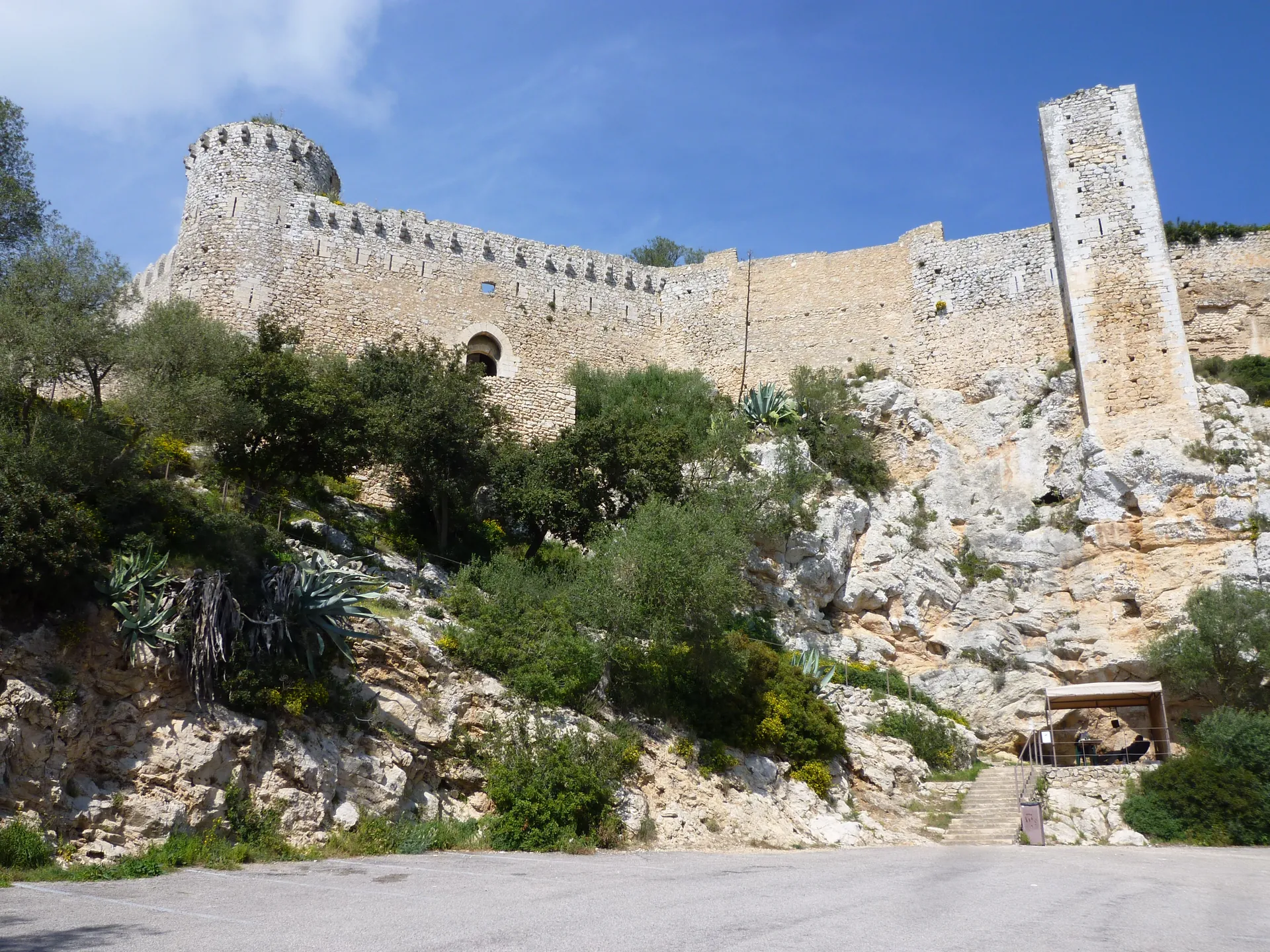
One of the Three Kings: The Castells Roquers
In Mallorca, we speak of the Castells Roquers, or rocky castles. These are three ancient fortresses built directly into the vertical cliffs of our mountains, making them almost impossible to capture. Santueri is the southern king of this trio, standing alongside the Castell d’Alaró in the centre and the Castell del Rei in the north. Unlike Bellver Castle in Palma, which is a perfect circle of royal elegance, Santueri is rugged, its shape dictated by the crags of the Puig de Santueri.
The site has been a stronghold since the Romans first arrived in the 2nd century BC. They saw what every general since has seen: a 423-metre vantage point that commands a view over the entire southeastern coast. After the Romans came the Byzantines, and later the Moors, who transformed the site into an alcazaba. Each layer of stone tells a story of a different empire trying to hold onto this scrap of Mediterranean paradise.
The current walls are mostly from the 14th century, built after the Reconquista (the Christian conquest). The limestone is so white it almost glows under the midday sun. Mind you, the heat up there can be fierce in July, so if you are planning a visit, come early. The castle is a Bé d’Interès Cultural, a protected monument of high cultural value, and the private owners have done a proper job of restoring the walkways so we can still explore it today.
The Siege of 1231 and the Legend of the Fresh Fish
The most dramatic chapter in Santueri’s long life happened in 1231. While King Jaume I was busy reclaiming Palma, a group of Moors retreated to this mountain. They held out for over a year, surviving on the water stored in their aljubs (stone cisterns) and whatever food they had stockpiled. The Christian forces were frustrated by the castle’s height and the sheer cliffs that drop away on almost every side. It is a story of endurance that we still talk about in Felanitx.
Local lore says the Moors taunted the besieging Christians by dangling fresh fish over the walls. They claimed there was a secret tunnel leading all the way to the sea, seven kilometres away. It was a clever bluff, meant to show they would never starve, though modern archaeology suggests the tunnel is just a myth. I like the story, though; it has that Malorcan spirit of defiance.
— Mateo Valero
Eventually, the castle fell, not through a grand battle, but through the slow grind of a prolonged siege. Today, when you walk through the Portal d’Entrada (the main gate), you can see the cleverness of the defence. The entrance is narrow and angled, designed to trap attackers in a “killing zone” where defenders could rain stones down from above. It is a grim thought, but the architecture is fascinating to study. You can find more about the island’s military history at the [Official Ministry of Culture Portal].
The 11-Point Self-Guided Route
The visit is organised into a self-guided tour with 11 marked stations. It is very well-done, with a brochure you get at the entrance that explains each section. You start at the main gate and work your way toward the Torre de l’Homenatge (the keep). Cala usually gets excited at station D, where the walls open up to a massive drop. I keep her on a short lead there, as the heights are realy quite dizzying.
- Station A: The Main Gate – A heavy, vaulted entrance that still feels intimidating.
- Station E: The Aljubs – These water cisterns are the reason the castle could survive sieges. Look down into them to see the incredible stonework.
- Station G: The Terraced Cisterns – A clever system of interconnected tanks built to capture and store rainfall.
- Station K: The North Rampart – This offers the clearest view toward the town of Felanitx and its vineyards.
Between the stations, the ground is uneven. It is not a place for flip-flops or flimsy sandals. You need proper walking shoes to navigate the limestone shards. If you are wondering how to get around the island to reach such remote spots, a car is essential for Santueri. The road Ma-4016 is narrow, and you might have to reverse a bit if you meet a tractor coming the other way, but that is all part of the charm.
Spanish Cooking Experience in Mallorca
Horse Riding in Mallorca on the Beach and Forest
Kayaking and snorkeling in the Mondragó Natural Park in Mallorca
Palma de Mallorca and Valldemossa Excursion from Cruise Port
Deluxe Cruise-Friendly Mallorca and Valldemossa Tour
Cala’s Trail: Hiking to the Summit
While you can drive almost to the gate, I prefer the hike. There is a trail that starts from the base of the mountain near the Felanitx-Santanyí road. It is a moderate climb of about 90 metres in elevation for the final stretch, but if you walk from the town, it is a good seven-kilometre trek. Cala loves this path because it is full of the smells of wild pines and the occasional goat. We often see local hikers stopping for a bit of traditional Mallorcan food, like a piece of pa amb oli, at the viewpoints.
The trail is mostly shaded by Aleppo pines until you reach the final limestone ascent. Once you break through the tree line, the sun hits you. The silence up here is heavy, broken only by the bells of sheep in the valley or the cry of a kestrel. It is the kind of place where you can sit on a stone for an hour and not see another soul. For those who ask which part of Mallorca is the nicest, I always point to these rugged eastern hills where the old ways still linger.
From the ramparts, you can see the Cabrera Islands floating on the horizon like a pod of whales. To the west, the giant cross of the Santuari de Sant Salvador stands on the neighbouring peak, watching over us.
Practicalities for the Modern Visitor
Visiting Santueri requires a bit of planning. It is not like a museum in Palma with fixed, unchanging hours. Because it is privately owned and exposed to the elements, they sometimes close if the weather is bad. Rain makes the limestone slick as ice, and the wind can be dangerous on the ramparts. Always check the [Official Website] before you set off from your hotel.
| Feature | Details (as of May 2026) |
|---|---|
| Entry Fee | €5.00 adults / Children under 12 Free |
| Opening Hours | 10:30 – 18:00 (Closed Sundays) |
| Parking | Small free car park at the entrance |
| Accessibility | Limited. Steep paths and uneven stone. |
There are no cafes or shops at the top, so bring your own water. There is a small ticket booth where they give you the brochure, but that is it for services. If you need a proper meal afterward, head down to Felanitx. The town is famous for its wine production, and you can find some wonderful celler restaurants that serve the kind of food my grandmother used to make. The [Felanitx Town Council Site] has a list of local producers you should visit.
The View from the Ramparts
The real reason people come to Santueri, besides the history, is the panorama. On a clear day, you can see the entire southeastern coastline, from the lighthouse at Porto Colom to the salt pans of Ses Salines. It is a view that explains why Mallorca is so famous. You can see the patchwork of olive groves, the white dots of fincas, and the deep, impossible blue of the Mediterranean. It is a sight that makes you feel very small, but in a good way.
I often sit near the North Tower and look across at the Santuari de Sant Salvador. There is a strange connection between the two peaks. One represents the military history of the island, the other its spiritual heart. Visiting both in one day is a popular local excursion, though it is a lot of driving on winding roads. If you do go, remember that it is rude not to tip a small amount if you use the services in the town below, even if it is just a coffee. We value the connection between the visitor and the local community.
A Final Reflection
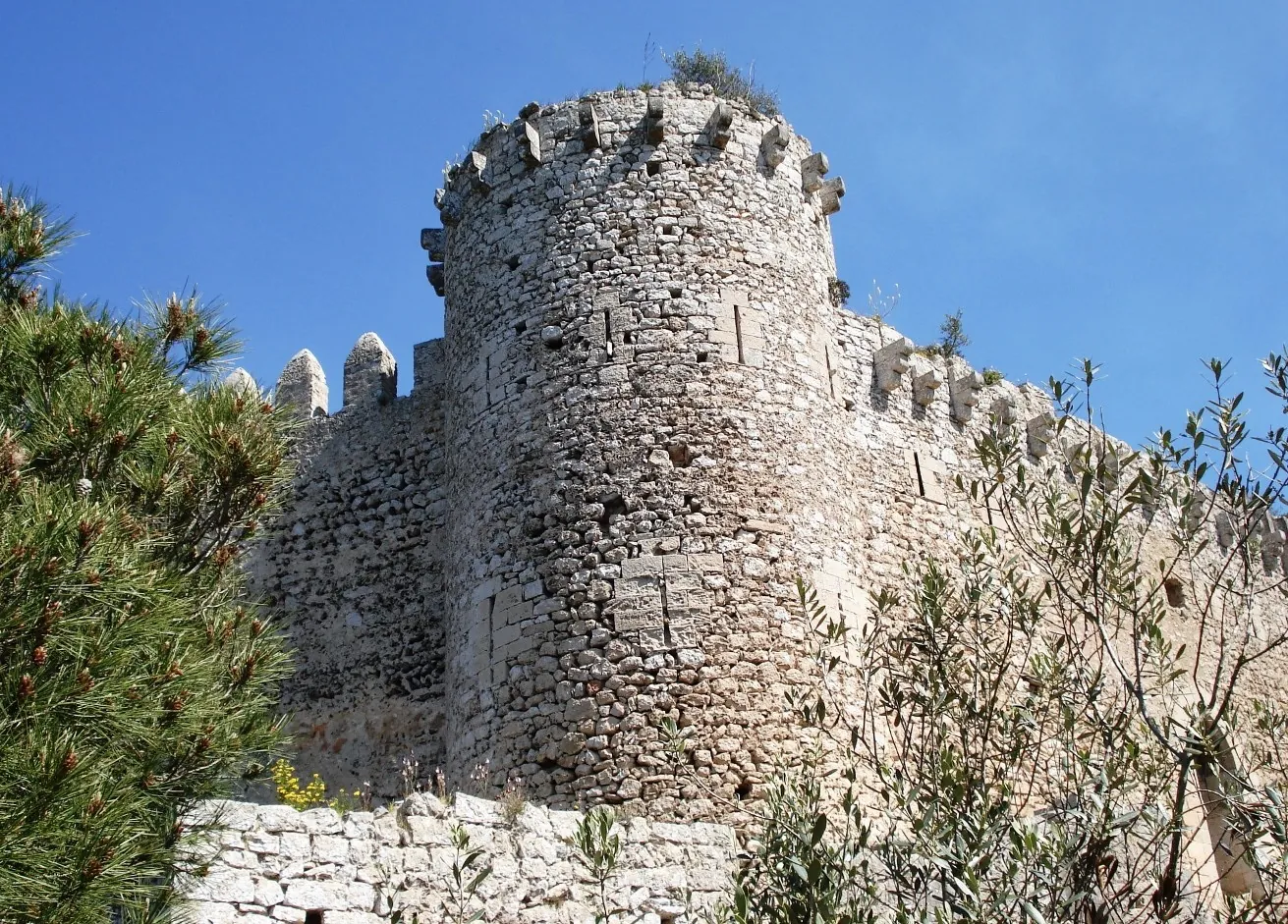
As the sun begins to dip toward the Pla de Mallorca, the limestone of Santueri turns a soft, dusty pink. This is when I usually start the walk back down with Cala. The castle has seen everything: the arrival of the cross, the crescent, and the cameras of modern tourists. Through it all, it has remained. It is a place that demands respect, both for its age and for the sheer effort it took to build something so grand on a mountain of rock. For me, it is a place I always find myself returning to.
If you are exploring the Levant, don’t just stick to the beaches. While the Caves of Drach are spectacular, they are often crowded. Santueri offers a different kind of magic—one of wind, stone, and silence. It is the real Mallorca, the one that doesn’t care about trends or celebrities. It is just there, standing guard over the island as it has for two thousand years, and it is a place you simply cannot afford to miss.