
The Raw Soul of the North: A Guide to Platja de Coll Baix
There is a specific kind of silence you only find at the edges of Mallorca, where the limestone cliffs finally give way to the Mediterranean. Platja de Coll Baix is that edge. Situated on the rugged peninsula of Alcúdia, this is one of the last truly wild frontiers on teh island. It has none of the sunbeds or plastic chiringuitos that define the southern resorts. Instead, you have a crescent of grey pebbles and water so blue it looks like a spill of ink. When people ask “What not to miss on Mallorca?”, I always point them here, provided they have the legs for the walk.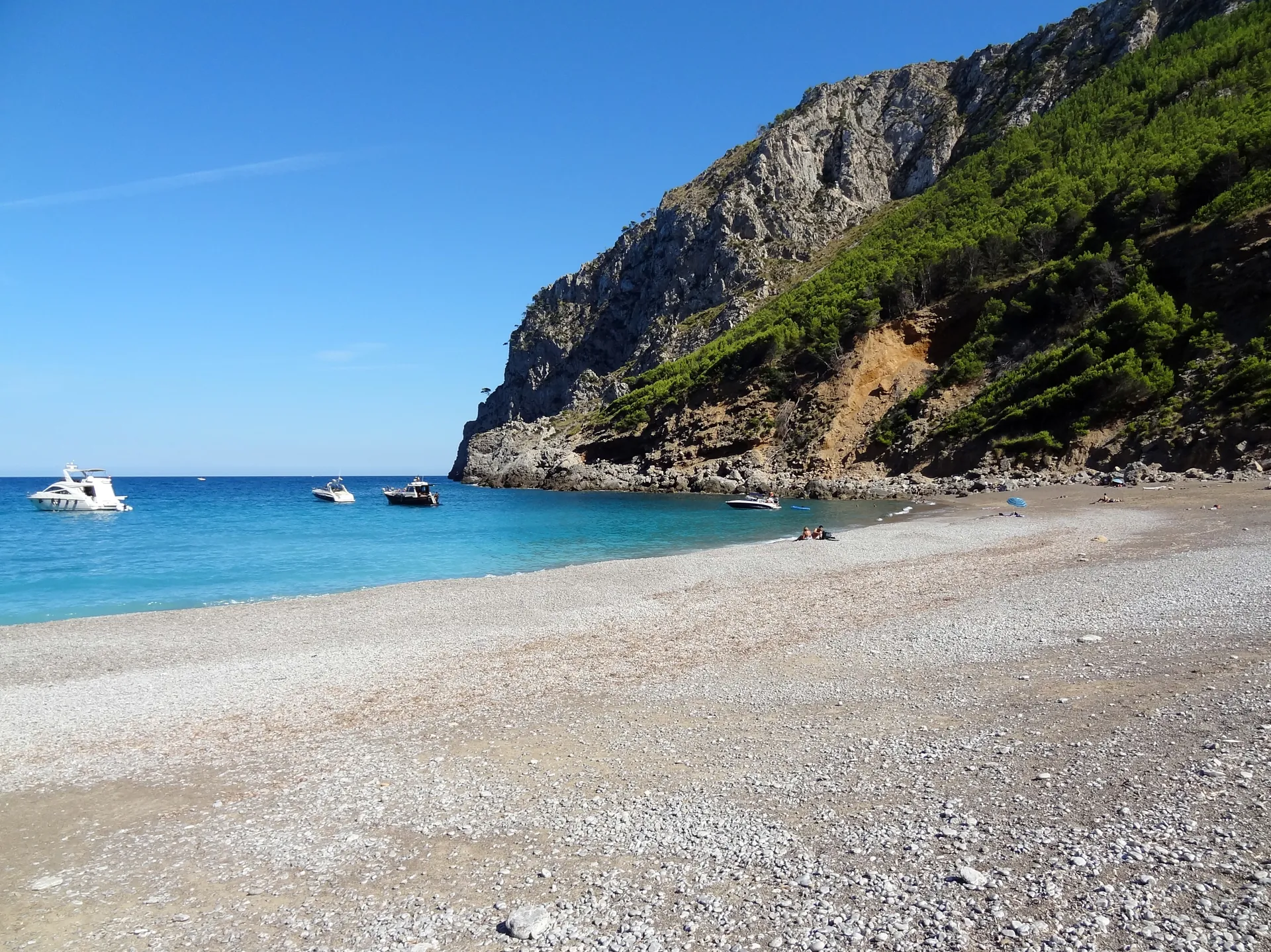
What is a “Coll Baix”?
In our local language, *Mallorquín*, the name translates to “Low Pass”. It describes the geographical dip between the peaks of the *Cap de des Pinar*. The beach is a geological masterpiece, carved out by centuries of northern winds and the relentless gnawing of the sea. It is a place that demands respect; the cliffs are steep and the land is parched.
The geography here is part of the *Peninsula de la Victòria*. Unlike the sandy stretches of Alcúdia Bay, this area is dominated by the *Talaia d’Alcúdia*, a peak that watches over the bay like a silent sentry. For those wondering “Which part of Mallorca is the nicest?”, the answer often depends on your tolerance for gravel roads and hiking boots. This is the island in its most honest form.
The Journey Begins: Driving to the Edge
To reach the starting point, you must leave the walled town of Alcúdia and head towards the *Camí de la Muntanya*. The road starts with smooth tarmac but soon dissolves into a rugged gravel track. You will pass through forests of Aleppo pines and holm oaks. Mind you, the final two kilometres are heavily potholed. While a small rental car can manage if you drive with the patience of a saint, a vehicle with high clearance is the proper choice for this terrain.The Refugi del Coll Baix
The road ends at a clearing known as the Refugi del Coll Baix. This forest refuge, managed by [IBANAT Official Website], is a simple stone building used by hikers and hunters. There is a small, free parking area here that fills up quickly during the summer months. Facilities are non-existent; you will find a few wooden picnic tables, but there are no toilets or water taps here. This is your last point of contact with any sort of infrastructure before the descent.| Trail Metric | Detail |
|---|---|
| Starting Point | Refugi del Coll Baix (Parking) |
| Distance | 1.5 km (0.9 miles) each way |
| Elevation Change | Approximately 130 metres |
| Time (Descent/Ascent) | 35 mins / 50 mins |
| Difficulty | Moderate with a technical scrammble |
Into the Woods: The Forest Trail
The first leg of the hike is a gentle wander through the woods. The air is thick with the scent of *murtra* (myrtle) and rosemary. The path is wide and shaded by the canopy of pines, which is a blessing when the Balearic sun is at its peak. As you walk, the sound of the wind through the needles is the only thing you hear. It is a soft, rhythmic hush that prepares you for the isolation of the beach.The trail changes character once the trees thin out. You transition from a soft forest floor to the hard, sharp reality of Mallorcan limestone.
The Scramble: Where the Path Ends
This is where the hike earns its “moderate” rating. The final ten minutes of the descent require you to navigate a rocky ledge along the coastline. The path essentially disappears, replaced by large boulders and a steep drop to the sea on one side. You need your hands here. It is not mountain climbing, but it requires focus. The limestone can be slippery if there has been a rare rain, and the heat radiating off the rock is intense. It is a spot for us to look at.Hiking with Cala
Whenever I tackle the Coll Baix trail, my dog, Cala, is usually leading the way. For those bringing four-legged friends, keep in mind that the rocky scramble can be tough on their paws. The limestone is abrasive. Also, there is zero fresh water at the beach, so you must carry enough for both of you. Cala knows the goats are the real masters of these cliffs, and she has learned to keep a respectful distance.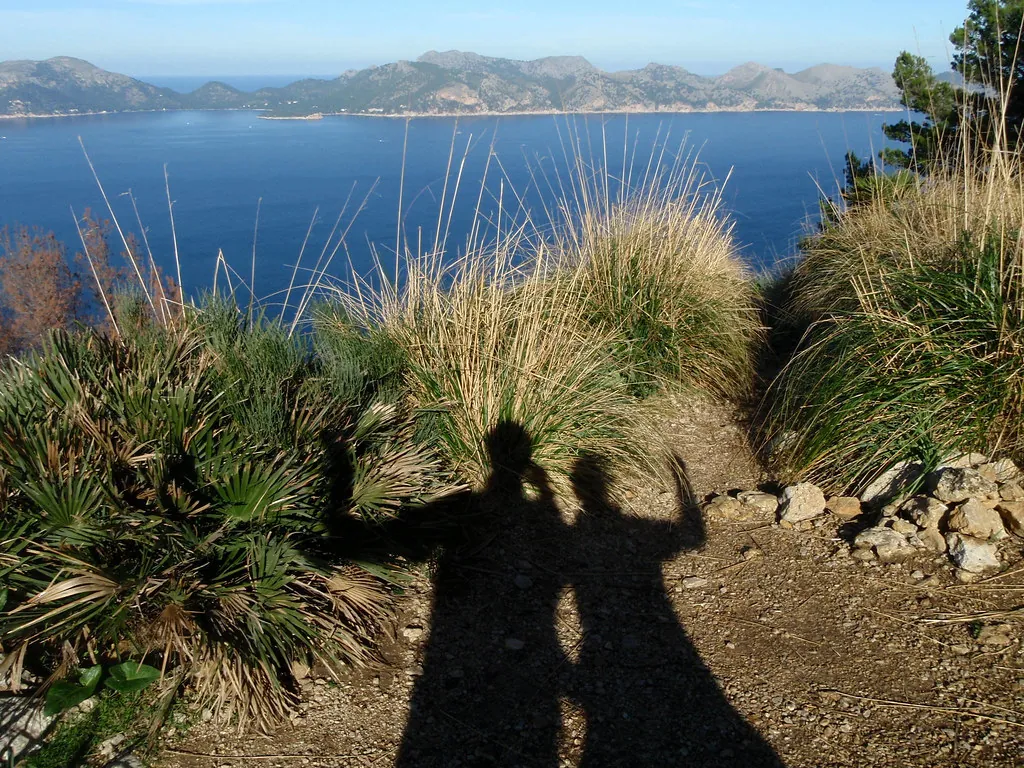
First Sight of the Blue
There is a moment, just as you round the final rocky outcrop, when the bay reveals itself. The contrast is what hits you. The cliffs are a dusty, sun-bleached grey, but the water is a vivid, electric turquoise that deepens into a royal blue as the floor drops away. From this height, you can see the entire 250-metre sweep of the beach. It is a sight that makes the sweat and the gravel road feel like a small price to pay.The Beach Experience
Platja de Coll Baix is not a “sandy” beach in the traditional sense. It is composed of coarse grey sand and small, smooth pebbles. Walking on it is a workout for the calves, mind you. Because the beach is so enclosed by high cliffs, it feels like a private cathedral of nature. There are no lifeguards here, and no one is going to sell you an overpriced mojito. You are entirely responsible for your own safety and comfort.Swimming in the Deep
The water at Coll Baix is exceptional for snorkeling. Because the beach is far from any urban runoff, the visibility is often twenty metres or more. However, be cautious. The sea floor drops off very quickly, and within five metres of the shore, you are in deep water. If the winds are blowing from the North or Northeast, the swells can become dangerous against the rocks. On a calm day, it is like swimming in a giant, natural aquarium.
Family Friendly
🇺🇸
Spanish Cooking Experience in Mallorca
Best Value
🇺🇸
Horse Riding in Mallorca on the Beach and Forest
Couple's Choice
🇺🇸
Kayaking and snorkeling in the Mondragó Natural Park in Mallorca
Best Value
Nature Lovers
🇺🇸
Palma de Mallorca and Valldemossa Excursion from Cruise Port
Best Value
🇺🇸
Deluxe Cruise-Friendly Mallorca and Valldemossa Tour
The Resident Goats
You are rarely alone at Coll Baix. The wild goats of the *Serra de Tramuntana* are frequent visitors. They are agile, fearless, and remarkably cheeky. They have learned that hikers carry backpacks full of snacks. Do not feed them; it disrupts their natural diet and makes them aggressive. I have seen many a tourist lose their lunch to a goat that was quicker than it looked. Keep your bags zipped and close to you.Alternative Arrival: By Sea
If the hike sounds too strenuous, you can arrive like a marauding pirate. Several boat tours depart from Port d’Alcúdia. A glass-bottom boat or a large catamaran usually costs between €35 and €48 per person for a two-hour trip. For a more intimate experience, a private RIB or speedboat charter is available, though you are looking at €75 to €95 per head. Arriving by sea gives you a different perspective on the sheer scale of the cliffs that hedge the beach in.The Essential Pack List
- Footwear: Proper hiking boots or sturdy trainers. Flip-flops are a recipe for a twisted ankle on the scramble.
- Water: At least two litres per person. There is nowhere to refill.
- Sun Protection: The cliffs reflect the heat, and there is almost no natural shade on the beach until late afternoon.
- Snorkeling Gear: Even a simple mask will reveal a world of saddled seabream and octopus.
- Trash Bag: Whatever you bring in, you must take out. There are no bins.
Nearby Peaks: Talaia d’Alcúdia
For the truly energetic, the trail to Coll Baix can be combined with a climb to the *Talaia d’Alcúdia*. This is the highest point on the peninsula. The views from the top span across the Bay of Alcúdia to the East and the Bay of Pollença to the West. It is a demanding loop, but the panoramas are some of the best on the island. You can find more details on local trekking routes via the [Official Alcúdia Tourism Portal].Leaving No Trace
Mallorca is famous for its beauty, but places like Coll Baix are fragile. As the island grows in popularity, the pressure on these virgin beaches increases. We must be guardians of these spots. Stay on the marked trails to prevent erosion and never leave behind cigarette butts or fruit peels. If we want this soul of the north to remain raw and beautiful, we have to treat it with the same love we show our own homes.If you have more time to explore the north, I highly recommend a visit to the nearby Ermita de la Victòria for a bit of history or perhaps the Museu Sa Bassa Blanca for an unexpected dose of art in the wilderness. For those planning a longer stay, checking the best time to visit Mallorca can help you avoid the heat of July when this hike is at its most punishing.