
This is Mateo Valero. If you find yourself driving the winding spine of the Ma-10 between Valldemossa and Deià, there is a stretch of road where the cliffs feel particularly heavy with history. Most people speed past to reach the sunset at Sa Foradada, but if you pull into teh dusty entrance of the Monestir de Miramar, you are stepping into the very soul of the Serra de Tramuntana. It is a place I have spent many hours at.
The Silence of the North Coast
There is a specific kind of stillness at Miramar that you won’t find in the busier corners of the island. It is a place where the air smells of salt and ancient stone, and the only sound is the wind moving through the holm oaks. I often come here when the world feels too loud. It is a proper sanctuary, mind you, and it has been one for over seven centuries. Whether you are a scholar of history or just someone who appreciates a good view, this estate has a way of slowing your heart rate down.
| Detail | Information |
|---|---|
| Address | Diseminado Miramar, 1, 07170 Valldemossa, Mallorca |
| Opening Hours | Monday to Saturday, 10:00 – 17:00 (Closed Sundays) |
| Entrance Fee | €4.00 (Adults), Children under 12 Free |
| Best Way to Get There | Car or private transport via the Ma-10 road |
Ramon Llull’s Vision and the Intellectual Roots
In 1276, the Mallorcan philosopher Ramon Llull founded a school here to teach Arabic and oriental languages to Franciscan friars. He wanted them to be able to travel and share their faith through reason rather than force. It was a revolutionary idea for the time. Llull is a giant of our history, a man whose logic was so advanced it influenced the early concepts of computer science. When you walk through the grounds, you are walking through a site that was once a beacon of medieval intellectualism. The name *Miramar* literally means “look at the sea,” and it is easy to see how the vast horizon inspired Llull’s meditations on the infinite.
The monastery served a very specific purpose. It was not just a place for prayer, but a hub for learning and translation. This tradition of knowledge continued into the 15th century when the first printing press in Mallorca was established right here in 1485. This was a massive milestone for the Balearic Islands, making Miramar a center of literary production long before the printing press became common in other parts of Spain. You can still feel that weight of old ink and parchment in the museum rooms today.
The Archduke’s Sanctuary
The estate eventually fell into ruin, but its story took another turn in 1872. Archduke Ludwig Salvator of Austria, or *S’Arxiduc* as we locals call him, arrived in Mallorca and was instantly captivated by the north coast. He was a cousin of Emperor Franz Joseph, but he preferred the life of a naturalist and explorer to the rigid ceremonies of the Viennese court. He bought Miramar and began a lifelong project of conservation and scientific study. He was a man who understood the value of the *Tramuntana* landscape before the rest of the world caught on.
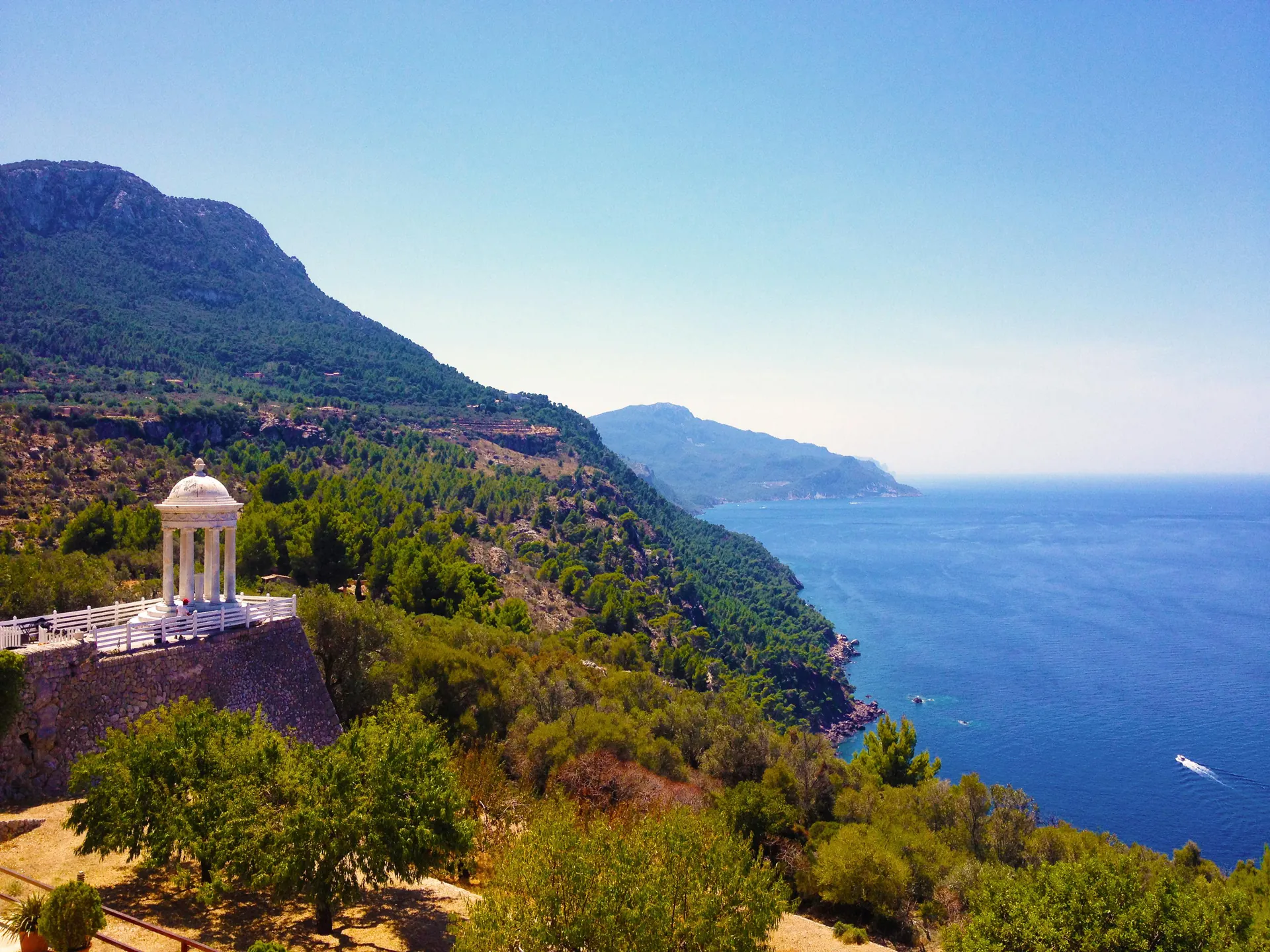
The Archduke preserved the old ruins and built new gardens that merged Austrian sensibilities with the rugged Mallorcan terrain. He was a pioneer of sustainable tourism, though the word didn’t exist then. He even built a series of *miradors* (viewpoints) along the coast so that everyone could enjoy the scenery he loved so much. His presence is still felt in the map room and the personal artifacts displayed inside the main house.
Nearby estates like Son Marroig were also part of his vast holdings. Today, celebrities like Michael Douglas, who owns the S’Estaca estate nearby, continue the tradition of foreigners falling in love with this specific coastline. While people often ask which celebrity lives in Mallorca, the truth is that the Archduke was the original pioneer who put this coast on the map for the international elite.
The Gothic Cloister and the Museum
One of the most striking features of Miramar is the Gothic cloister. These arches were not originally part of the monastery. The Archduke rescued them from the convent of Santa Margalida in Palma when it was being demolished and had them reassembled here. They stand against the backdrop of the sea, creating a hauntingly beautifull image. It is a bit of a historical collage, but it works perfectly in this setting. The way the light passes through the slender columns at midday is something you have to see for yourself.
Inside the museum, the collection is a mix of the sacred and the scientific. You will see old maps of the Mediterranean, navigators’ tools, and relics of Ramon Llull. There is also a dedicated section to the *Die Balearen*, the Archduke’s monumental seven-volume work on the geography and culture of the islands. It remains the most comprehensive study of Mallorca ever written. The chapel is another quiet corner, small and humble, but it carries the religious history of the 13th-century friars who first called this place home.
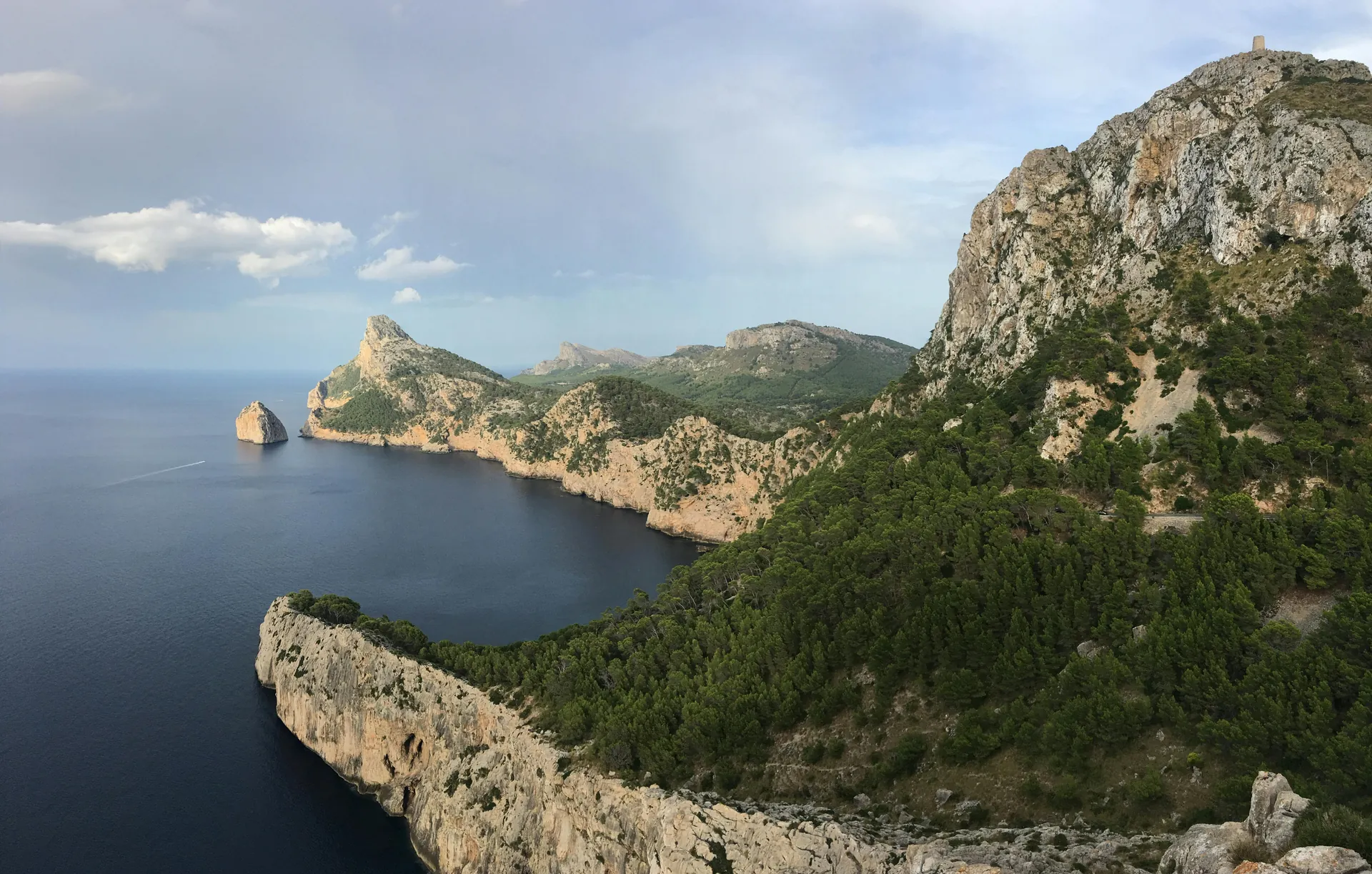
“The views from the Mirador de sa Ferradura at Miramar define the Mallorcan aesthetic: a brutal collision of limestone cliffs and the endless blue of the Mediterranean.”
The Gardens and Walking with Cala
The gardens at Miramar are a mix of ancient olive groves and manicured terraces. Some of the olive trees here are hundreds of years old, their trunks twisted into shapes that look like sculptures. I always bring my dog, Cala, when I visit the trails surrounding the estate. There are several paths that lead from the monastery towards the cliffs, and she loves the scent of the wild rosemary and pine. The terrain is rocky, so you need proper boots if you plan to venture far.
One of the best walks leads to the *Mirador de ses Puntes*. It is a relatively easy trek from the monastery, and the reward is a panoramic view that stretches towards the Dragonera island on a clear day. If you are interested in more serious hiking, the Serra de Tramuntana offers endless options. You can find more details on how to navigate these routes in our Getting Around guide. Just remember to carry plenty of water, as the Mallorcan sun is fierce, even in the shoulder seasons.
Practicalities and Local Secrets
Visiting Miramar is straightforward, but there are a few things to keep in mind. The parking lot is small and can fill up quickly during the summer months. It is best to arrive early in the morning when the light is soft and the air is still cool. The entrance fee is a modest €4.00, which goes towards the maintenance of this private estate. Unlike the more commercial attractions on the island, Miramar feels personal and unhurried. It is a good place to escape the crowds that descend on Valldemossa for the day.
- Photography: The best light for the cloister is between 11:00 and 13:00. For the coastal views, the golden hour just before sunset is unmatched.
- Language: While Spanish is spoken everywhere, the local tongue is *Mallorquí*. A simple *Bon dia* (Good morning) or *Gràcies* (Thank you) goes a long way with the staff.
- Food: There is no cafe on-site, so I recommend picking up some traditional food in Valldemossa. An *ensaïmada* (sweet lard pastry) or some *sobrassada* (cured pork paste) on crusty bread makes for a perfect picnic at one of the viewpoints.
- Safety: Be careful near the cliff edges. There are no railings in many areas, and the limestone can be slippery after rain.
Connecting the Journey
Most people combine a visit to Miramar with a stop in Valldemossa or Deià. If you have the time, I highly recommend driving down to the Port de Valldemossa for a seafood lunch after exploring the monastery. The road is incredibly narrow and steep, so drive with care. Alternatively, you can continue north to Sa Foradada for a hike and a glass of wine as the sun dips below the horizon. The entire stretch of the Ma-10 is a [UNESCO World Heritage site](https://whc.unesco.org/en/list/1371), and Miramar is one of its most significant cultural anchors.
If you are looking for a more structured way to see these sites, you might consider a Private Tour that covers the Archduke’s trail. There are also excellent Sightseeing Bus Tours that pass through this area, though having your own car gives you the freedom to linger in the silence of the cloister for as long as you like. For those arriving by cruise, a Valldemossa Excursion from the Port is a common way to see the highlights of this region.
The Enduring Spirit of Miramar
Mallorca is famous for many things: the beaches, the nightlife of Palma, and the luxury villas of the celebrities. But the real Mallorca is found in places like Miramar. It is the combination of intellectual history, royal eccentricity, and raw natural beauty. It is why Brits and Austrians and people from all over the world have been coming here for centuries. It isn’t just about the scenery; it is about the feeling of being part of something much older than yourself. When I sit on the stone bench overlooking the sea with Cala at my feet, the modern world feels very far away indeed.
Spanish Cooking Experience in Mallorca
Horse Riding in Mallorca on the Beach and Forest
Kayaking and snorkeling in the Mondragó Natural Park in Mallorca
Palma de Mallorca and Valldemossa Excursion from Cruise Port
Deluxe Cruise-Friendly Mallorca and Valldemossa Tour
Local Tip: If you want to see the estate without the groups, visit on a weekday morning. The [Official Valldemossa Tourism Portals](https://www.visitvalldemossa.com) often have updates on local festivals that might affect road access.
Whether you have three days or two weeks on the island, this corner of the north coast is essential. It is not a place to rush. Take your time, walk the gardens, and listen to the silence. It is the best souvenir you can take home from Mallorca.