
Torre del Verger: The Watchman of the West
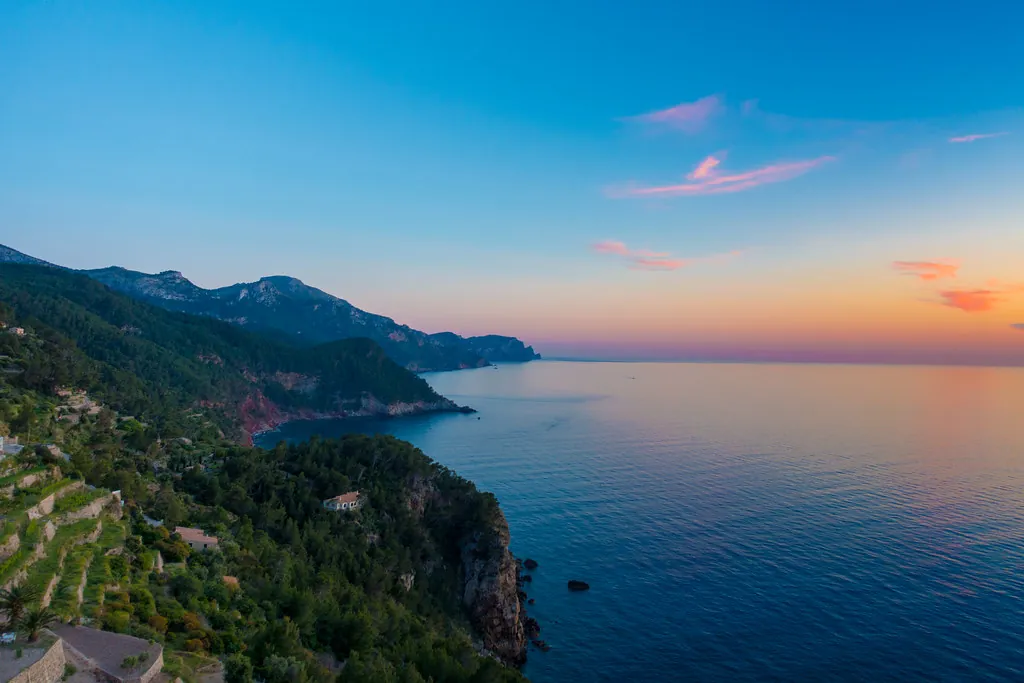
I drive the Ma-10 road often, usually with my dog Cala hanging her head out the passenger window to catch the salt wind. The western coast of the island is unforgiving and steep. Right on the edge of a sheer drop between the mountain villages of Banyalbufar and Estellencs sits Torre del Verger. People often ask why Mallorca is so famous, and while the southern sandy beaches usually get the credit in magazines, it is this rough, mountainous coastline that truly defines the island’s character. British visitors also frequently wonder if Mallorca is the same as Majorca. It is. The version with a ‘j’ is simply an old anglicized spelling from the package-holiday boom, but here on the ground, we stick to the traditional double-l of our native languages.
The Journey from Palma: Navigating the Ma-10
Leaving the flat plains of the island behind, the drive up into the mountains changes your perspective completely. If you are staying in the capital and want to figure out your itinerary, the route towards Esporles and then down into Banyalbufar is an education in Mallorcan geography. The roads shrink. The dry-stone walls inch closer to your side mirrors. Cala usually rests her chin on the doorframe, watching the ancient olive trees blur past.
Many drivers ask how many days in Mallorca is enough to see everything. The truth is, you can spend two entire weeks just exploring the remote coves and historical towers of the Serra de Tramuntana. Rushing the Ma-10 is a mistake. The tarmac twists back on itself in tight hairpins. Cyclists love this route, and you share the narrow lanes with them. Patience is mandatory. You drop into second gear, take the corners wide when visibility allows, and let the landscape dictate your pace. Before you even reach the tower, the Consell de Mallorca maintains several smaller pull-offs where you can safely let faster local traffic pass.
The 1579 Origins: Pirates and Smoke Signals
The Mediterranean was a volatile frontier in the sixteenth century. North African corsairs routinely attacked the Balearic Islands, stealing crops and capturing locals for ransom. They frequently burned settlements to the ground. The threat was constant. The coastal villages needed a way to communicate danger before the pirate ships reached the shore.
In 1579, the local authorities commissioned this specific watchtower. It was part of an ambitious defense network championed by Joan Binimelis, a brilliant Mallorcan doctor who also studied astronomy and history. His system was highly effective. When guards spotted unidentified ships on the horizon, they lit a fire. By day, they used damp wood to create thick smoke signals. By night, they used bright flames. The neighboring towers saw the signal and repeated it, sending a warning down the entire coastline and all the way to Palma in a matter of minutes.
Aleppo Pines and Coastal Flora
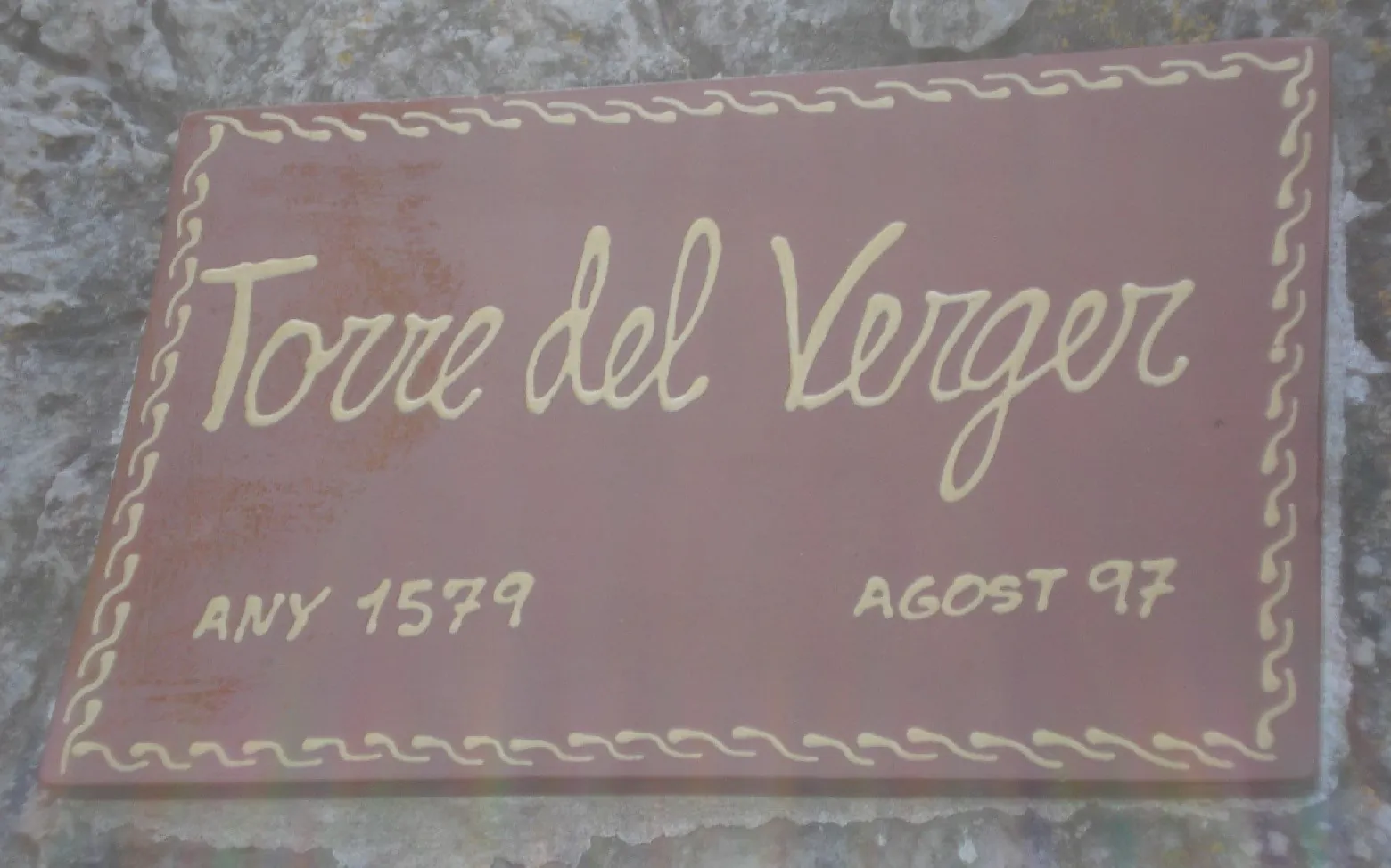
The environment surrounding Torre del Verger is harsh. The salt spray and relentless wind stunt the growth of the trees. Aleppo pines grip the limestone cliff edges with exposed, twisting roots. In the spring, wild rosemary and sea fennel push through the cracks in the rock. The scent of the herbs mixes heavily with the iodine of the sea. When Joan Binimelis surveyed this exact spot centuries ago, he chose it not just for the clear line of sight, but because the jutting rock formation was naturally defensible.
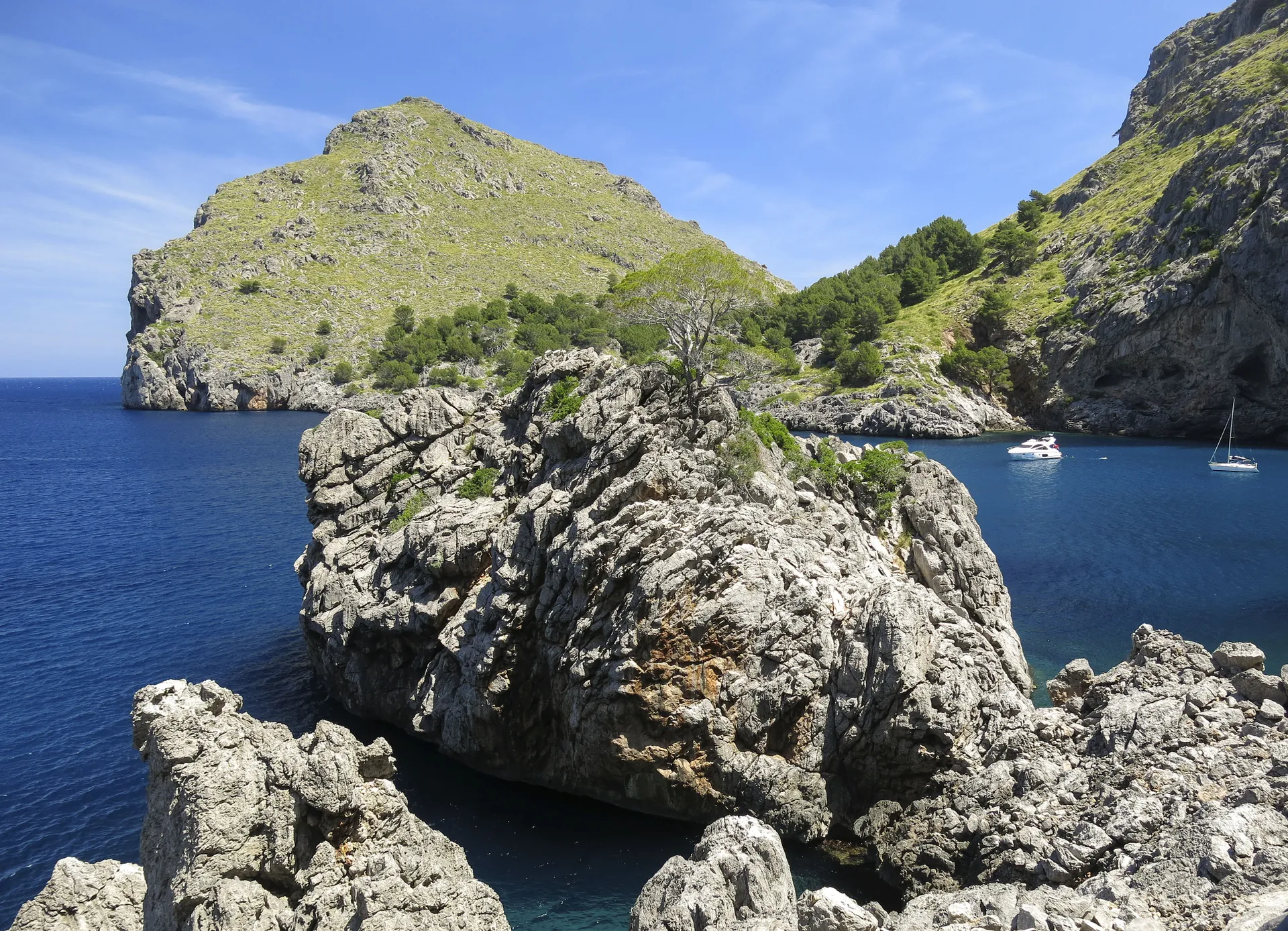
You can trace the defensive line with your own eyes today. Looking south toward Estellencs, the coast folds in on itself, hiding small pebble coves. Looking north, you can see the terraces of Banyalbufar stepping down into the water. Every single watchtower in the network was built within visual range of the next. If the smoke signals failed due to heavy fog, a guard on horseback rode the rugged mountain trails to deliver the warning in person.
Climbing the Tower of Souls
The local nickname for the structure is Torre de ses Ànimes, the Tower of Souls. Myths surround the cliffside, with old stories claiming invisible spirits weave through the pine branches at dusk. The physical reality of the tower is just as striking. It is a rough limestone cylinder, standing roughly eight meters tall with walls over a meter thick.
In the original design, there was no ground-floor door. Guards used a wooden rope ladder to reach an elevated entry point, pulling it up behind them to survive a direct assault. Today, you face a slightly easier climb. A set of modern iron steps leads up the interior. It is a tight squeeze. You pull yourself through a narrow hatch in the roof to reach the open platform. The wind hits you immediately. You look down at teh Mediterranean, hundreds of meters below, and the sheer drop takes your breath away. This is the exact view you came for.
Do not climb the iron steps in complete darkness. The stone edges around the roof hatch are worn smooth from centuries of heavy boots, and a slip up there is unforgiving.
Mateo Valero
The Archduke’s Obsession with the Coast
By the late nineteenth century, the threat of pirate raids was a distant memory, and Torre del Verger lost its military purpose. The structure began to crumble. Enter Archduke Ludwig Salvador of Austria, a man who became completely infatuated with the Balearic Islands. Locals still refer to him affectionately as S’Arxiduc. He purchased massive tracts of land along the Tramuntana coast, including the nearby Son Marroig estate and the plot beneath this very tower.
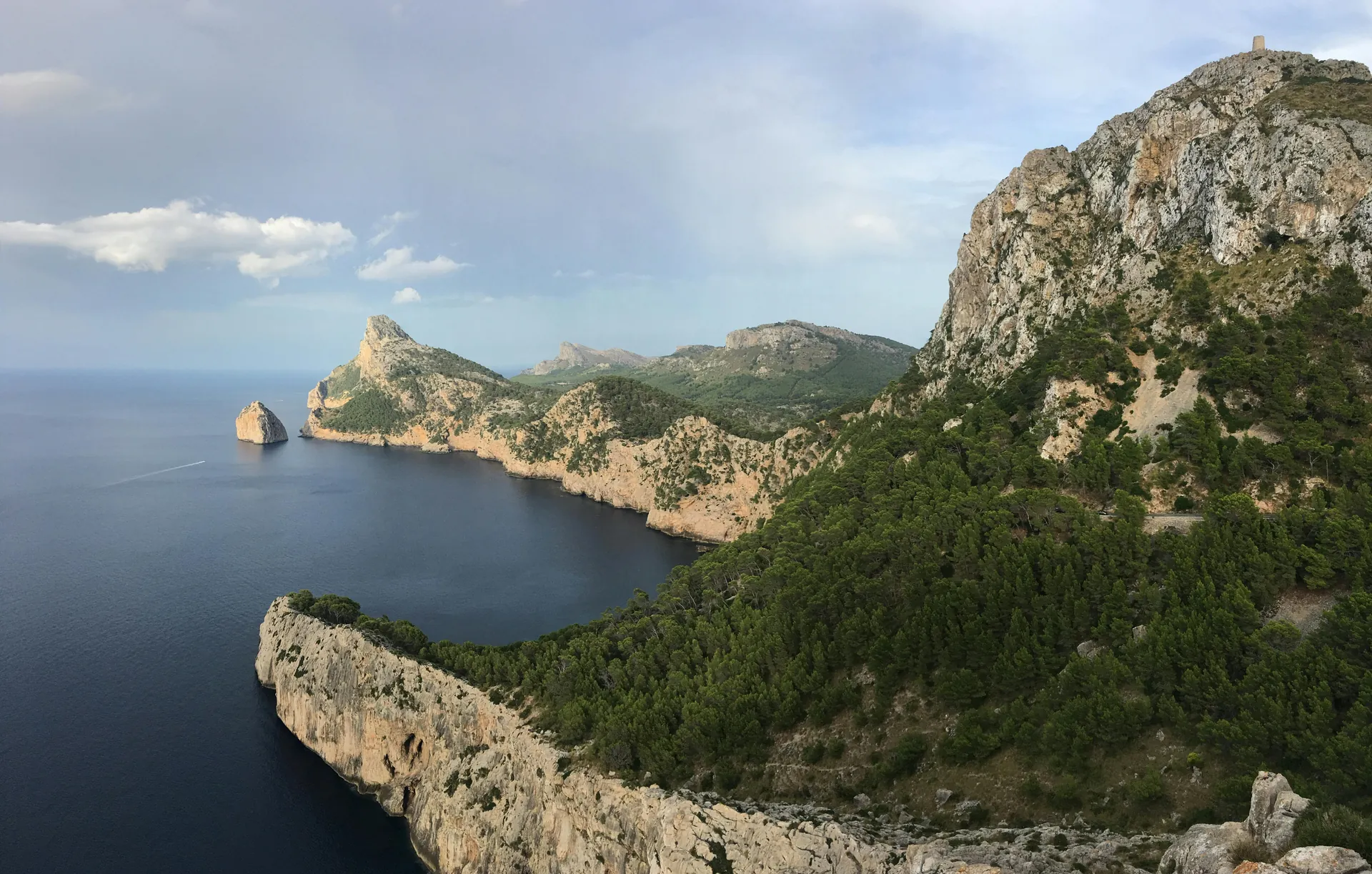
He bought Torre del Verger for one specific reason. The Archduke firmly believed this promontory had the best vantage point on the entire island. Today, the Official Heritage Portal of the Consell de Mallorca protects the site, having restored the masonry in 1955 to keep the walls from collapsing into the sea.
Timing Your Visit: The Tramuntana Sunset
The tower is completely free to enter, and the gate never closes. If you ask me which part of Mallorca is the nicest, my answer is always this specific stretch of the western coast during the golden hour. The setting sun turns the limestone cliffs a deep, bruised purple. I highly reccomend arriving an hour before sunset to secure a spot.
Even in the middle of July, the wind on the roof platform is cold. Bring a light jacket. I always check the Spanish Meteorological Agency (AEMET) reports before driving up, as heavy coastal fog occasionally swallows the tower entirely, turning a scenic trip into a stare at a gray wall.
Practicalities and Security
Getting to Torre del Verger requires navigating the island by car. The parking situation at the tower is minimal. There is a small, unpaved lay-by right off the asphalt. It holds perhaps six or seven cars at a push. When the sun dips low, cars pile up on the shoulders, creating a chaotic bottleneck.
Mind you, rental car break-ins are a known issue at isolated viewpoints along the Tramuntana coast. This is a major point regarding what to be careful of in Mallorca. Thieves know tourists leave luggage in the backseat while they climb the tower for a quick photo. Take your valuables with you, leave the glovebox open to show it is empty, and never leave bags visible. It is a minor inconvenience that saves your holiday.
Beyond the Tower: Banyalbufar and Local Etiquette
Once the sun drops below the horizon, the crowd scatters. This is the perfect time to drive five minutes down the road to Banyalbufar. The village is famous for its terraced hillsides and Malvasia wine. Sitting on a terrace with a cold glass of local white wine is a proper end to the day.
Sitting at a cafe here brings up the inevitable budget conversation. Travelers often ask if Mallorca is cheap or expensive. Up here in the mountains, prices are higher than in the inland agricultural towns, but far lower than the luxury beach clubs of the southwest. A glass of wine and a plate of traditional food will not empty your wallet. Speaking of meals, if you want to know what food Mallorca is known for, order a slice of toasted country bread rubbed with local ramallet tomatoes and topped with cured sobrassada sausage. It is peasant food at its absolute best, rich and heavily spiced with paprika.
If you stop for dinner or a drink, you might wonder if it is rude not to tip in Mallorca. The culture here is relaxed. Leaving a few extra coins on the table or rounding up the bill is appreciated by the staff, but a strict twenty percent is not demanded. You might also wonder what language they speak in Mallorca as you listen to the waiters chat. Locals speak Mallorquín, a distinct dialect of Catalan, alongside Castilian Spanish. A simple “bon dia” goes a long way with the residents.
The privacy of this coastline attracts a lot of quiet wealth. People occasionally ask which celebrity lives in Mallorca, hoping to spot a famous face. Michael Douglas owns the massive S’Estaca estate just a bit further north along this same coastal road, a property Archduke Ludwig Salvador himself converted from a ruined old manor house. The Hollywood connection is interesting, but the real star of the Tramuntana is the absolute silence you find once the day-trippers leave.
If your base is in Palma and you prefer not to drive the mountain roads yourself, several excellent guided options exist. Booking a Valldemossa, Deià & Sóller Experience often includes stops along the Ma-10 viewpoints. Alternatively, you can explore the rugged coastline from the water by looking into boat tours and cruises that sail past the sheer cliffs of the west coast.
Final Thoughts on the Western Sentinel
The entire mountain range is a UNESCO World Heritage site, recognized for the way human agriculture and architecture blend naturally into the wild landscape. When you stand on the roof of Sa Torreta, looking out at the endless blue water, that harmony is obvious.
Torre del Verger does not require a full day of your itinerary. It is a brief, intense encounter with Mallorca’s history and its raw geography. You climb the iron steps, you feel the cold wind off the sea, and you understand exactly why the coastal guards and the Austrian Archduke both stood on this same rock, captivated by the horizon. Drive carefully on the way back down in the dark.